Palm Beach offers privacy, legacy ownership, and established social networks; Miami brings international connectivity, business energy, and a wider range of urban living. The right wealth relocation depends on daily priorities and the full cost of ownership, not Florida’s shared income-tax advantage alone.

For a household relocating substantial wealth, Palm Beach versus Miami is less a contest between luxury addresses than a choice about daily life. Palm Beach favors privacy, legacy ownership, and an established social setting. Miami places greater emphasis on international business, cultural activity, nightlife, and urban living. Both can meet sophisticated residential requirements, but they serve different priorities.
The starting point is not which market is more prestigious. It is whether the residence should serve primarily as a private refuge, an active operating base, or a balance of the two. A calendar shaped by philanthropy and time at home calls for a different search from one organized around international travel, business meetings, and evenings out.
Neither destination wins on Florida’s lack of state individual income tax. That advantage is shared. The meaningful comparison begins with the life a buyer expects to lead after arrival.
The Town of Palm Beach has a residential identity grounded in its island geography. Ocean and Intracoastal frontage, Worth Avenue shopping, and the walkable Lake Trail offer distinct settings for daily routines. For estate buyers, historic architecture, gardens, land, and waterfront privacy are central considerations, not incidental amenities.
Its social environment is associated with established networks, philanthropy, club culture, and seasonal residents. For buyers who value continuity, that can be compelling. The appeal is not simply quiet; it is the opportunity to build a familiar routine around a private home and an established community.
Limited land and strict zoning constrain island inventory. Buyers with exacting requirements may face a narrower selection and should separate essential features from preferences before beginning their search. Scarcity can shape availability, but it is not a guarantee of appreciation or capital preservation.
Palm Beach is a strong starting point for a household prioritizing discretion, architectural character, and a long-term sense of place. That does not mean every island property offers the same privacy or suits the same ownership plan.
The Town of Palm Beach, West Palm Beach, and Palm Beach County are not interchangeable. A search that begins with island estates may shift toward a condominium elsewhere, but that changes the residential brief; it does not simply widen the selection within the same setting.
For buyers willing to consider West Palm Beach, Alba West Palm Beach is a separate residential option to evaluate. The central question is whether the household wants the island itself or is open to a different address and ownership format.
The same distinction applies when considering Forté on Flagler West Palm Beach alongside an island search. Compare the property, recurring obligations, and daily itinerary rather than allowing the broader Palm Beach name to substitute for location-specific judgment.
Palm Beach County extends further into condominium, estate, coastal, golf, and equestrian settings. Those choices can meaningfully broaden the search, provided buyers recognize that county-wide variety does not describe island living.
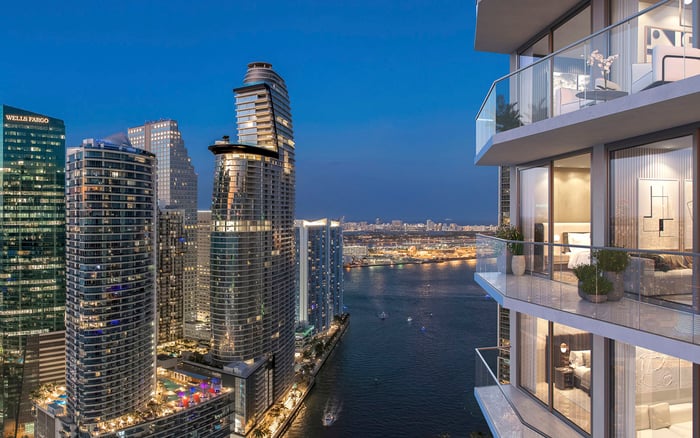
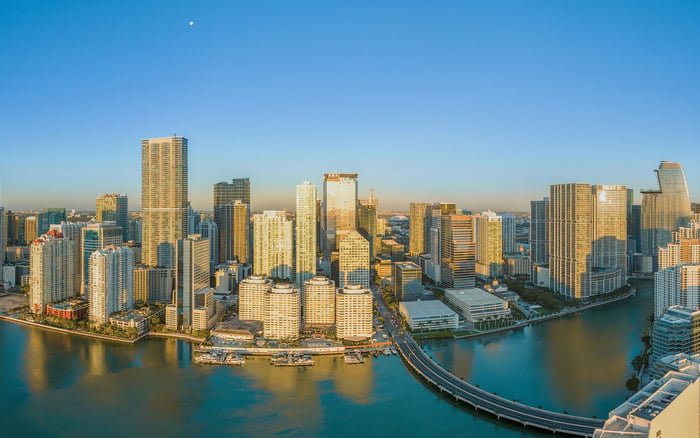
Miami is a natural consideration for buyers whose relocation remains closely tied to work. Its finance, technology, entertainment, and international-business connections support a more outward-facing life. Miami International Airport’s broader international connectivity also matters for households whose schedules regularly cross borders.
The housing options are correspondingly varied: high-rise condominiums, waterfront houses, new developments, and urban neighborhoods offer different ways to organize a residence. That breadth is useful only when the buyer has decided how much urban activity belongs in everyday life.
In a Brickell search, The Residences at 1428 Brickell offers a specific project to evaluate within the broader condominium search. The decision should turn on the residence and its ownership obligations, not the assumption that a recognizable address automatically suits a frequent traveler or full-time household.
Nor should Miami be reduced to Brickell. A buyer considering Park Grove Coconut Grove is testing another neighborhood against the same personal requirements. A Miami waterfront house and an urban condominium can deliver substantially different experiences; grouping them under one citywide label obscures the real decision.
The fiscal distinction is straightforward: Florida imposes neither a state individual income tax nor a state individual capital-gains tax. Relocation does not eliminate applicable federal taxes, and neither Palm Beach nor Miami has an advantage over the other on those specific state taxes.
The more consequential property comparison is the annual ownership budget. Property taxes, homeowners insurance, wind and flood coverage, maintenance, and private-school tuition where relevant can offset part of the benefit of leaving a state with income tax.
Prepare a budget for each shortlisted property rather than applying a broad regional allowance. A residence comfortably within the acquisition budget may carry recurring obligations that change its appeal. Tax planning and property selection should inform each other, but they are not the same exercise.
For condominiums, examine association budgets, reserves, building insurance, assessments, inspection reports, rental restrictions, and applicable post-Surfside requirements. These are core ownership questions in either market. A compelling interior cannot substitute for a clear understanding of the building’s financial and physical obligations.
Palm Beach’s established networks and Miami’s more internationally mixed, entrepreneurial environment offer different starting points for a new chapter. Neither guarantees belonging. The question is which setting supports the relationships and activities a household genuinely intends to maintain.
Before choosing, sketch an ordinary week rather than an ideal weekend. Identify expected business commitments, travel patterns, time at home, and preferred evening activities. For families, test school and household logistics from each actual address rather than assuming one destination offers uniformly easier commutes.
Then visit with that schedule in mind. Separate the pleasure of a property tour from the practical question of living there. Set explicit priorities for privacy, access, social engagement, and ownership complexity, especially when household members value them differently.
Palm Beach is the stronger starting point when privacy, legacy ownership, and an established social rhythm lead the brief. Miami deserves priority when international connectivity, business activity, cultural engagement, and residential variety matter most. These are directional distinctions, not rules that every neighborhood or property must follow.
The best relocation decision makes the trade-offs clear before an address becomes emotionally indispensable. Define the daily rhythm, distinguish the geography, and compare full ownership costs before choosing the home.
Explore residences aligned with your relocation priorities through MILLION.
If branded residences are on your mind — as a home or as an allocation — we would be glad to share what we are seeing, privately.
Begin a quiet conversationPalm Beach may suit buyers prioritizing privacy, legacy ownership, and established networks. Miami may better fit households seeking international business connections, cultural activity, and urban living.
No. Both share Florida’s lack of state individual income tax, so that specific tax does not distinguish the destinations.
Florida does not impose a state individual capital-gains tax, but applicable federal taxes remain. Relocation should not be treated as eliminating all tax obligations.
No. The Town of Palm Beach and West Palm Beach are distinct locations, and Palm Beach County encompasses a much broader range of residential settings.
Ocean and Intracoastal frontage, historic architecture, gardens, land, and waterfront privacy are central considerations. Limited land and strict zoning can narrow available inventory.
Miami International Airport offers broader international connectivity. That can make Miami a practical consideration for households with frequent global travel.
Miami offers high-rise condominiums, waterfront houses, new developments, and urban neighborhoods. Those formats can create very different daily experiences within the same city.
Buyers should account for property taxes, homeowners insurance, wind and flood coverage, maintenance, and private-school tuition where relevant. These expenses can offset part of the income-tax benefit.
Review association budgets, reserves, building insurance, assessments, inspection reports, rental restrictions, and applicable post-Surfside requirements. Evaluate these obligations alongside the residence itself.
No. Constrained supply can narrow the available selection, but it does not guarantee appreciation or capital preservation.