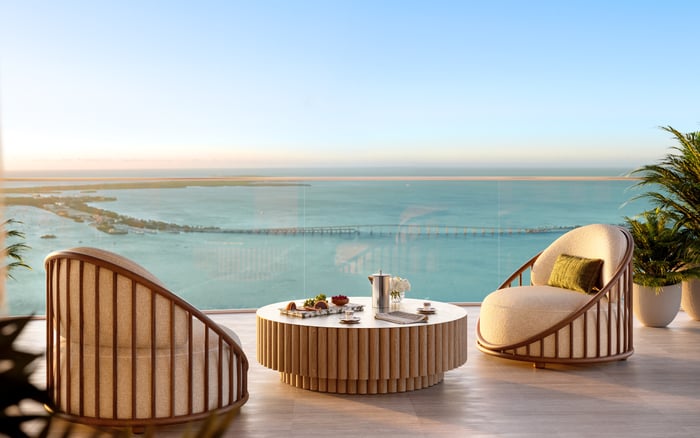
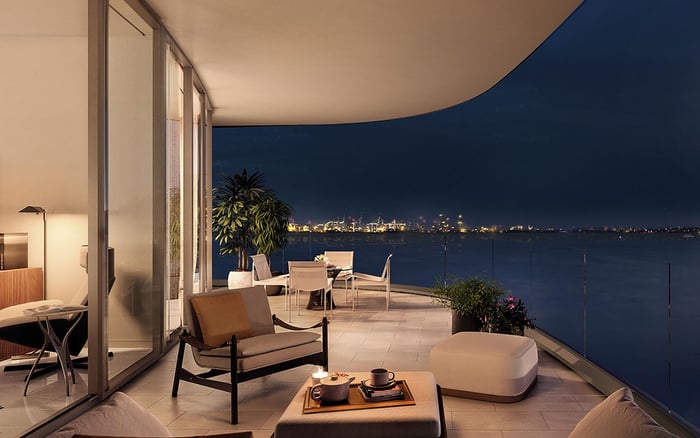
Privacy is a lifestyle benefit, not a budget forecast. At Baccarat Residences Brickell, buyers should examine service inclusions, assessment allocations, waterfront responsibilities, and replacement funding before drawing conclusions about recurring ownership costs.
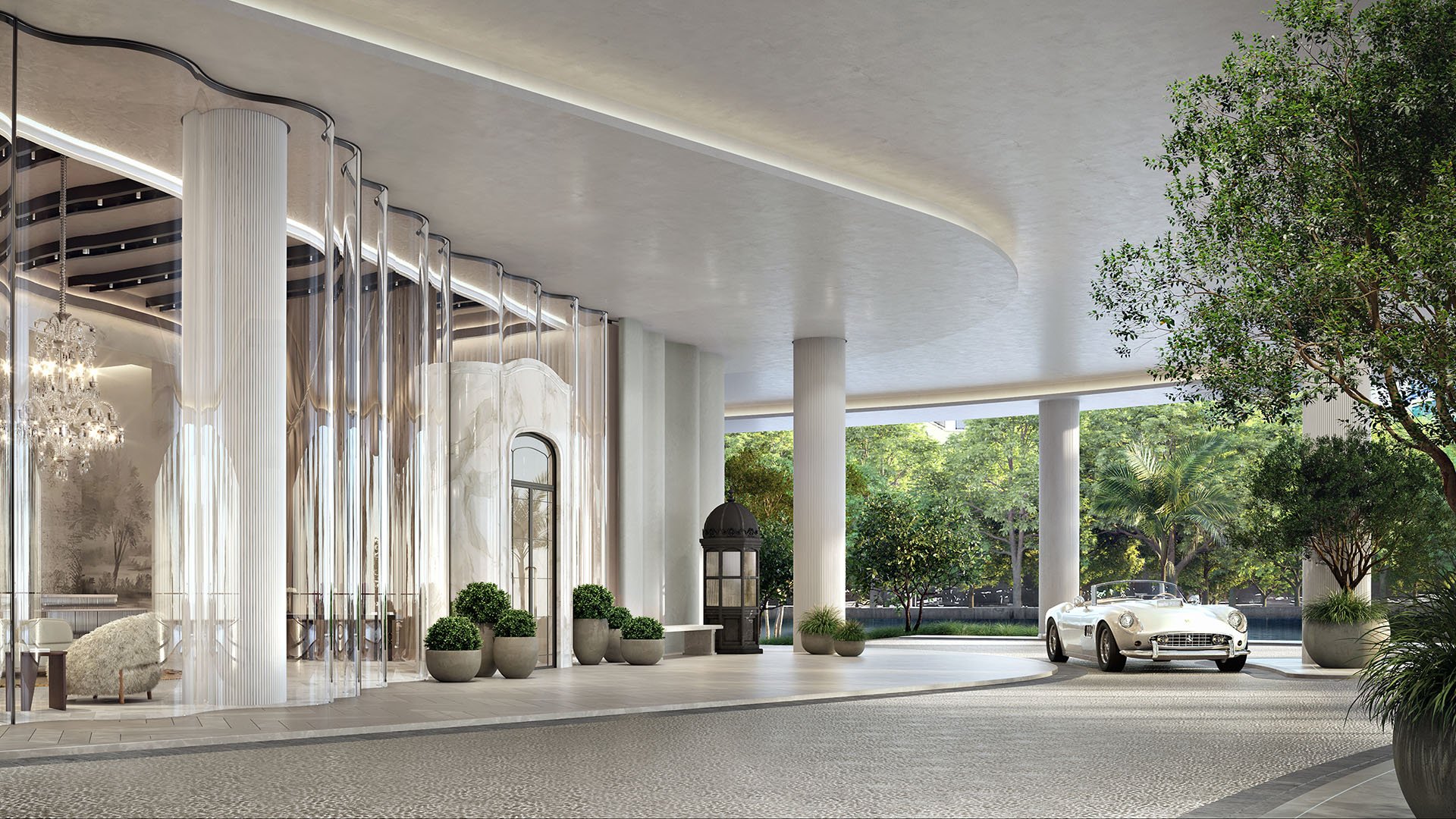
A private arrival, attentive service, and beautifully composed shared spaces can make a residence feel removed from the city below. They do not, by themselves, make it inexpensive to operate. At Baccarat Residences Brickell, the ownership question extends beyond discretion: how will the promised experience be funded, allocated, and maintained?
The project is planned as a 75-story waterfront tower at 444 Brickell Avenue. The March 2026 residence breakdown comprises 360 homes: 324 tower residences, eight penthouses, and 28 riverfront flats and duplexes. Those figures establish neither residences per floor nor a comparative density benchmark. Calling the tower low density without defining the comparison would obscure rather than clarify the analysis.
Private-key elevator access is a marketed privacy feature, not evidence of lower common charges. Even where fewer residences share a space, its maintenance costs depend on the systems, service standards, and contractual responsibilities involved.
Related Group and GTIS Partners form the development team, with architecture by Arquitectonica and interiors by Meyer Davis Studio. The collaboration with French luxury brand Baccarat establishes a particular design and service proposition. For a buyer, the financial task is to translate that proposition into specific obligations.
The March 2026 program describes more than 75,000 square feet of planned amenities. Advertised offerings include a wine cellar and tasting room, screening room, library, residents’ lounge, billiards lounge, and business center with private workspaces. Concierge and valet are advertised around the clock.
This is a full-service proposition, not a limited-service ownership model. Yet an amenity inventory is not an operating budget. The relevant questions concern staffing, opening hours, maintenance standards, vendor contracts, and the entity responsible for each expense. Check planned and advertised specifications against the governing documents, since the program may change.
The planned 12th-level resort deck includes a zero-entry heated saline pool, spa, and cabanas. The wellness program also includes a fitness center curated by Altitude Fitness and a hammam spa with a lounge.
For diligence purposes, separate the physical facilities from the services delivered within them. Ask who funds pool equipment maintenance, who operates the spa, and whether treatments or instruction carry additional charges. Access to a wellness space does not establish that every experience within it is included in the association assessment.
Apply the same distinction to the advertised pet spa, grooming, and walking services. A service can be available to residents without being an association-funded benefit. Written inclusion schedules are more useful than broad descriptions of convenience, particularly for owners who expect frequent use.
A private marina with residents’ yacht access, riverfront promenades, and gardens are advertised features. They may be central to a buyer’s interest, but access rights and maintenance responsibilities are separate questions.
Request the documents defining marina use, any separate charges, the operating entity, and responsibility for infrastructure. Do not assume yacht access includes a berth or that every waterfront improvement belongs to the condominium association.
Apply the same discipline to promenades and landscaped areas. Identify who maintains them, who insures them, and how shared expenses are allocated. A waterfront setting is a lifestyle attribute. Its ownership implications require contractual review, not assumptions drawn from a sales presentation.
A brand affiliation reveals neither the amount nor the structure of recurring charges. It also does not establish a contractual brand fee. At Baccarat, no adopted assessment figure or contractual brand-fee amount is established here, so assigning a numerical premium would be premature.
For buyers also considering Cipriani Residences Brickell, a useful comparison begins with a consistent set of questions, not an assumed relationship between names and fees. Which services are included? Which are optional? Which are delivered through third parties? What standards must the operator maintain?
Build the comparison around your intended use. An owner who regularly uses valet and concierge may assess their value differently from an occasional resident. That preference does not determine the assessment allocation. Confirm the obligation independently of how often you expect to use a facility.
Begin with the proposed operating budget and the unit-specific assessment allocation. The total residence count is not a sufficient basis for calculating an individual owner’s share. Ask how the governing documents assign expenses to the residence under consideration.
Next, request a staffing schedule that supports the advertised service hours. Clarify which roles are employed directly, which are contracted, and where their costs appear in the budget. Examine a 24/7 service promise alongside its proposed funding rather than treating it as a complimentary feature.
Insurance assumptions also warrant explicit review. Ask what coverage and deductibles the budget assumes, which assets are covered, and how responsibilities are divided. Do not infer a specific Baccarat premium from the building’s height, address, or waterfront position alone.
Finally, examine any developer subsidy arrangements. If a subsidy exists, identify its duration, covered expenses, and budget treatment after it ends. Distinguish the expected introductory payment from the costs owners may ultimately need to support.
Daily operations and long-term replacement funding answer different questions. Review the reserve schedule and responsibility for elevators, façade, mechanical systems, pool equipment, furnishings, and marina infrastructure. Do not automatically assign every advertised feature to the association.
For each major component, ask who owns it, who maintains it, and who pays for eventual replacement. Then examine the funding assumptions against those responsibilities. A proposed assessment is more meaningful when its treatment of both current service and future capital needs is clear.
If The Residences at 1428 Brickell is also on your shortlist, apply the same document requests there. Compare equivalent expense categories and service inclusions without presuming equivalent budgets or operating structures.
Baccarat’s advertised staged deposits address acquisition payments tied to contract timing, construction progress, and closing. They are not a schedule of recurring association charges. Keep the purchase-payment calendar separate from the ownership budget.
The final decision need not favor the lowest assessment. It should favor a clearly understood relationship between the residence, the services you value, and the obligations you accept. Privacy can justify a preference; it cannot substitute for financial diligence.
For a considered approach to South Florida ownership, explore your residential options with MILLION.
If branded residences are on your mind — as a home or as an allocation — we would be glad to share what we are seeing, privately.
Begin a quiet conversationNo. Operating costs depend on service standards, systems, maintenance responsibilities, and expense allocations, not simply how many residences share a space.
The March 2026 breakdown identifies 360 residences: 324 tower units, eight penthouses, and 28 riverfront flats and duplexes.
The residence count does not establish residences per floor or a comparative density benchmark. Private-key elevator access supports privacy but does not prove low density or low fees.
No adopted monthly assessment figure is established here. Buyers should request the proposed operating budget and the allocation for their specific residence.
The March 2026 program describes more than 75,000 square feet of planned amenities. Offerings include social spaces, wellness facilities, and a resort deck.
Yes, 24/7 concierge and valet are advertised. Buyers should confirm their contractual scope and how their costs are funded.
Advertised availability does not establish inclusion. Confirm whether each service is association-funded, separately billed, or provided by a third party.
The advertised yacht access does not establish an included berth. Review access rights, separate charges, and infrastructure responsibilities in the relevant documents.
Review responsibility and replacement funding for elevators, façade, mechanical systems, pool equipment, furnishings, and marina infrastructure. Do not assume every advertised feature is an association expense.
No. The advertised deposits concern acquisition payments tied to contract timing, construction progress, and closing, rather than recurring association charges.