A buyer-focused guide to distinguishing private arrival from exclusive elevator control, testing visitor authorization, and confirming whether service routes genuinely separate from residential circulation in Pompano Beach.
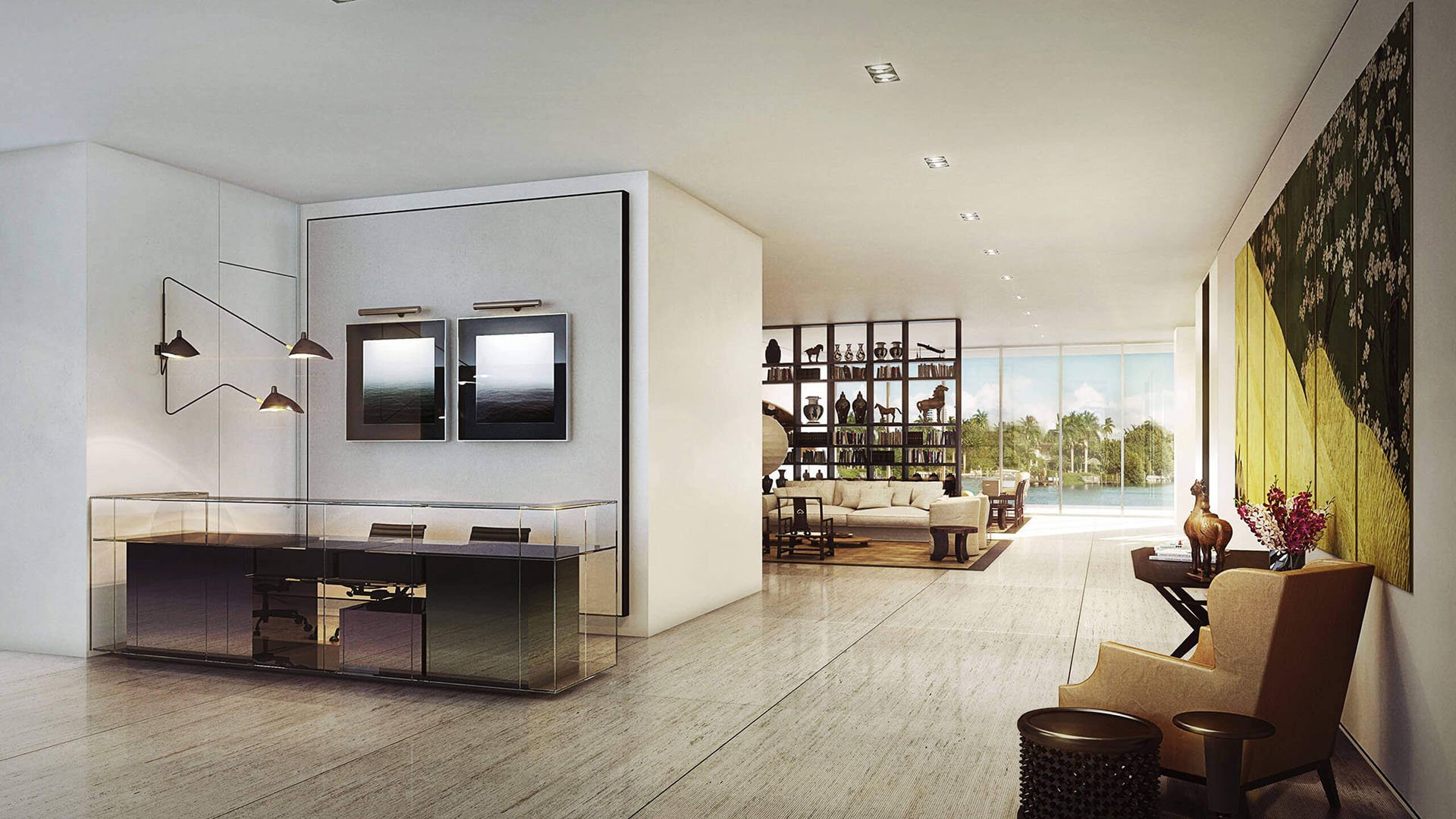
In Pompano Beach, a private elevator arrival can feel like an extension of the residence: composed, quiet, and removed from the public lobby. Yet that architectural impression answers only part of the buyer’s question. Who can reach the arrival space, under whose authority, and by which route matters as much as the finish of the foyer.
A private landing, an exclusive cab, and a destination-controlled elevator are different propositions. A sound inquiry separates physical layout from access permissions and daily management. For a discerning Broward buyer, the objective is not to collect security amenities, but to understand how the residence functions when an owner arrives, a guest visits, or a contractor needs entry.
Whether considering Casamar or another Pompano Beach residence, apply the same operational questions. A project name does not establish a particular access arrangement.
Solemar’s stated arrival configuration pairs semi-private elevators with private foyer entrances. That does not establish a cab expressly dedicated to one residence. Its 24/7 valet parking, concierge services, and security do not, by themselves, explain who authorizes a visitor’s elevator journey.
Riverside Grande presents a different configuration. The 40-residence, 10-floor Intracoastal condominium, one block from the beach, identifies each three-bedroom residence as having its own private elevator leading to an entranceway with solid double doors. Its 24-hour security and concierge service still leave visitor screening and service circulation to be confirmed.
At Plaza at Oceanside, 1 N Ocean Boulevard, both “elevator foyer entry” and “private elevator landing” appear in residence descriptions. Neither phrase alone settles cab exclusivity.
Ask management to identify the cab serving the exact residence, every other residence it serves, and every location where it can open. Compare that explanation with elevator and unit-stack plans. A beautiful threshold should not substitute for a precise definition.
At 1380 S Ocean Boulevard, Unit 1001, the stated features include a private elevator, card entry, secured lobby and elevator access, cameras, doorman service, and security service. Those features do not establish whether visitors require concierge approval, resident release, temporary credentials, or destination-specific authorization.
Royal Coast, at 2000 S Ocean Boulevard, includes 24-hour security personnel, video surveillance, and fob-entry systems among its stated features. These do not confirm private-elevator operation, floor-specific credential restrictions, or separate service circulation. Treat unspecified controls as questions, not presumed deficiencies.
Request written confirmation of the destinations available to owner, guest, employee, and contractor credentials. Ask who can change permissions, revoke access, and override restrictions. For a residence under consideration at Ocean 580 Pompano Beach, resolve these questions for the particular unit rather than inferring answers from its address.
Assess visitor authentication as a sequence: site entrance, lobby admission, elevator authorization, and the residential threshold. Ask management to demonstrate an ordinary, authorized visit rather than relying on a verbal description of “controlled access.”
Test several scenarios: a dinner guest arrives while the owner is home; a delivery driver arrives while the owner is away; a contractor needs scheduled entry; a domestic employee has recurring access. For each, ask who confirms identity, who approves admission, which destination becomes available, and when permission expires.
At 407 N Riverside Drive, Unit 205, the stated features pair private elevator entry with phone/intercom entry. That combination is a starting point for inquiry, not proof of how resident approval connects to elevator access.
Also ask how visitors are recorded, whether approval can be withdrawn, and what happens when the resident cannot be reached. A useful answer describes an actual procedure rather than merely naming a device.
Salato’s stated configuration includes four semi-private elevators and lobbies serving 40 residences. Its villa has a distinctly different arrangement: a first-floor position on the building’s north side, almost completely separate from the main building, with a private lobby and an elevator unavailable to other building residents.
The villa’s stated features also include “personal and independent guest entries” and direct access from the owner’s private garage to the private lobby. These describe guest and owner arrival possibilities. They do not establish a separate route for domestic employees, deliveries, or maintenance personnel.
Video surveillance and access control at Salato cover all points of entry, but credential permissions and visitor logging remain operational questions. When comparing a villa with a standard residence, keep each configuration attached to the specific home. Do not transfer an exceptional unit’s features to the entire building.
For an owner, privacy includes the movement of groceries, furniture, maintenance teams, and waste. Ask to trace loading, delivery, moving, maintenance, and trash routes from their starting points to the residence. Establish whether they share a resident entrance, passenger elevator, landing, or interior doorway.
A separate exterior door does not necessarily mean separate circulation. Nor does private garage access prove that service traffic avoids the owner’s arrival space. Where routes overlap, ask about scheduling, supervision, and permission limits rather than assuming the arrangement is unsuitable.
Buyers considering The Ritz-Carlton Residences® Pompano Beach should bring the same route-based questions to their unit review. The goal is a clear account of circulation, without relying on branding to resolve operational details.
Request elevator and unit-stack plans, access-control permissions, condominium rules, visitor procedures, and emergency-override policies. Read them together: a plan describes where movement is possible; permissions and procedures explain who may make that movement.
Ask management to distinguish current operations from proposed arrangements. Where an answer remains unsettled, seek written clarification tied to the residence before treating it as a purchase attribute.
For a second-home buyer evaluating Armani Casa Residences Pompano Beach, include periods of owner absence in that review. Confirm how authorized employees, deliveries, and maintenance visits would be handled while the owner is away.
The most persuasive private arrival has understandable boundaries: who shares the cab, who grants access, and where service traffic travels. Precision makes privacy a usable part of the home rather than an attractive phrase.
For a discreet perspective on your Pompano Beach residence search, explore MILLION.
If branded residences are on your mind — as a home or as an allocation — we would be glad to share what we are seeing, privately.
Begin a quiet conversationNo. A private foyer describes an arrival space; cab exclusivity requires separate confirmation of which residences and destinations the elevator serves.
Solemar is described as having semi-private elevators leading to private foyer entrances. That wording does not establish elevator cabs dedicated to individual residences.
Riverside Grande advertises each three-bedroom residence as having its own private elevator leading to an entranceway with solid double doors. Visitor screening and service circulation still require confirmation.
Salato advertises four semi-private elevators and lobbies serving 40 residences. Its villa has a separately described arrival configuration.
No. Its private garage access and independent guest entries describe arrival routes, but do not establish separate circulation for staff, deliveries, or maintenance.
Ask management to demonstrate site entrance, lobby admission, elevator authorization, and arrival at the residential threshold. Test guests, delivery drivers, contractors, and domestic employees separately.
Confirm which destinations each credential can reach, who can change or revoke permissions, and who can override restrictions. Request those details in writing for the particular residence.
No. Its described security personnel, surveillance, and fob-entry systems do not establish floor-specific credential restrictions or private-elevator operation.
Trace loading, delivery, maintenance, moving, and trash routes to the residence. Identify any shared entrances, passenger elevators, landings, or doorways.
Request elevator and unit-stack plans, access-control permissions, condominium rules, visitor procedures, and emergency-override policies. Compare the documents with management’s demonstration and written explanation.