A buyer-focused examination of cybersecurity, guest-profile data and owner confidentiality at Mandarin Oriental Residences, West Palm Beach, separating advertised privacy features from the operational protections worth documenting before purchase.

Privacy in a serviced residence has two dimensions: who can reach the front door and who can see the information generated behind it. At Mandarin Oriental Residences, West Palm Beach, buyers should evaluate both with equal care. A private arrival is a design feature; controlled access to household information requires documented operating rules.
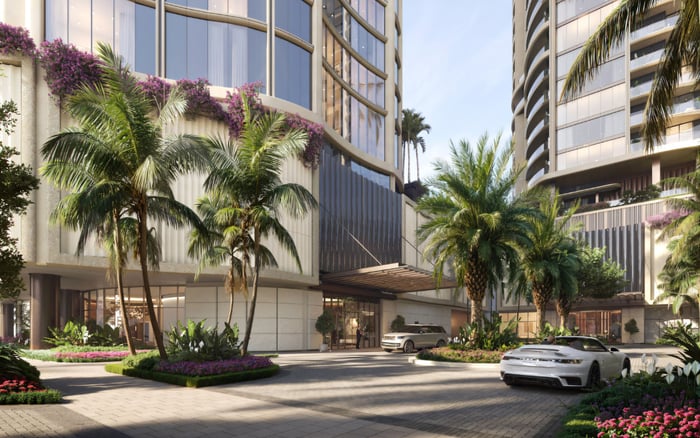
Great Gulf is developing the project with Mandarin Oriental as the intended hospitality brand and operator. Marketed at 5400 North Flagler Drive, the planned 31-story tower includes two- to four-bedroom residences, two multilevel private villas and a full-floor penthouse. Direct-access private elevators and integrated smart-home controls are advertised, alongside services that include repair requests and artisan recommendations.
These offerings define the diligence agenda; they do not resolve it. Advertised 24-hour security, valet parking, guest suites and a private porte-cochère should not be treated as verified digital safeguards. The buyer's objective is to establish how discretion will work after occupancy, not simply how arrival will feel.
Group-wide privacy provisions cover information associated with reservations, stays, visits, purchases and digital interactions. They include administrative, organizational and technical safeguards, along with regular review and monitoring. These provisions do not establish which controls will apply to this particular residence.
Historical group-level cybersecurity measures from 2023 included a centralized cybersecurity function, external benchmark assessments, vulnerability assessments and penetration testing. They also included backups, disaster-recovery planning, annual security-awareness training, phishing testing and IT-control and cybersecurity audits. These are relevant starting points, not current property-specific assurance.
Request an assurance package identifying the systems covered, assessment dates, unresolved findings and responsibility for remediation. Ask for applicable penetration-test summaries and evidence that backups and recovery procedures have been tested. A confidential summary may be more appropriate than detailed technical findings.
The same distinction matters when evaluating The Residences at Mandarin Oriental, Miami: a shared brand does not establish identical systems, vendors or contractual protections across residences.
The central governance question is straightforward: which entity is responsible for each category of information? Ask the developer, intended operator and relevant management parties to identify their respective obligations in writing. Include owner, resident, guest and household-staff data; a response limited to payment details is not enough.
Request a residence-specific data map covering concierge interactions, visitor credentials, valet, cameras, package handling, Wi-Fi, building applications, maintenance and smart-home systems, wherever applicable. For each category, seek the collection purpose, storage location, authorized users, outside vendors and retention period. This is a recommended diligence inventory, not a confirmed description of installed systems.
Group-wide provisions permit transfers of personal information across jurisdictions. Ask where residential information would be stored and accessed, including by support personnel. Geographic location alone does not establish security, but it helps counsel assess the contractual and legal framework.
For a buyer also considering Mr. C Residences West Palm Beach, this questionnaire provides a consistent basis for comparison without presuming equivalent operations or privacy terms.
Personalization should have defined boundaries. Ask whether residential service preferences will remain separate from hotel guest profiles, marketing records and other properties' systems. Do not assume that integration exists or that separation is guaranteed. Obtain a clear explanation of what is necessary for service and what is optional.
Owner confidentiality deserves its own written protocol. Request rules governing disclosure of ownership, occupancy, travel schedules, guest identities, household-staff details and service histories. Clarify who may authorize disclosure and how staff should verify requests from assistants, relatives or outside service providers.
Access should follow job responsibilities, not convenience. Seek confirmation of multifactor authentication, privileged-access controls, staff offboarding and time-limited vendor access. Visitor credentials should have defined expiration and revocation procedures. Ask whether access to sensitive records is logged and who reviews exceptions. These are requested protections, not established project commitments.
The residences are marketed with integrated controls for lighting, shades, climate, security and entertainment. For an owner who travels frequently, the question is not simply what can be controlled remotely, but who retains that capability.
Before accepting a smart-home package, request an account and permissions schedule. Clarify cloud connectivity, remote support, firmware updates, any cameras or microphones, and the separation between owner accounts and building or vendor administration. Ask how temporary access is granted, recorded and withdrawn after a service visit.
Surveillance merits a separate discussion. Request the intended camera coverage, footage retention periods, viewing permissions and disclosure rules. Confirm procedures for lost phones and compromised credentials. At resale, require a documented process for revoking permissions and resetting accounts so the incoming owner does not inherit the previous household's digital access arrangements.
In a historical breach, some Mandarin Oriental guests' names and credit-card numbers appeared to have been acquired without authorization. No evidence was identified that payment-card PINs, security codes or other personal guest data were acquired or misused. That history does not establish an incident at the West Palm Beach residences or demonstrate their present security posture.
The practical response is to request an incident-response framework: named escalation contacts, owner-notification commitments, investigation procedures and rules for compromised devices or access credentials. Have counsel examine how response costs, insurance and breach liabilities are allocated among the relevant parties.
Retention also requires specificity. Group-wide provisions allow information to be kept for its original purpose, ongoing business needs, recordkeeping, regulatory investigations or legal proceedings. Where justification is insufficient, they provide for deletion, disposal, anonymization or blocking where legally permitted.
At group level, a Data Protection Officer and procedures for access, correction, objection, deletion and portability are in place, where applicable. Ask how those procedures would work for residential records, including after a sale, and distinguish marketing preferences from service personalization.
Before committing, assemble a concise operational schedule alongside the purchase review: responsible entities, data flows, access controls, security assurance, incident response and exit procedures. Distinguish existing practices from planned controls, and ask when each planned protection will be implemented and how it will be evidenced.
A polished presentation cannot substitute for a named decision-maker or an enforceable obligation. Equally, an unanswered technical question is not proof of a vulnerability. Resolve material questions through documentation and qualified legal or cybersecurity review. The objective is not to eliminate personalized service, but to make its boundaries explicit.
For a considered approach to South Florida residential ownership, explore MILLION.
If branded residences are on your mind — as a home or as an allocation — we would be glad to share what we are seeing, privately.
Begin a quiet conversationGreat Gulf is developing the project, with Mandarin Oriental as the intended hospitality brand and operator.
The project is marketed at 5400 North Flagler Drive, West Palm Beach. The planned tower has 31 stories.
No. Direct-access private elevators are advertised physical-privacy features, not evidence of cybersecurity or data-governance performance.
The 2023 disclosures describe historical group-level practices. They do not establish current residence-specific controls or independent assurance.
Ask whether residential service preferences are separate from hotel guest profiles and marketing records. Request written rules covering access, sharing and optional personalization.
Group-wide privacy provisions permit transfers across multiple jurisdictions. Buyers should clarify where residential data would be stored and who could access it.
Integrated controls are marketed for lighting, shades, climate, security and entertainment. Buyers should separately confirm cloud connectivity, remote-access permissions and update responsibilities.
No. It concerns apparent unauthorized acquisition of some guests' names and credit-card numbers and does not establish an incident at these residences.
Group-wide procedures provide for deletion requests where applicable, but retention may remain justified for business, recordkeeping or legal purposes. Buyers should clarify how requests would apply to residential records.
Buyers should request documented account resets, revoked permissions and procedures for deleting or otherwise handling the departing owner's records. These are recommended protections, not confirmed project commitments.