North Bay Village’s evolving waterfront offers compelling choices, but luxury buyers should distinguish the promise of redevelopment from the realities of ownership. Evaluate construction phases, contractual protections, infrastructure, carrying costs, and building-specific resale evidence before committing.
North Bay Village’s appeal begins with its geography: three islands in Biscayne Bay between Miami and Miami Beach. Its transformation, concentrated around Harbor Island, Treasure Island, and the Kennedy Causeway corridor, raises a more demanding question for luxury buyers: what, precisely, are you purchasing today, and how much of the surrounding lifestyle remains a future proposition?
The announced pipeline includes Ritz-Carlton-branded residences, Pagani Residences, Continuum Club & Residences, Shoma Bay, and Palm Tree Club. These projects should not be treated as uniformly completed or operational. For buyers considering a primary residence or seasonal retreat, the distinction between an existing amenity and an anticipated one deserves as much attention as the floor plan.
A sound decision separates three things: the residence itself, the obligations attached to ownership, and the neighborhood’s development timetable.
A sales presentation naturally centers on one address. Your diligence should extend to neighboring parcels and the routes you will use every day. With several major developments advancing within the same municipality, cumulative construction activity matters more than any single completion milestone.
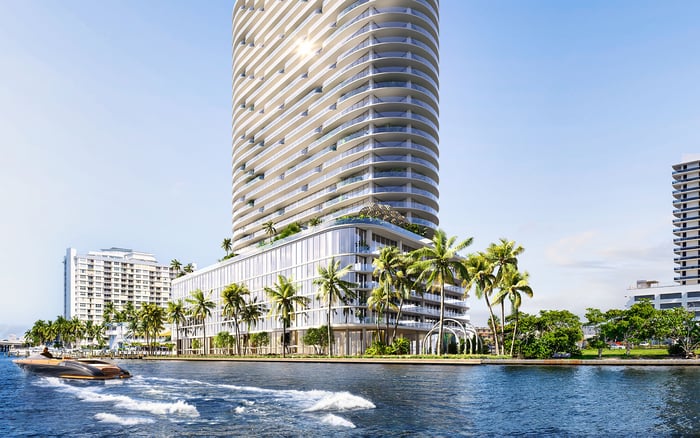
Continuum Club & Residences North Bay Village is a planned 32-story waterfront development at 1755 John F. Kennedy Causeway with approximately 198 residences. Broader plans include additional condominiums, a hotel, a 20-slip marina, and a bayfront promenade. Buyers should distinguish delivery of the residence from the timing, access arrangements, and obligations associated with those surrounding elements.
On Harbor Island, the proposed twin-tower Ritz-Carlton project associated with Related Group and Macklowe Properties calls for 364 residences at 8000 and 7946 East Drive. That proposal belongs in the neighborhood assessment-not in an assumption that the surrounding environment is already settled.
Request a map of adjacent development, then evaluate potential effects on views, privacy, construction exposure, and access. A compelling bay outlook deserves a parcel-by-parcel examination.
A recognized name can sharpen a development’s identity. It does not replace an examination of what the purchaser is contractually entitled to receive.
Pagani North Bay Village is positioned as Pagani Automobili’s first branded residential project globally. For buyers drawn to that distinction, the practical questions concern the residence, specifications, services, and ownership obligations documented in the purchase package.
For any pre-construction purchase, have counsel review deposits, escrow protections, completion provisions, material-change clauses, assignment restrictions, cancellation rights, and remedies. Ask which amenities are included in the residential delivery and which depend on later phases or separate arrangements.
The discipline is straightforward: distinguish a design narrative from an enforceable commitment. Brand affinity can inform a preference, but the agreement should define the purchase and the consequences if delivery differs from expectations.
At Shoma Bay North Bay Village, planned at 1850 JFK Causeway, the proposed residential and retail mix includes an expected 35,000-square-foot Publix. That prospect may appeal to buyers seeking everyday convenience, but it should remain separate from an assessment of currently operating retail.
Apply the same distinction to promenades, marina access, dining, and services elsewhere in the pipeline. Ask whether each benefit is operational, under construction, or proposed, and whether access is included in ownership or governed separately.
Then visit the specific property at the hours you expect to use it. Test peak-hour travel, arrival and departure, deliveries, and the transition from garage to residence. Consider how nearby construction might affect a terrace, work-from-home routine, or seasonal stay. The relevant lifestyle is not simply the one envisioned for the completed neighborhood; it is also the one you will experience during its transition.
North Bay Village has developed a village-wide Stormwater Master Plan addressing infrastructure, current and future drainage conditions, flooding, and water quality. Aging seawalls and stormwater infrastructure also require evaluation and improvement.
Prolonged flooding affects a neighborhood where the existing conveyance system cannot adequately serve drainage needs. That condition should not be generalized to every property, just as a waterfront address alone cannot establish a building’s resilience.
For the residence under consideration, verify flood designation, elevation, garage protection, backup power, and seawall responsibility. Ask whether relevant improvements are completed, funded, or merely proposed. Where a marina is involved, clarify the associated maintenance and financial obligations.
Have qualified advisers assess the property’s exposure to high tides, storm surge, heavy rainfall, and runoff. Regional conditions provide context; they do not substitute for building-specific engineering and insurance review. The objective is to understand both physical protection and the costs that remain with the owner.
A refined ownership experience depends partly on the financial framework supporting it. Model association dues, property taxes, insurance, windstorm deductibles, reserve contributions, service fees, and any seawall or marina obligations together. Ask advisers to stress-test that budget rather than treating the initial estimate as a permanent ceiling.
For an existing condominium, request reserve studies, structural and milestone-inspection documentation, insurance declarations, pending assessments, litigation disclosures, and board minutes. These are diligence requests, not assumptions that any particular property has deficiencies.
Established alternatives include 360 on Harbor Island, Eloquence, Cielo, Lexi, Space 01, and Grandview Palace. They offer another set of ownership options to examine alongside the new-development pipeline. Compare documented condition, financial obligations, layout, and immediate usability rather than allowing age or branding alone to determine the shortlist.
Municipality-wide condominium medians combine buildings of different ages and price tiers. They are not reliable substitutes for branded-luxury comparables, nor do they establish how quickly a particular residence might resell.
Build the comparison around residences with relevant characteristics: building positioning, interior area, elevation, exposure, condition, and ownership costs. Distinguish asking prices from completed transactions, and evaluate whether the evidence supports the premium attached to the specific home.
Before committing, assemble a written decision file covering contractual protections, current amenities, neighboring development, resilience, and the full carrying budget. North Bay Village’s transformation may suit buyers willing to live through change, but the purchase should remain convincing without assuming every surrounding proposal arrives on schedule.
For a considered approach to North Bay Village’s evolving residential landscape, explore the possibilities with MILLION.
If branded residences are on your mind — as a home or as an allocation — we would be glad to share what we are seeing, privately.
Begin a quiet conversationNorth Bay Village is a three-island municipality in Biscayne Bay between Miami and Miami Beach. Redevelopment is concentrated around Harbor Island, Treasure Island, and the Kennedy Causeway corridor.
No. The announced pipeline should not be treated as uniformly completed or operational; verify the status of each residence, amenity, and surrounding phase.
Beyond the residential building, broader plans include additional condominiums, a hotel, a 20-slip marina, and a bayfront promenade. Buyers should evaluate separate phases, access arrangements, and potential construction exposure.
Pagani Residences is positioned as Pagani Automobili’s first branded residential project globally. Buyers should still examine the specifications, services, and obligations documented in the purchase agreement.
No. The expected 35,000-square-foot Publix is a prospective convenience and should be distinguished from currently operating retail.
No. Identified drainage concerns in a particular neighborhood should not be generalized to every property; flood exposure requires property-specific evaluation.
Counsel should review deposits, escrow protections, completion provisions, material changes, assignment restrictions, cancellation rights, and remedies. Buyers should also clarify which amenities depend on later phases.
Request reserve studies, structural and milestone-inspection documentation, insurance declarations, pending assessments, litigation disclosures, and board minutes. These requests do not imply that a particular building has deficiencies.
Include association dues, taxes, insurance, windstorm deductibles, reserve contributions, service fees, and any seawall or marina obligations. Evaluate them together rather than focusing only on the purchase price.
No. Those medians combine different building ages and price tiers, so buyers should use relevant property-level comparisons and completed transactions instead.