For London professionals keeping European hours in Miami, the most consequential home features reveal themselves before sunrise. A buyer-focused guide to time-zone planning, office separation, lighting, bedroom privacy and pre-dawn property checks.
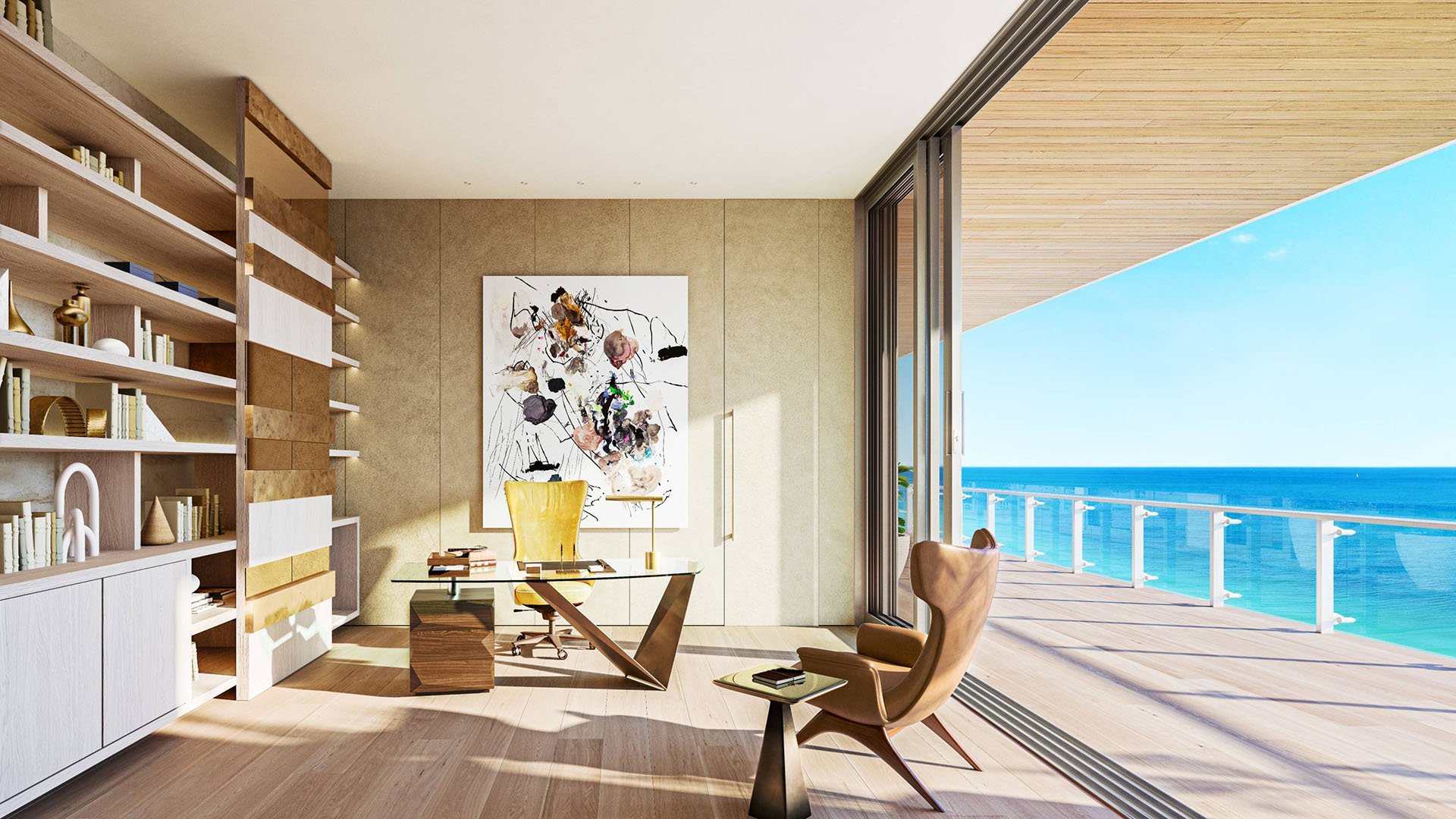
A move from London to Miami can change the setting without changing the working day. If your calendar remains anchored to European colleagues, the defining moment in a prospective home may not be sunset on the terrace. It may be the quiet passage from bedroom to desk while the rest of the household sleeps.
That reverses the usual viewing priorities. Before considering where to entertain, establish where you will take the first call, switch on a light and prepare coffee without disturbing anyone. The most compelling residence has a plan that makes those actions effortless.
The right home should work beautifully before it looks beautiful in daylight. For this buyer, luxury begins with separation, control and a morning routine that does not require the entire household to adopt London hours.
Miami uses Eastern Time: UTC−5 during standard time and UTC−4 during daylight saving time. When London is five hours ahead, a 9:00 a.m. London meeting begins at 4:00 a.m. in Miami. When the difference is four hours, the same meeting begins at 5:00 a.m. Neither conversion is a year-round rule; check the dates against your actual calendar.
Miami's 2026 daylight-saving period begins on March 8 and ends on November 1. In March, clocks advance from 2:00 a.m. to 3:00 a.m.; in November, they return from 2:00 a.m. to 1:00 a.m.
Build your property brief around the earliest recurring commitment, not the average start. Allow for preparation time and calls that occasionally move forward. Then map the route from waking to working. A desk that suits a 9:00 a.m. local start may be poorly positioned for a household still asleep at four.
Treat office separation as a requirement to investigate, not a feature to infer from bedroom count. Ask whether the proposed workspace can be closed off, whether the route to it passes sleeping rooms and whether a video call would be audible elsewhere. A generous room is not automatically a discreet office.
When considering a residence at The Residences at 1428 Brickell, apply those questions to the specific plan. The project name alone does not establish acoustic performance, office suitability or the relationship between the desk and bedroom doors.
Look beyond the room itself. Where would equipment sit? Can documents remain out overnight? Would a partner need to cross the camera background to reach another room? Request dimensions and assess the intended furniture arrangement rather than relying on a staged desk. The goal is a workspace that stays ready without taking over the shared home.
A 4:00-5:00 a.m. start falls well before sunrise in the October and December examples. On October 21, 2026, Miami's sunrise is approximately 7:22 a.m., with sunset around 6:47 p.m. Around the December solstice, sunrise is roughly 7:00 a.m. and sunset around 5:30 p.m., providing about ten and a half hours of daylight.
The practical implication: assess the office first as an artificially lit room. Test task lighting, facial illumination for calls and screen reflections. Then consider how the same position works when daylight arrives. Evaluate waterfront views from the intended desk position, not only from the living room.
If comparing options at The Perigon Miami Beach, request an assessment of the particular residence's orientation and window-treatment possibilities. Do not assume a preferred view guarantees comfortable screen use. Bedroom blackout capability and office light control are separate checks; each deserves attention.
An early start calls for an equally careful discussion about the evening. Decide when shared spaces need to become quieter and whether the bedroom can remain restful while others continue their day. Assess the route between kitchen, living area and sleeping rooms, with doors both open and closed.
For a Coconut Grove search that includes Park Grove Coconut Grove, examine the individual layout in those terms. Ask whether an office could stay separate from evening activity and whether morning preparation could happen without passing through the sleeping area. These are questions for the particular home, not assumptions about the development or neighborhood.
Consider where work ends, too. A separate office can provide a useful boundary, but only if it suits how you live. Imagine closing the door after the final European call and using the rest of the home without screens, paperwork or equipment remaining at its center.
A daytime tour cannot demonstrate a pre-dawn routine. Where access permits, arrange an early-morning visit and walk the route you would actually use. Assess lighting between the bedroom, office, kitchen and any entrance you expect to use before sunrise.
Ask management to confirm applicable access procedures and service hours. If your routine depends on a shared workspace, fitness facility or another common area, establish whether it is available at the required time. Do not assume a service offered during the day is available before dawn.
Connectivity deserves the same specificity. Ask what can be installed in the residence, where equipment would sit and whether a separate backup connection is feasible. Test calls from the intended desk position where possible. Treat redundancy as something to verify and arrange, not an inherent benefit of a luxury address. Record the answers for each property to keep comparisons concrete.
The autumn clock change illustrates why one viewing cannot represent every morning. Miami's sunrise shifts from 7:28 a.m. on October 31, 2026, to 6:29 a.m. on November 1. Sunset moves from 6:39 p.m. to 5:39 p.m. The apparent light schedule changes by approximately an hour overnight.
Before deciding, compare each residence against three moments: the first call in darkness, the arrival of daylight and the household's evening routine. Keep office separation, lighting control, connectivity and access as distinct checks. An exceptional view need not compensate for a compromised working arrangement.
The strongest choice is not necessarily the most dramatic residence. It is the one that accommodates an early professional life without making the entire home feel permanently at work.
Explore a home search shaped around your European working day with MILLION.
If branded residences are on your mind — as a home or as an allocation — we would be glad to share what we are seeing, privately.
Begin a quiet conversationWhen London is five hours ahead, it is 4:00 a.m. in Miami; when it is four hours ahead, it is 5:00 a.m. Check the difference for the specific meeting date.
Miami uses Eastern Time: UTC−5 during standard time and UTC−4 during daylight saving time.
Clocks advance from 2:00 a.m. to 3:00 a.m. on March 8 and return from 2:00 a.m. to 1:00 a.m. on November 1.
Yes, in the October and December examples discussed. Sunrise is approximately 7:22 a.m. on October 21 and around 7:00 a.m. near the December solstice.
Assess a closable workspace, its relationship to bedrooms and a morning route that avoids disturbing sleeping household members.
Evaluate artificial lighting for screens and video calls before sunrise, then consider glare and light control once daylight arrives.
No. Assess the intended desk position, orientation and window-treatment possibilities separately from the appeal of the view.
It allows you to evaluate lighting and access routes under conditions closer to your working routine. Arrange the visit where access permits.
Confirm available installation options, equipment placement and the feasibility of a separate backup connection. Test calls from the intended workspace where possible.
No. Ask management to confirm access procedures and hours for any shared space your early routine would depend on.