A disciplined first-year budget for a multigenerational move from Greenwich to Downtown Miami separates association dues and property taxes from optional services, insurance, furnishing, and relocation, with payment timing as important as annual totals.

For a multigenerational household moving from Greenwich to Downtown Miami, the financial question extends beyond the purchase price. The residence must accommodate different routines, mobility needs, visiting relatives, and perhaps caregivers, while keeping the first year’s cash requirements clear.
Build four separate accounts: recurring carrying costs, usage-based services, one-time furnishing and relocation, and contingency reserves. Then place every payment on a calendar. An annual average helps compare residences; it does not show when insurance premiums, furniture deposits, or tax payments require liquidity.
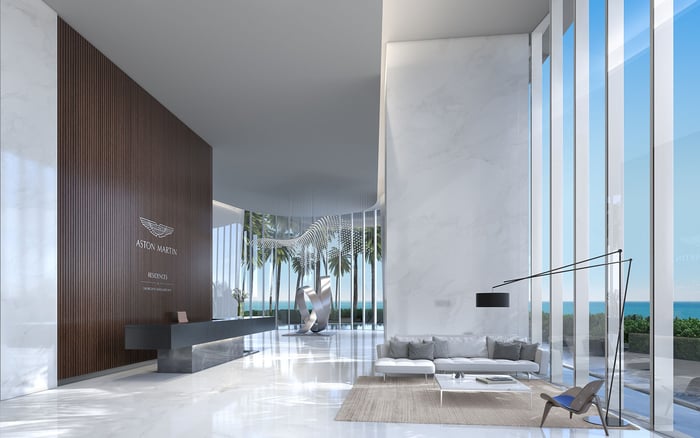
If Aston Martin Residences Downtown Miami is on the shortlist, begin with the question that applies to every candidate: what will this particular unit cost to operate for this household? Neither a project name nor an amenity description answers it.
For a hypothetical budget, consider dues of $0.90-$1.50 per square foot monthly. For an illustrative 2,000-square-foot condominium, that translates to $1,800-$3,000 monthly, or $21,600-$36,000 annually, in association dues alone. These are arithmetic scenarios, not verified market ranges or quotations for any residence mentioned here.
At an alternative assumption of exactly $2 per square foot monthly, the same illustrative footprint would require $4,000 monthly, or $48,000 annually. That figure is not a ceiling. The footprint is an arithmetic example, not a recommendation for a multigenerational family.
For a residence under consideration at One Thousand Museum Downtown Miami, replace these assumptions with the unit’s written assessment schedule. Request the current association budget, financial statements, reserve disclosures, master-insurance declarations, pending-assessment notices, and move-in rules.
Keep ordinary dues and special assessments on separate budget lines. Confirm what the dues include before adding allowances, so the model neither overlooks an obligation nor counts an expense twice.
Access to an amenity does not confirm that every associated service is included. Request written pricing and inclusion lists for valet, parking, storage, housekeeping, transportation, dining, wellness, and in-residence maintenance.
When considering Waldorf Astoria Residences Downtown Miami, use that checklist to establish what is included, what is optional, and what requires a separate arrangement. Do not assume any particular offering, availability, or price without written confirmation.
Translate household preferences into quantities before assigning dollars: vehicles requiring parking, housekeeping visits, transportation needs, and anticipated guest stays. Multiply those quantities by confirmed prices and record retainers separately. The resulting service budget should reflect how the family intends to live, not the breadth of an amenity presentation.
Miami-Dade’s ad valorem calculation is taxable value multiplied by the applicable millage rate, divided by 1,000. The actual burden depends on assessed value, applicable exemptions, and the rates imposed by county, municipal, school, and other relevant taxing authorities.
Do not carry the seller’s tax bill into the household budget unchanged. A sale can trigger reassessment, and the seller’s assessment limitation may no longer apply in the following year. Obtain a post-sale estimate for the actual unit and update it with final adopted rates. Keep the annual estimate distinct from the payments falling within the first twelve months of ownership.
For a qualifying permanent residence, confirm homestead-exemption eligibility, the applicable exemption amounts, and the filing deadline. Distinguish any assessed-value limitation from the total tax bill rather than assuming both will change at the same rate.
HO-6 condominium-owner policies generally cover building property, personal property, personal liability, and loss of use, subject to policy terms. They generally exclude flooding, so separate flood coverage must be purchased if desired or required.
Compare the proposed unit-owner policy with the association’s master policy before selecting coverage. Review responsibility for interior improvements, valuables, flood exposure, wind or hurricane deductibles, and loss of use. For a multigenerational household, ask how the proposed coverage would respond to temporary displacement of the intended occupants.
Use written premiums rather than a generic allowance. Record the actual premium-payment schedule and keep cash available for deductibles separate from the premium itself. Reconcile association and personal coverage; do not treat them as interchangeable.
Treat furnishing as an acquisition-and-installation project, separate from carrying costs. The schedule should cover furniture, accessible pieces, window treatments, lighting, technology, delivery, storage, and installation.
For a prospective home at Casa Bella by B&B Italia Downtown Miami, confirm contractual inclusions before commissioning additional pieces. A project’s identity is no substitute for a written inventory of what the selected residence includes.
Prioritize the rooms and equipment needed from the first night, then stage discretionary purchases. Before authorizing large pieces or delivery dates, confirm accessible routes, elevator dimensions, move-in procedures, and storage arrangements. Obtain a separate Greenwich-to-Miami moving quotation rather than folding relocation into the furniture allowance.
Also confirm caregiver registration, guest policies, parking arrangements, and emergency-power provisions. These details belong in the selection decision, not merely the move-in checklist.
Give each budget line four fields: confirmed amount, due date, payment frequency, and responsible party. Mark unpriced items as awaiting quotation rather than entering zero. For contingency reserves, distinguish cash set aside from money actually spent.
Before committing, reconcile association documents, service pricing, insurance quotations, the post-sale tax estimate, and furnishing contracts. Then sequence move-in charges, deposits, installation balances, recurring dues, service retainers, premiums, and tax payments or escrow. Update the calendar as dates become contractual.
This framework does not establish an all-in first-year total. Closing costs, financing costs, income-tax effects, and origin-home disposition costs fall outside its scope and require separate treatment. The objective is a residence whose daily operations suit every generation, supported by a cash plan that makes those arrangements sustainable.
For a considered approach to your Downtown Miami residence search, explore MILLION.
If branded residences are on your mind — as a home or as an allocation — we would be glad to share what we are seeing, privately.
Begin a quiet conversationUse the selected unit’s written assessment schedule and confirm what the dues include. The article’s per-square-foot examples are hypothetical calculations, not verified market ranges or building-specific quotes.
At an assumed $0.90–$1.50 per square foot monthly, dues would be $1,800–$3,000 monthly, or $21,600–$36,000 annually. At exactly $2 per square foot monthly, annual dues would be $48,000.
Do not assume amenity access includes associated services. Obtain written inclusions and pricing for parking, valet, housekeeping, transportation, dining, wellness, storage, and maintenance.
Multiply taxable value by the applicable millage rate and divide by 1,000. Final liability depends on the property’s assessed value, applicable exemptions, and relevant taxing authorities’ rates.
Obtain a post-sale estimate for the actual unit and update it with final adopted rates for the relevant taxing authorities. Keep the annual estimate separate from payments due during the first twelve months of ownership.
Not unchanged: a sale can trigger reassessment, and the seller’s assessment limitation may no longer apply in the following year. Obtain a post-sale estimate for the intended unit.
Confirm eligibility, applicable exemption amounts, and the filing deadline for the intended permanent residence. An assessed-value limitation should not be treated as a cap on the total tax bill.
HO-6 policies generally exclude flooding, so separate flood coverage is needed if desired or required. Review the unit-owner policy alongside the association’s master coverage.
Include furniture, accessible pieces, window treatments, lighting, technology, delivery, storage, and installation. Obtain a separate moving quotation and schedule deposits and balances by actual payment date.
No, unit-specific dues, insurance, services, furnishing, and relocation must be priced before a total can be established. Closing costs, financing costs, income-tax effects, and origin-home disposition costs are outside the framework’s scope.