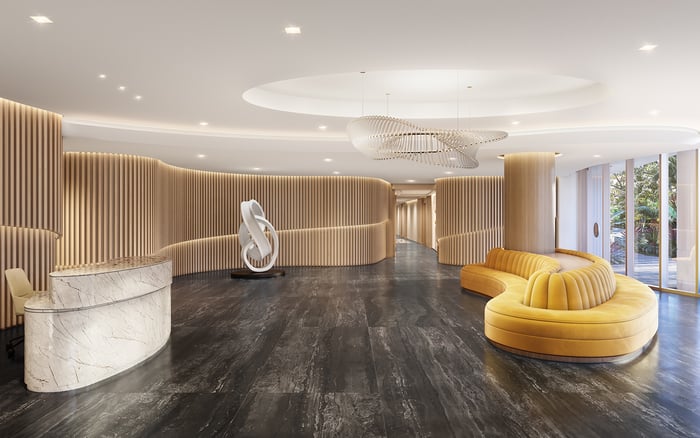
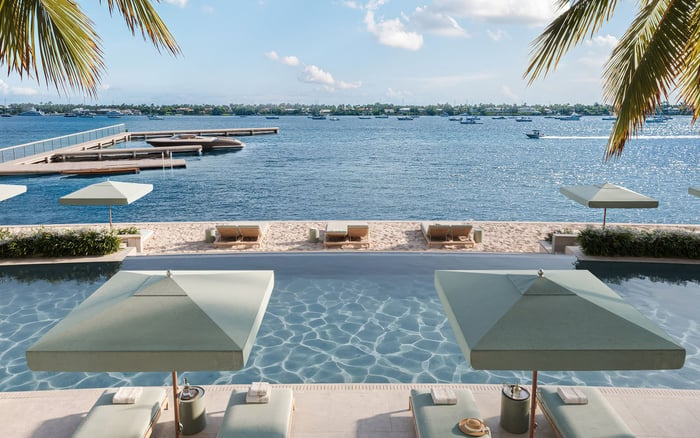
A discreet buyer’s guide to choosing between Miami Design District and West Palm Beach through the lens of lower operational friction, from daily logistics and building governance to privacy, service expectations, capital planning, and long-term ownership ease.
For seasoned South Florida buyers, the decision between the Miami Design District and West Palm Beach is rarely only a matter of taste. Both can satisfy a desire for architecture, access, restaurants, art, privacy, and a polished residential rhythm. The more revealing question is quieter: which address will require less operational energy after closing?
Lower operational friction is the luxury of fewer unresolved details. It is the ability to arrive without choreography, host without improvisation, maintain a residence without constant oversight, and move through the week without the building, neighborhood, or household staff becoming a second job. In this sense, the most elegant purchase is not always the most dramatic one. It is the one that disappears into the owner’s life.
That is where the comparison becomes useful. Miami Design District can appeal to buyers who want an intensely curated urban environment, close to design, fashion, dining, and cultural energy. West Palm Beach can appeal to buyers who place a premium on a more measured residential routine, with a different cadence of arrivals, appointments, and social life. Neither is universally easier. The lower-friction choice is the one that best matches how the residence will actually be used.
Before comparing floor plans, begin with a seven-day calendar. How often will the residence be occupied? Who arrives first: the owner, family, staff, guests, or service providers? Are mornings quiet, gym-driven, school-driven, office-driven, or travel-driven? Does the owner host dinners frequently, or is the home primarily a retreat?
A buyer considering the Design District should weigh the benefits of a compact, design-forward lifestyle against the practical demands of an active urban setting. A project such as Kempinski Residences Miami Design District may be compelling for the buyer who wants the residential experience to sit close to Miami’s creative and hospitality energy. The question is not whether that energy is desirable. It is whether it reduces friction or adds it for a specific household.
In West Palm Beach, the same test applies differently. A residence such as Alba West Palm Beach may fit a buyer who wants a polished base in a city with a distinct social tempo from Miami. The practical inquiry is whether the neighborhood rhythm supports everyday needs without requiring constant adjustments to appointments, parking, dining plans, or guest movement.
Operational friction often begins inside the building. The most beautiful lobby is of limited value if package management is inconsistent, elevator policies are unclear, staffing feels thin, or service access is awkward. Buyers should study rules and management culture with the same attention they give to ceiling heights and terrace depth.
The issue is especially important for part-time owners. If a residence will be locked for weeks at a time, the building’s procedures become a proxy for the owner’s presence. Access for vendors, inspection routines, security protocol, guest approvals, deliveries, and insurance documentation all matter. A lower-friction building does not simply offer service. It offers predictable service.
New construction can be attractive because it may present a cleaner starting point for systems, finishes, amenity programming, and resident expectations. Yet newness alone does not guarantee ease. Buyers should ask how the association will function, how staffing will be scaled, how move-ins are sequenced, and how the developer’s vision transitions into daily governance after residents arrive.
The Design District buyer often wants proximity to culture without defaulting to a conventional resort experience. The appeal lies in a more composed urban luxury, where design, restaurants, retail, and architecture form part of the daily backdrop. For the right owner, this can reduce friction because the desired lifestyle is close at hand.
The tradeoff is that urban convenience rewards intentional planning. Arrival sequences, valet flow, guest logistics, pet routines, storage, and service access should be inspected carefully. Buyers should visit at different times of day, not to judge popularity, but to understand how the area breathes when the owner is most likely to use it.
For those who want a nearby Miami base with a broader Midtown orientation, Miami Design Residences Midtown Miami may enter the conversation as part of a wider lifestyle map. The core test remains the same: does the location make the owner’s preferred week simpler, or does it make every desirable moment dependent on timing?
Design District ownership can be especially persuasive for buyers who value immediacy. If the home is used for dinners, gallery evenings, short stays, creative meetings, and high-touch entertaining, proximity may outweigh the desire for quiet separation. If the home is intended as a decompression chamber, the buyer should be more exacting about acoustic performance, private arrival, and the building’s ability to buffer the surrounding energy.
West Palm Beach asks a different set of questions. It is not simply the quieter alternative, and it should not be treated as a generic retreat. The best purchase depends on how close the owner wants to be to dining, the waterfront, private clubs, cultural programming, daily services, and regional travel patterns.
A project such as Forté on Flagler West Palm Beach may appeal to buyers studying the relationship between residence, view orientation, and a more composed daily routine. Another buyer may prefer the hospitality cues associated with Mr. C Residences West Palm Beach, particularly if the ownership experience is expected to feel turnkey and socially connected.
The key is not to assume that calmer automatically means easier. A residence can be serene but inconvenient if the owner’s week depends on frequent cross-county movement, recurring Miami commitments, or a household team that operates more efficiently in another market. West Palm Beach can lower friction when the buyer’s preferred social, medical, club, office, dining, and travel patterns are already aligned with that geography.
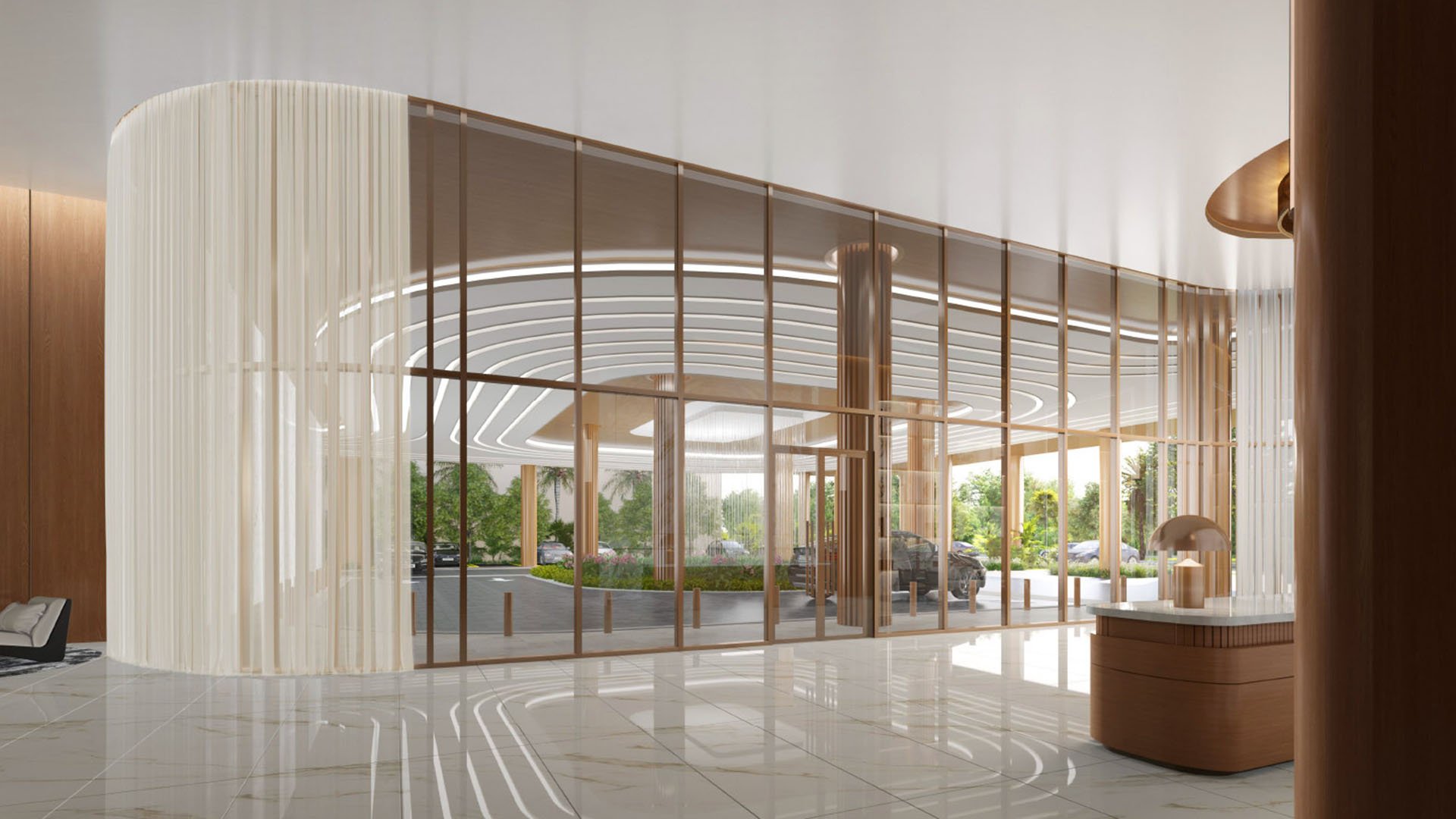
First, test arrivals. A luxury residence should make the first five minutes feel effortless. Study the transition from street to lobby to elevator to residence, including valet, self-parking, ride-share, guest drop-off, and service entry.
Second, test service. Ask how vendors are approved, how deliveries are handled, when work may occur, and how the building communicates with absent owners. A beautifully staffed building can still feel difficult if procedures are opaque.
Third, test privacy. Privacy is not only distance from other people. It is control over sightlines, sound, circulation, and information. A high-profile address may still be low friction if privacy has been designed into the arrival and residential sequence.
Fourth, test maintenance. Consider finishes, glazing, terrace exposure, mechanical access, storage, and ease of replacement. The lower-friction home is not necessarily the simplest one. It is the one whose complexity is well managed.
Fifth, test your investment horizon. If the residence may become a long-term hold, a family base, or a future resale, operational quality becomes part of value. Buyers remember the view, but owners live with the systems.
The Miami Design District and West Palm Beach answer different emotional desires, but the lower-friction decision is practical. Choose the Design District when proximity to Miami’s design and cultural current actively simplifies life. Choose West Palm Beach when its rhythm, access, and residential calm better match the way the household already functions.
Lifestyle is not an abstract word at this level. It is the sum of small efficiencies repeated every week. The right residence should feel like infrastructure for a more graceful life, not an object that demands constant management.
Is Miami Design District lower friction than West Palm Beach? It can be for buyers who want immediate access to Miami’s design, dining, and cultural rhythm. It may be less ideal for those seeking a quieter residential cadence.
Is West Palm Beach always calmer for luxury buyers? Not always. It can feel calmer, but ease depends on the owner’s travel, social, service, and family patterns.
What is operational friction in real estate? It is the daily effort required to use, maintain, access, and enjoy a residence. Lower friction means fewer recurring obstacles.
Should I prioritize location or building services? Prioritize the combination. A strong location can be undermined by weak operations, while excellent services can make a busier address feel seamless.
Does new construction reduce ownership friction? It can, particularly when systems and amenities are thoughtfully planned. Buyers should still study governance, staffing, and service procedures.
Which area is better for a part-time residence? The better choice is the one with building operations that support absence well. Vendor access, security, and communication are central.
How should privacy factor into the decision? Privacy should be evaluated through arrival, elevator access, sightlines, acoustics, and staff discretion. It is an operational feature, not just a feeling.
Can a highly active neighborhood still be low friction? Yes, if the owner values that activity and the building buffers daily logistics well. Convenience can be a form of calm.
What should I ask before signing a contract? Ask about staffing, association rules, delivery procedures, guest access, parking, service elevators, maintenance protocols, and move-in coordination.
Which market is better for lifestyle and investment alignment? The stronger choice is the one that fits both current use and long-term ownership goals. Personal rhythm should lead the analysis.
For a confidential assessment and a building-by-building shortlist, connect with MILLION.
If branded residences are on your mind — as a home or as an allocation — we would be glad to share what we are seeing, privately.
Begin a quiet conversation