Miami Beach and Palm Beach share Florida’s homestead framework, but a buyer’s residency, portability eligibility and post-purchase assessment shape the tax outcome. A disciplined comparison separates those benefits from municipal levies and the broader cost of ownership.
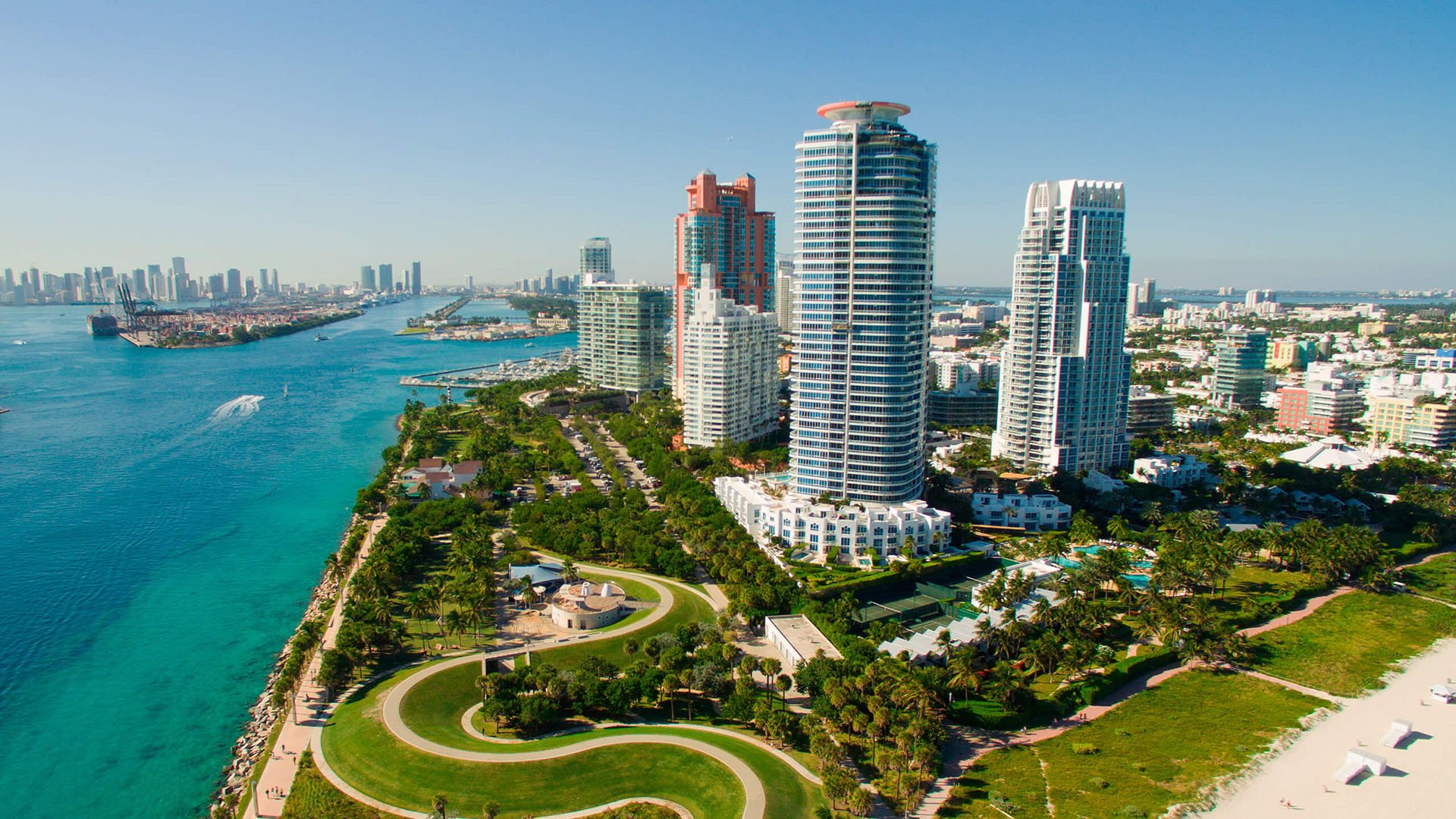
For a luxury buyer choosing between Miami Beach and Palm Beach, property-tax planning begins with a personal question: will this residence become a permanent home or remain part of a broader collection of properties? Both destinations operate under Florida’s statewide homestead framework. Neither offers eligibility simply because a buyer prefers its address.
The meaningful comparison is not a headline tax rate. It is the interaction of intended use, the property’s post-purchase assessment, the buyer’s accumulated Florida homestead protection and the full ownership budget. A seller’s tax bill is history, not a forecast of the buyer’s obligations.
There is no sound basis here to declare either destination the lower-tax choice. Buyers should request property-specific estimates using consistent assumptions, then decide whether the resulting annual commitment suits how they intend to live.
Homestead exemption reduces taxable value. It does not reduce the annual tax bill dollar-for-dollar by the exemption amount. That distinction matters when weighing benefits alongside a multimillion-dollar acquisition.
The first $25,000 of exemption applies to all property-tax levies, including school district taxes. The additional tier applies only to non-school levies. For 2026, the maximum homestead exemption is $51,411 for properties eligible for the full benefit, reflecting the inflation adjustment of the second tier. It should not be described as $51,411 in annual savings or applied uniformly across every levy.
For a buyer considering Five Park Miami Beach, the practical question is not whether the project itself confers a special homestead advantage. It is whether the purchaser and residence satisfy the applicable requirements. The same discipline applies to a Palm Beach purchase.
Keep three concepts separate: the property’s just value, its assessed value and its taxable value. Homestead exemptions and assessment protections act at different stages; the applicable levies then determine the tax burden.
A property used solely as a second home or investment does not qualify for the permanent-residence homestead exemption. Buyers planning seasonal use should build their base budget without assuming that benefit. A possible future change in residency is a planning scenario, not an established entitlement.
For Palm Beach buyers, ownership and occupancy as a permanent residence are assessed as of January 1. The regular exemption filing deadline is March 1 of the year for which qualification is sought. Closing, occupancy and filing should be coordinated, not treated as interchangeable dates.
When evaluating Palm Beach Residences, buyers should separate the residence’s appeal from the timing of personal eligibility. Acquiring a property does not, by itself, settle the homestead question.
In either destination, confirm the relevant qualification year before budgeting for any exemption. Permanent-residence status is the foundation of the strategy, not an administrative detail to resolve after the purchase.
Property generally resets to just value on January 1 after a change of ownership, with eligible portability potentially reducing the new assessment. A listing’s existing tax figure should therefore not anchor the buyer’s long-term budget.
An owner’s historical assessment protection can make the existing bill materially different from what a purchaser should expect. The buyer needs an estimate reflecting the ownership change, applicable exemptions and any separately verified portability benefit.
Save Our Homes generally limits annual growth in a homesteaded property’s assessed value to 3% or the previous year’s CPI, whichever is lower. This limits assessment growth; it does not guarantee that the total tax bill will rise by no more than that percentage.
For a residence at The Perigon Miami Beach, as for any candidate property, request a buyer-specific assessment estimate rather than extrapolating from another owner’s circumstances. The objective is a defensible forward budget, not the most attractive historical number.
Portability can move an eligible Save Our Homes assessment benefit between Florida counties. That makes it relevant to a move between Miami Beach and Palm Beach, but the benefit derives from the qualifying buyer’s history. The seller’s eligibility is not the asset being transferred.
What moves is the difference between the prior homestead’s just value and its capped assessed value, subject to the portability rules. The maximum transferable benefit is $500,000. That ceiling is an assessment reduction, not $500,000 in annual tax savings. Nor is it a transfer of the prior property’s tax bill or exemption.
Eligibility uses a three-tax-year window tied to the prior homestead. Applications generally must be submitted by March 1 of the year for which the benefit is requested. Buyers should establish the qualifying dates and transferable amount before relying on either.
The buyer’s file should include prior Florida homestead information, the relevant assessment figures and confirmation of the benefit available for the intended purchase. Do not assume every qualifying move receives the maximum.
Miami Beach adopted an FY 2026 city operating millage of 5.8702 mills. That figure represents only the city operating levy, not the property’s complete combined tax rate. Using it alone would understate the scope of the tax calculation.
Homestead eligibility in Palm Beach County does not establish the Town of Palm Beach’s municipal rate. Keep the county, the town and each property’s applicable taxing jurisdictions distinct. West Palm Beach should not be substituted for the Town of Palm Beach in a comparison.
Request a complete property-specific estimate in each location, using the same eligibility assumptions and clearly identified tax periods. Proposed future tax changes should remain outside the current budget unless implementation is confirmed.
Tax planning is only one part of annual carry. Insurance, association dues where applicable, maintenance, utilities and special assessments each require property-specific review. Homestead rules alone cannot establish an overall cost winner.
Before committing, organize the comparison around four requests:
A post-purchase tax estimate that does not rely on the seller’s bill.
Confirmation of permanent-residence eligibility and filing dates.
Verification of the buyer’s own portability amount and qualifying window.
Current ownership-cost documents and insurance quotations for each residence.
The stronger choice is the property whose verified obligations align with the buyer’s residency plan, holding horizon and preferred lifestyle. Miami Beach and Palm Beach share the legal framework; the individual purchase determines how that framework translates into annual carry.
For a considered approach to your South Florida residential search, explore MILLION.
If branded residences are on your mind — as a home or as an allocation — we would be glad to share what we are seeing, privately.
Begin a quiet conversationBoth operate under Florida’s statewide homestead framework. Eligibility depends on permanent-residence status and applicable requirements, not the city selected.
No. It reduces taxable value, with the first $25,000 applying to all levies and the additional tier applying only to non-school levies.
The 2026 maximum is $51,411 for properties eligible for the full benefit. That amount is a taxable-value reduction, not annual tax savings.
No. A property used solely as a second home or investment does not qualify for the permanent-residence homestead exemption.
Ownership and occupancy as a permanent residence are assessed as of January 1. The regular filing deadline is March 1 of the year for which qualification is sought.
It generally limits annual growth in a homesteaded property’s assessed value to 3% or the previous year’s CPI, whichever is lower. It does not impose the same cap on the total tax bill.
Yes, an eligible Save Our Homes assessment benefit can transfer between Florida counties. The maximum transferable benefit is $500,000, subject to applicable rules.
Portability uses a three-tax-year eligibility window tied to the prior homestead. Applications generally must be submitted by March 1 of the year for which the benefit is requested.
Not reliably. Property generally resets to just value on January 1 after an ownership change, with the buyer’s eligible portability potentially reducing the new assessment.
No. That FY 2026 figure covers only Miami Beach’s city operating levy, so a valid comparison requires complete property-specific tax estimates and separate review of other ownership costs.