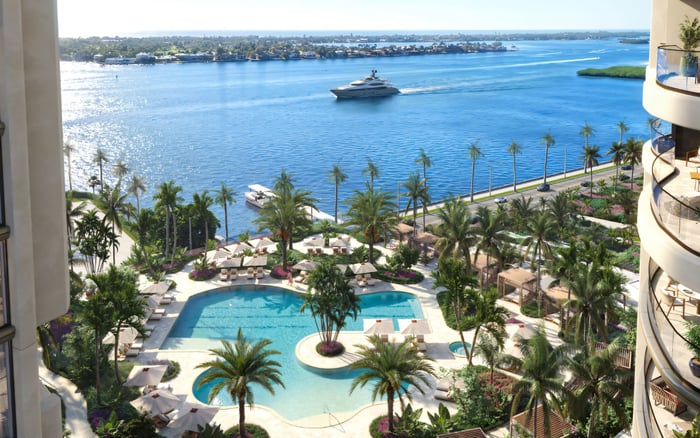
A location-fit review of Palm Beach Residences should connect daily routines, privacy expectations, water orientation, access, coastal diligence, and future resale positioning without relying on broad market assumptions.

A location review of Palm Beach Residences should begin with the household’s actual routine. Architecture, interiors, and services matter, but they do not replace a clear understanding of how the setting will affect arrivals, departures, privacy, recreation, and time spent at home.
Buyers should assess the residence and its surroundings together. The most useful questions are practical: Which destinations matter most? How often will the owner travel off-site? Which outlook is preferred? What degree of separation feels comfortable rather than inconvenient?
This approach keeps the analysis property-specific. It also prevents a broad impression of Palm Beach from substituting for direct diligence on the residence under consideration.
Privacy should be tested rather than assumed from a location name. Buyers can examine arrival sequences, shared circulation, visibility from neighboring properties, landscaping, terrace exposure, window placement, and the relationship between principal rooms and surrounding activity.
The same review should consider how privacy changes throughout the day. A residence may feel secluded from one room or terrace while remaining more exposed from another. In-person visits at relevant times can help reveal conditions that plans and marketing images may not show.
A comparison with Forté on Flagler West Palm Beach and South Flagler House West Palm Beach can help buyers clarify which location pattern and degree of separation best suit the household. The purpose is not to declare one setting superior, but to identify the better personal fit.
Water orientation should be evaluated from the residence itself. Buyers should verify the direction, breadth, and consistency of any view from principal rooms and outdoor areas rather than relying on a general description of the property.
Light, terrace depth, window placement, landscaping, setbacks, and nearby structures can all affect how an outlook is experienced. Reviewing sightlines from seated and standing positions can provide a more realistic understanding of daily use.
Water proximity should also be separated from water access. Beach routes, docks, marinas, and other access points should be confirmed for the specific property when they are important to the purchase decision. No amenity or access right should be inferred from proximity alone.
A coastal purchase warrants focused property-level review. Buyers can request available documentation concerning the site, shoreline conditions, building operations, insurance, maintenance responsibilities, and any work that could affect access or enjoyment. Appropriate legal, insurance, engineering, and inspection professionals can help interpret relevant records.
View diligence should include current conditions and potential sources of change. The review may consider neighboring sites, landscaping, building elements, and other physical conditions that could affect sightlines. Any conclusion about view protection should be based on verified property information.
For another water-oriented comparison, buyers may consider The Ritz-Carlton Residences® West Palm Beach. Comparing multiple residences can help distinguish a preferred outlook from a broader preference for being near the water.
Location fit becomes clearer when buyers map recurring trips. The analysis should include preferred dining, recreation, appointments, transportation connections, and any other destinations that shape ordinary use.
Routes should be tested at times relevant to the household. A second-home owner may prioritize a different pattern from a full-time resident, while a boating-focused buyer may weigh access differently from someone whose routine centers on dining or quiet time at home.
The goal is not to maximize proximity to every destination. It is to understand which trade-offs support the intended lifestyle and which could become persistent friction.
Exit appeal should be evaluated without unsupported forecasts. A buyer can instead focus on attributes that are understandable and verifiable, including access, privacy, outlook, outdoor usability, condition, and the clarity of the residence’s overall proposition.
Property-specific differences matter. Two residences associated with the same broader location can present different sightlines, arrival experiences, exposures, and maintenance considerations. Separating durable attributes from changeable conditions can support a more disciplined purchase decision.
The strongest ownership case is one in which present-day fit is clear and future buyers can readily understand the residence’s advantages. That does not guarantee a resale outcome, but it creates a more coherent basis for evaluating long-term optionality.
What is the first location-fit question for Palm Beach Residences? Start by asking whether the setting supports the household’s actual daily and seasonal routines.
Should privacy be assumed from the Palm Beach location? No. Review arrival, circulation, neighboring visibility, landscaping, windows, and terraces at the property level.
How should buyers evaluate a water view? Inspect it from principal rooms and outdoor spaces, including from both seated and standing positions.
Does water proximity confirm water access? No. Any beach route, dock, marina, or other access arrangement should be verified for the specific property.
What should coastal diligence cover? Review available site, shoreline, insurance, maintenance, inspection, and building records with appropriate professionals.
How can buyers assess daily convenience? Map recurring destinations and test important routes at the times the household expects to use them.
Why compare Palm Beach and West Palm Beach projects? A comparison can clarify which access pattern, outlook, and degree of separation best match the buyer’s preferences.
What factors can affect the experience of a view? Window placement, terrace depth, landscaping, setbacks, nearby structures, and light can influence how an outlook is experienced.
How should exit appeal be evaluated? Focus on verifiable and understandable attributes rather than relying on unsupported market predictions.
Can location fit guarantee a resale result? No. A clear location proposition can support thoughtful decision-making, but it cannot guarantee a future outcome.
For a discreet conversation and a curated building-by-building shortlist, connect with MILLION.
If branded residences are on your mind — as a home or as an allocation — we would be glad to share what we are seeing, privately.
Begin a quiet conversation