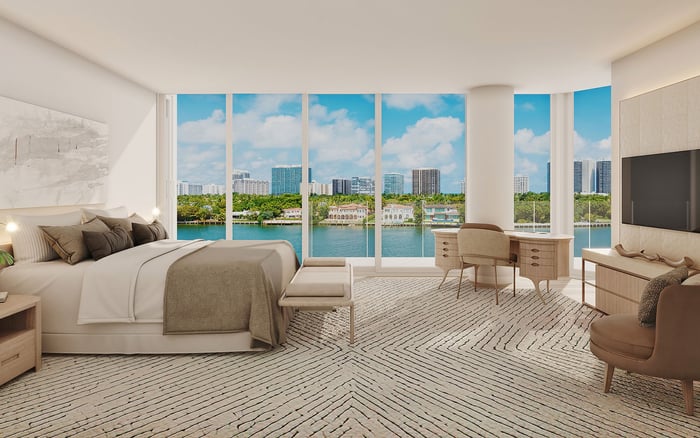
La Maré Bay Harbor Islands may serve as a luxury residential base for aging in place, but buyers should independently verify emergency access, accessibility, staffing boundaries, backup systems, and options for privately arranged care.

For buyers considering La Maré Bay Harbor Islands as a long-term South Florida home, aging in place requires more than selecting a desirable residence. The decision should account for emergency access, mobility, daily assistance, building operations, and the boundaries between residential hospitality and healthcare.
A luxury building may provide personnel who manage arrivals, deliveries, visitors, or resident requests. Those functions should not be interpreted as medical care unless the governing documents and service agreements expressly say so. Buyers should ask what staff can do during an emergency, what they are trained to do, and where their responsibilities end.
The practical objective is to determine whether the selected residence, the building’s documented procedures, and independently arranged support can operate as a dependable system.
Aging in place works best when residential convenience and care responsibilities are clearly separated.
Floor-plan suitability should be tested rather than assumed. A buyer or qualified adviser should measure doors, halls, elevator interiors, thresholds, bathroom clearances, shower entries, bedside space, and the full route from vehicle arrival to the residence. A plan that feels generous during a tour may still present obstacles for a wheelchair, walker, stretcher, or caregiver.
Flexible rooms can be valuable if a household later needs a live-in caregiver, a private recovery area, or space for remote medical consultations. Buyers should verify whether the layout supports those uses without compromising privacy or circulation. They should also review association rules before assuming that grab bars, accessible showers, altered cabinetry, widened openings, or other modifications will be permitted.
Comparative tours can sharpen this review. Alana Bay Harbor Islands offers another local point of reference for examining layouts, common-area routes, staffing practices, and alteration rules. The comparison should focus on written details rather than broad luxury positioning.
Terms such as concierge, doorman, front desk, hospitality, and resident services can describe different duties. Buyers should request a written explanation of staffing coverage and emergency procedures. Important questions include how first responders enter, how staff handle an unresponsive resident, whether emergency contacts are maintained, and who can authorize access when a resident cannot reach the door.
Building personnel may help facilitate entry, but buyers should not assume they provide clinical assessment, medication management, patient monitoring, or healthcare coordination. Any expected service should be confirmed in current documents rather than inferred from a title or marketing phrase.
The same diligence can be applied while touring Onda Bay Harbor. Comparing documented procedures across nearby properties may reveal meaningful differences in access control, recurring-provider entry, after-hours coverage, and communication protocols.
Emergency planning should follow the entire route responders would use. Confirm the correct entrance, gate or lobby procedure, elevator access, unit identification, and any steps needed to reach the resident. Ask management how these procedures operate after hours and during disruptions.
Buyers should also request current information about backup power and the systems it supports. Relevant items may include elevators, lighting, access controls, communications, and other common infrastructure. The existence of a generator alone does not establish which systems remain available or for how long.
A household emergency plan should identify who calls emergency services, who meets responders, who contacts family, and how essential information can be accessed. Medication lists, allergies, physicians, emergency contacts, and advance instructions should be kept current and stored in a location known to the appropriate people.
Aging-in-place support may involve primary physicians, specialists, house-call clinicians, home-health providers, personal-care aides, transportation assistance, meal support, or live-in caregivers. Availability, licensing, service areas, minimum schedules, costs, and response expectations should be confirmed directly with each provider.
Urgent care, house-call medicine, home care, and emergency medical services perform different functions. A buyer should define which resource is appropriate for routine needs, non-life-threatening concerns, daily assistance, and emergencies. Life-threatening situations require emergency services rather than reliance on a residential staff member or routine appointment.
The household should also decide who coordinates appointments, holds access credentials, receives updates, and provides backup when the primary caregiver is unavailable. Building management should confirm rules affecting recurring providers, overnight caregivers, parking, deliveries, identification, and access permissions.
South Florida residential marketing may use wellness and concierge terminology in different ways. A wellness amenity does not necessarily provide medical care, and a concierge service does not necessarily coordinate healthcare. Buyers should review contracts, association materials, and provider agreements to determine exactly what is included.
A comparison with The Well Bay Harbor Islands may help buyers distinguish among residential amenities, wellness positioning, hospitality services, and formal care arrangements. Each project should be assessed on its own written program; one building’s offering should never be attributed to another.
Begin with a physical inspection focused on mobility and access. Then examine association rules, staffing responsibilities, emergency-entry procedures, backup systems, and communication plans. Finally, map the private providers and family members who would support the resident as needs change.
Legal, medical, accessibility, and insurance professionals may each identify issues outside a standard property tour. Their review can help a buyer understand modification approvals, care arrangements, emergency instructions, and financial responsibilities before committing to a residence.
La Maré may be considered as one component of a broader aging-in-place strategy, not as a substitute for that strategy. The strongest plan will align the residence, documented building procedures, private care arrangements, and family responsibilities before they are needed.
For discreet guidance on evaluating South Florida residences for long-term living, connect with MILLION.
If branded residences are on your mind — as a home or as an allocation — we would be glad to share what we are seeing, privately.
Begin a quiet conversationNo. Buyers should rely only on written descriptions of staff duties and independently confirm any medical or emergency responsibilities.
Ask how responders enter, reach the residence, use elevators, and gain access if the resident cannot answer the door.
Inspect doors, thresholds, halls, elevators, bathrooms, shower entries, bedside clearances, and the route from arrival to the residence.
It may be suitable, but buyers should verify dimensions, privacy, circulation, and association rules before relying on that use.
Yes. Request current documentation identifying which building systems receive backup power and how outage procedures operate.
No. Urgent care serves different needs, while life-threatening situations require emergency services.
Depending on individual needs, a plan may involve clinicians, home-care providers, personal aides, transportation, meal support, or caregivers.
Rules may address alterations, recurring service providers, overnight caregivers, parking, deliveries, insurance, and access credentials.
Review the specific written services rather than assuming that wellness or concierge language includes healthcare.
Buyers should determine whether the residence, building procedures, private support, and family plan can work together as needs change.