At a standalone branded residence, low projected dues are not automatically a virtue. Kempinski’s extensive amenities and hospitality model make budget adequacy, reserves and service funding more important than headline HOA comparisons.
For buyers considering Kempinski Residences Miami Design District, the most revealing figure may not be the purchase price. It may be the monthly assessment-and, more precisely, what that assessment is expected to fund.
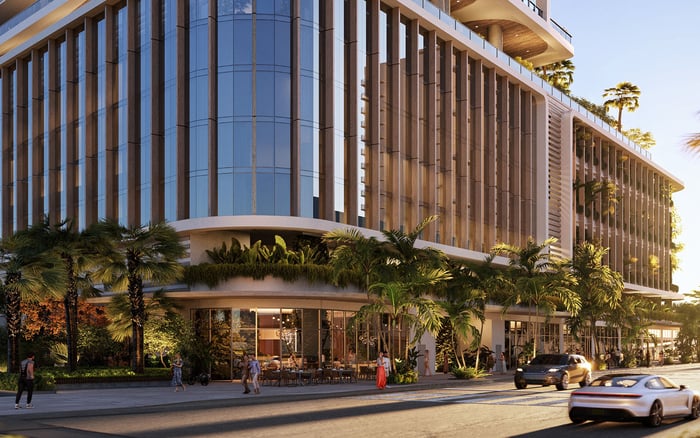
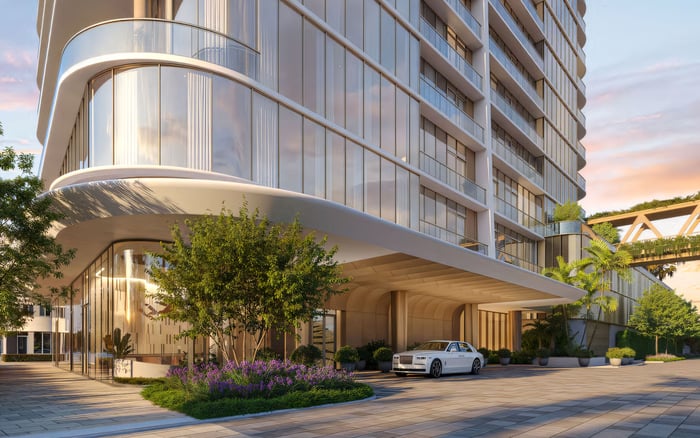
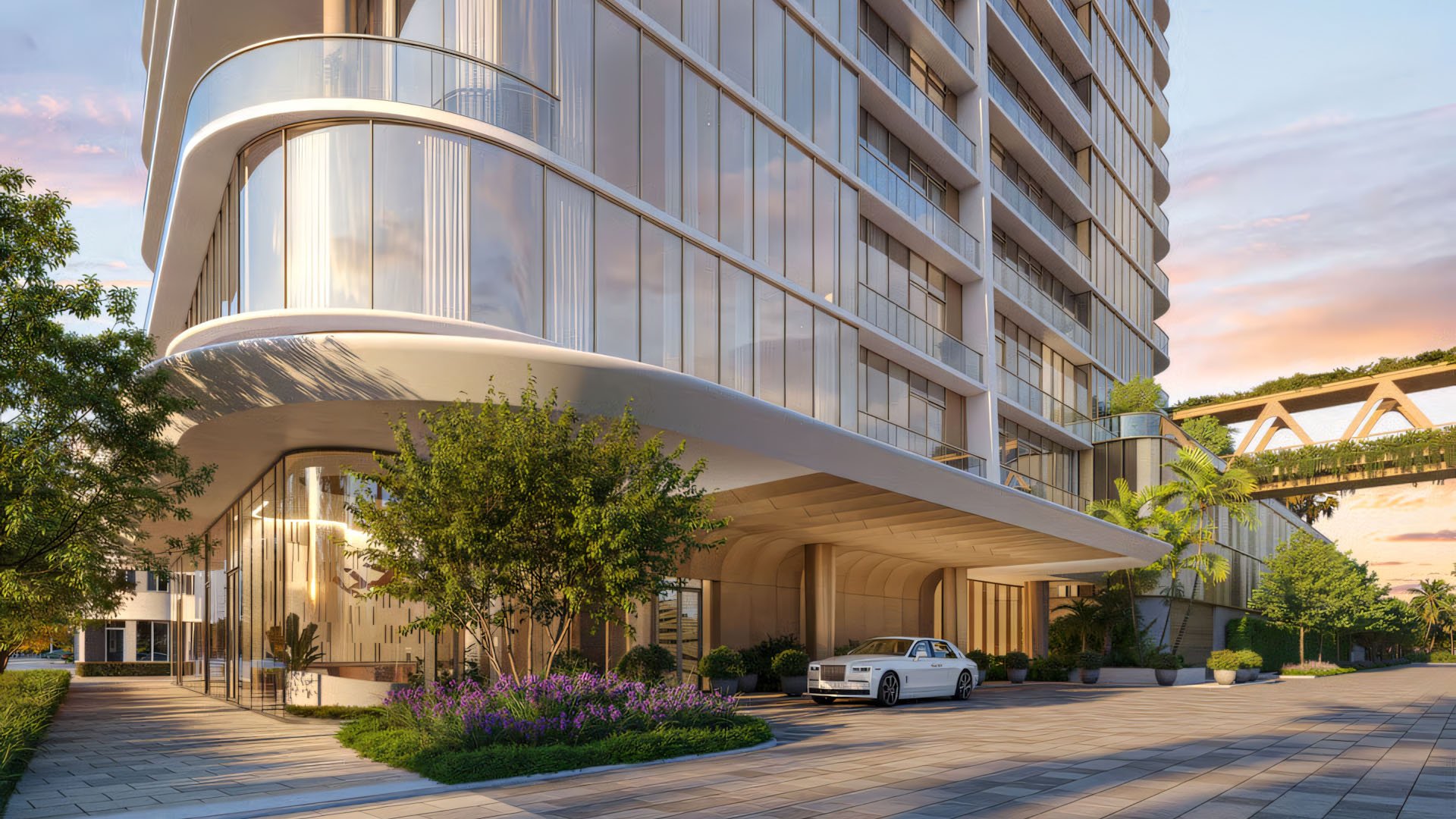
Kempinski’s first branded residential project in the United States is planned as two 23-story towers at 3801 and 3883 Biscayne Boulevard, on the northern edge of Miami’s Design District. Plans call for approximately 132 private residences, six townhomes and owner guest suites. Homes are marketed from approximately $3.7 million, with two- to four-bedroom layouts spanning roughly 2,100 to 3,100 square feet. Penthouses are expected to exceed $30 million.
Those figures establish the project’s luxury positioning. They do not, however, answer the more consequential ownership question: whether projected common charges can sustain the experience being sold. In branded residences, an HOA fee is not merely an expense line. It is the operating architecture behind the lobby, concierge desk, pools, wellness facilities, guest accommodations, house cars and service culture.
The best HOA figure is not necessarily the lowest one, but the one that credibly funds the promise.
Kempinski is planned as a standalone residential development, without an adjoining Kempinski hotel or shared hotel back-of-house infrastructure. That distinction deserves close attention. In a mixed hotel-and-residence model, certain operating systems may be shared. Here, the condominium association cannot rely on hotel-room revenue or adjoining hotel operations to offset residential service and amenity costs.
Daily management is expected to be overseen by Kempinski Group, creating a hospitality-forward model rather than a conventional condominium operation. Marketed services include a 24-hour Kempinski-trained concierge, house-car service, owner guest suites and lifestyle programming. Owners are also expected to receive Titanium status in the Kempinski Discovery program.
Each feature may enrich ownership, but each carries a cost profile. Staffing must cover shifts, training, supervision and continuity. Vehicles require drivers, upkeep and replacement planning. Guest suites require housekeeping and operational oversight. Wellness spaces need specialized maintenance. The association, funded by owners, is ultimately responsible for sustaining the shared service level.
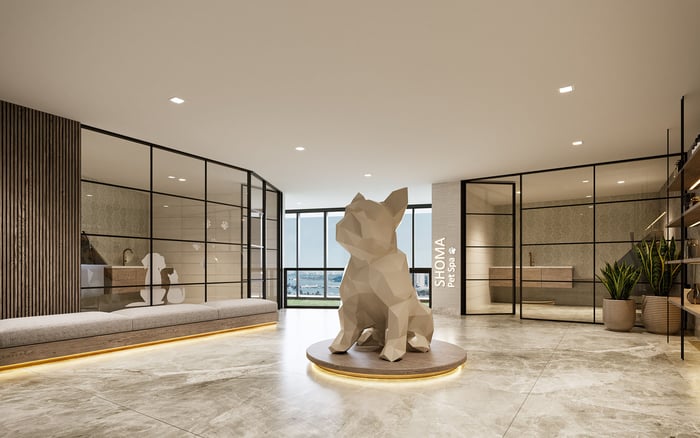
Approximately 70,000 square feet of indoor and outdoor amenities are planned across the two towers, linked by an elevated amenity bridge. The North Tower is conceived around wellness, with fitness facilities, treatment and recovery areas, a wellness café, garden lounge, children’s room and an approximately 85-foot lap pool.
The South Tower’s social program is expected to include private dining, a business center, game room, golf simulator, music studio, children’s and teen lounges, and a library with a bar. Outdoor plans add a beach-entry resort pool, splash pad, padel court, lawn games, an outdoor theater and landscaped recreation areas.
This is an unusually broad program to clean, staff, insure, maintain and periodically renew. A polished sales presentation may make these spaces appear effortless. Condominium operations are not. Pool systems age, furnishings wear, technology becomes obsolete and hospitality staffing remains a recurring obligation. The budget must support not only the opening-day presentation but also long-term consistency.
Buyers comparing urban luxury options such as Villa Miami, The Residences at Mandarin Oriental, Miami and 888 Brickell by Dolce & Gabbana should therefore avoid treating monthly dues as a simple league table. The relevant comparison is the relationship among residence size, services, amenity intensity, staffing model and the expenses allocated to owners.
No final official HOA schedule is established in the available project information. Available estimates place branded HOA fees at approximately $3,000 to $4,000 or more per month, with $3,200 used in one sample financial analysis. Separately, Unit 801 at 3883 Biscayne Boulevard is advertised with a monthly HOA fee of $6,042.
Neither figure should be treated as a definitive building-wide rate. Unit-level dues can vary by residence size, the allocation of common expenses and any limited common elements. More importantly, the project remains in pre-construction. The anticipated timetable calls for groundbreaking in the second quarter of 2027, top-off in the second quarter of 2028 and closing in the fourth quarter of 2029. Current HOA figures are therefore pre-completion projections and remain subject to revision.
A low estimate may be accurate if supported by efficient design and realistic procurement. It may also reflect optimistic assumptions about payroll, insurance, maintenance contracts, utilities or reserves. Conversely, a higher figure is not proof of stronger management. The objective is not to prefer expensive dues, but to determine whether the number is credible.
For a practical buyer’s review, the first document to scrutinize is the association budget pro forma. Buyers should identify what is included in the quoted assessment, what remains separately billed and which assumptions underpin the first years of operation. The review should test staffing levels, compensation, insurance, utilities, security, amenity maintenance, guest-suite operations, house-car costs and reserve contributions.
Particular attention should go to specialized spaces. Treatment rooms, recovery areas, pools, food-and-beverage settings and entertainment facilities can require different vendors, certifications and replacement cycles. Buyers should ask whether every marketed amenity is fully funded from launch and whether the projected service schedule matches the sales narrative.
The reserve position is equally important. An attractive first-year assessment becomes less persuasive if it postpones necessary contributions or assumes future owners will absorb increases. The risk is not limited to higher monthly dues. Underfunding can eventually lead to service reductions, deferred upkeep or special assessments, each of which can affect enjoyment and resale perception.
The reported deposit schedule begins with $50,000 at reservation, followed by 20% at contract, 10% at groundbreaking, 10% at top-off and 60% at closing. That extended horizon gives purchasers time to evaluate evolving disclosures, but it also means early operating projections should not be mistaken for final obligations.
For an investment purchase, monthly costs influence carrying expenses and potential yield. For a primary- or second-home buyer, the calculation may be more experiential: whether the building can reliably deliver the privacy, readiness and service expected at this price point. In both cases, artificially lean dues can be more concerning than properly calibrated ones.
New-construction buyers in the Design District should seek clarity on expense allocation by unit, the treatment of guest suites, the cost and availability of house cars, reserve assumptions, insurance allowances, and the process for maintaining Kempinski standards. They should also confirm which services are included, which are usage-based and which could change after turnover.
The decisive question is not, “Is this the lowest HOA?” It is, “Can this HOA preserve the building I am buying?” At Kempinski, with two towers, extensive amenities and no adjoining hotel to absorb part of the operational load, that distinction is central to disciplined luxury ownership.
For confidential guidance on evaluating South Florida’s most distinguished residences, connect with MILLION.
If branded residences are on your mind — as a home or as an allocation — we would be glad to share what we are seeing, privately.
Begin a quiet conversationIn a full-service building, unusually low dues may rely on optimistic assumptions about staffing, insurance, maintenance or reserves. The key issue is whether the budget can sustain the promised experience.
No. It is planned as a standalone branded residential project without an adjoining Kempinski hotel or shared hotel back-of-house infrastructure.
Approximately 70,000 square feet of indoor and outdoor amenities are planned across the two towers, connected by an elevated amenity bridge.
Available estimates suggest approximately $3,000 to $4,000 or more monthly, while one Unit 801 offering advertises $6,042 monthly. Neither establishes a final building-wide schedule.
Assessments can vary based on residence size, allocation of common expenses and limited common elements. A single unit’s advertised fee should not be applied across the building.
Marketed services include a 24-hour Kempinski-trained concierge, house-car service, owner guest suites and lifestyle programming.
Buyers should examine staffing, insurance, utilities, security, specialized amenity maintenance, vehicle operations, guest suites and reserve contributions.
The anticipated timetable calls for closing in the fourth quarter of 2029, following projected groundbreaking in Q2 2027 and top-off in Q2 2028.
No final official HOA schedule was included in the available project information. Current figures remain projections and may change before completion.
Monthly assessments increase carrying costs and can reduce potential yield. Underfunded dues can also create exposure to later increases, service cuts or special assessments.