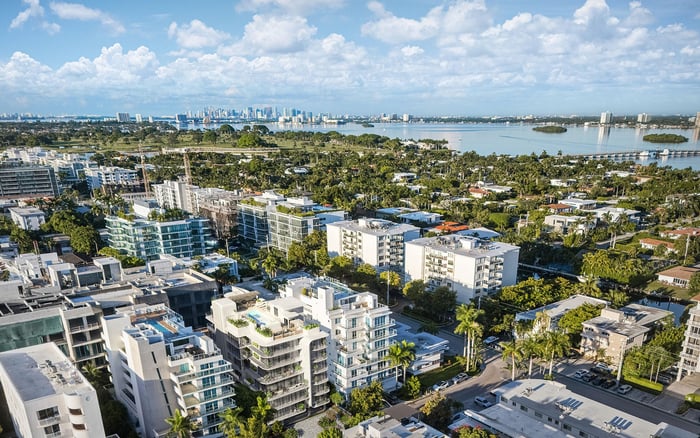
A buyer-focused framework for evaluating Alma Bay Harbor Islands explains why a developer’s pro forma budget is an opening assumption rather than a record of stabilized condominium operating costs.

At Alma Bay Harbor Islands, the ownership review should extend beyond the headline monthly association charge. In any boutique condominium, the size of the ownership base, the allocation formula and the division of maintenance responsibilities can materially shape each residence’s carrying costs.
The key issue is not whether a proposed budget appears high or low in isolation. Buyers should determine what the estimate includes, how common expenses are assigned and which costs may remain the individual owner’s responsibility.
A developer’s pro forma is a forward-looking planning document. It relies on assumptions about services, utilities, maintenance, insurance, reserves and other operating requirements before the association has established a sustained record under resident use.
A stabilized operating cost, by contrast, develops from actual experience. Vendor renewals, building consumption, service patterns and maintenance needs become clearer only after operations begin. The pro forma can therefore support initial underwriting without serving as a guarantee of future carrying costs.
This distinction does not imply that the proposed budget is inaccurate. It means the estimate and an established operating history answer different questions. One presents an opening financial framework; the other reflects observed performance over time.
A building-level expense does not automatically translate into an equal charge for every residence. The governing documents may assign costs according to percentage interests, residence characteristics, limited common elements or another stated method.
For that reason, buyers should avoid relying on a simple equal-share calculation unless the documents expressly require it. The residence-specific allocation can be as important as the total amount shown in the association budget.
Responsibility for terraces, rooftop areas, pools, windows and other components should also be verified rather than assumed. A cost excluded from the association budget may still affect ownership expenses if it belongs to the individual residence.
A disciplined review should consider the condominium declaration, proposed budget, percentage-interest schedule and any responsibility matrix together. These materials can clarify which expenses are common, which are limited to certain owners and which remain private obligations.
The review should also distinguish recurring operating expenses from reserves, one-time costs and potential assessments. Legal counsel and financial advisers can help interpret how the documents apply to a particular residence and ownership plan.
Buyers considering Alma may also review Mila Bay Harbor Islands, The Well Bay Harbor Islands and Onda Bay Harbor. A meaningful comparison requires more than placing monthly association figures side by side.
Each charge should be normalized for the services it covers, the applicable allocation method and any owner-specific responsibilities. Differences in operating scope can make similar headline figures economically distinct, while different headline figures may reflect different inclusions.
A buyer can evaluate ownership costs through several scenarios. The first can follow the proposed budget, while additional cases can test moderate and higher operating expenses. Each case should use the residence’s documented allocation rather than an assumed share.
Separate allowances may be appropriate for components assigned to the owner under the governing materials. This approach creates a clearer view of potential carrying costs and helps identify which assumptions deserve further diligence before contractual deadlines.
The measured conclusion is that Alma’s developer pro forma should be treated as a starting point. Stabilized operating costs can only emerge from the completed condominium’s actual operations, making document review and scenario analysis essential parts of the purchase evaluation.
What is a developer’s pro forma budget? It is a forward-looking estimate of anticipated condominium income and expenses based on assumptions made before stabilized operations.
Why is a pro forma different from a stabilized operating cost? A pro forma is predictive, while stabilized costs reflect actual operating experience developed over time.
Does this distinction mean the proposed budget is unreliable? No. It means the proposed budget is an opening planning tool rather than a guarantee of future expenses.
Which documents should a buyer review? The declaration, proposed budget, percentage-interest schedule and responsibility matrix should be considered together.
Are common expenses always divided equally? Not necessarily. The governing documents determine the allocation method applicable to each residence.
Why do owner-specific responsibilities matter? Components maintained by an owner can create costs that are not included in the association’s headline charge.
How should buyers compare association charges across projects? They should compare the services included, allocation methods and private obligations rather than relying only on monthly totals.
What expenses may change after occupancy? Actual service, utility, insurance, maintenance and reserve requirements may differ from initial assumptions.
How can a buyer stress-test carrying costs? Model several operating-cost scenarios using the residence’s documented allocation and identified private responsibilities.
Who can help interpret the ownership documents? Qualified legal counsel and financial advisers can explain how the governing materials may apply to a specific purchase.
For a discreet conversation and a curated building-by-building shortlist, connect with MILLION.
If branded residences are on your mind — as a home or as an allocation — we would be glad to share what we are seeing, privately.
Begin a quiet conversation