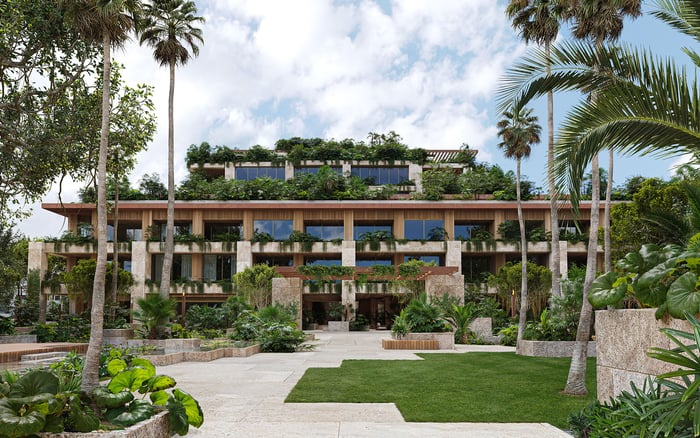
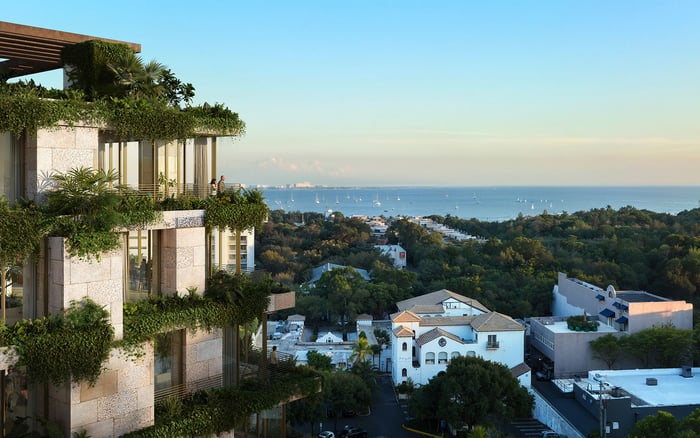
A buyer-focused look at how privacy, density, circulation, landscape and service can shape the luxury ownership experience at Park Grove and Ziggurat Coconut Grove.
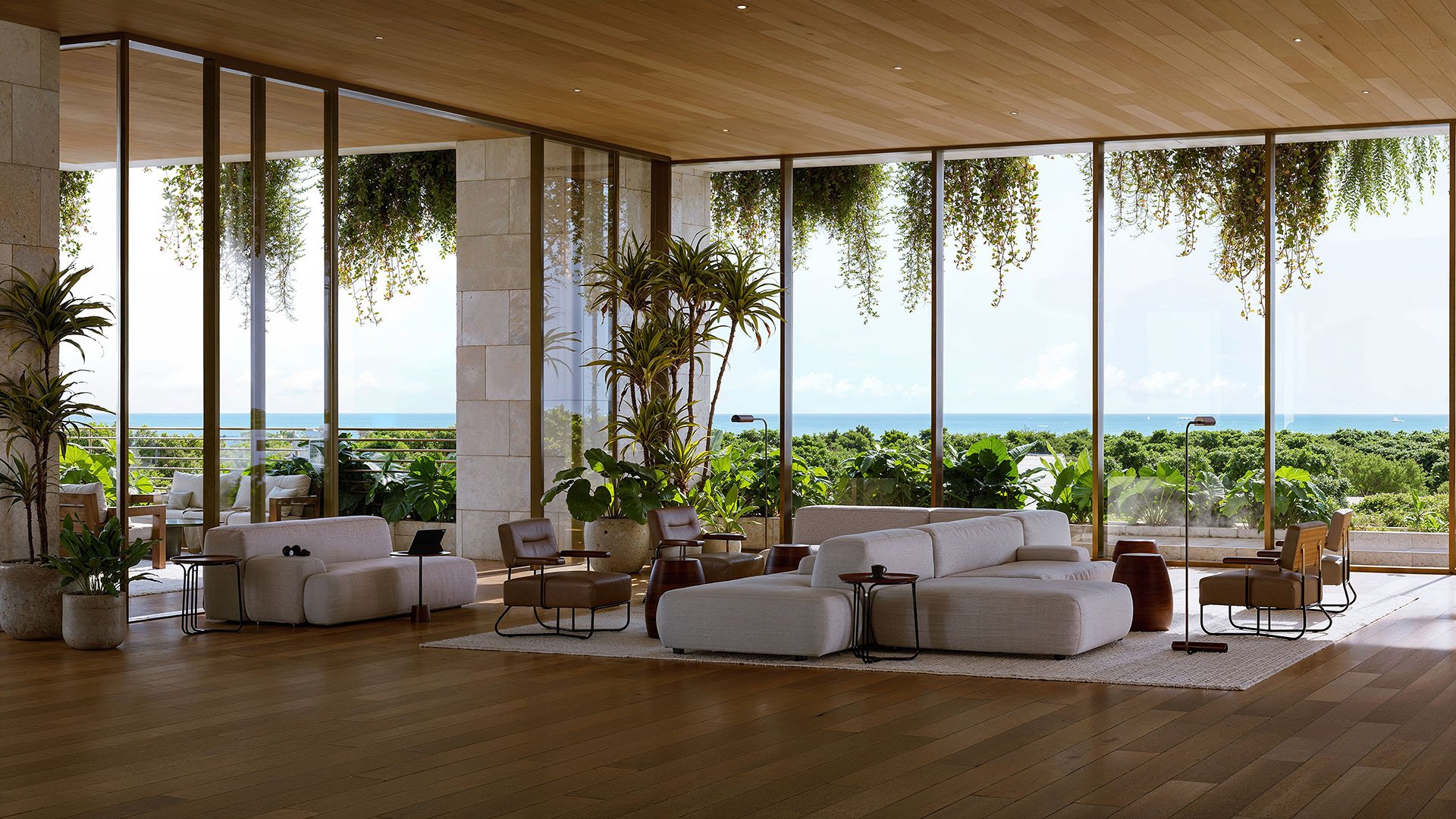
In Coconut Grove, buyers comparing Park Grove Coconut Grove and Ziggurat Coconut Grove can evaluate privacy as a design and ownership consideration rather than a single feature. The analysis extends beyond the interior of a residence to arrival, circulation, sightlines, shared spaces and the transition between public and private areas.
Low density is also more nuanced than a residence count. A property may feel private when its layout reduces unnecessary exposure, its shared areas support comfortable movement and its service model respects the boundaries of daily life. These qualities should be considered together rather than treated as interchangeable claims.
A disciplined comparison begins with the lived experience each property is intended to support. Buyers can examine how the architecture frames entry, how residences relate to shared areas and whether the overall environment feels appropriately scaled to their preferences.
Park Grove and Ziggurat should therefore be assessed through the same core questions without assuming that they provide identical ownership experiences. The useful distinction is not simply which project appears more exclusive, but how each one addresses separation, community and convenience.
This approach keeps the comparison grounded in observable design priorities. It also avoids treating privacy as a guarantee of financial performance or assuming that one architectural format will suit every buyer.
Privacy is often established before an owner reaches the front door. Arrival sequences, elevator circulation, corridor planning and the placement of shared areas can affect how frequently residents encounter activity and how clearly private space is separated from communal space.
Sightlines deserve similar attention. Buyers should consider views into and out of a residence, the relationship between neighboring homes and the role of architectural or landscape elements in shaping visual separation. These details can be more consequential to daily comfort than a broad description of density.
The same framework can inform comparisons with Four Seasons Residences Coconut Grove and The Well Coconut Grove. Each property should be evaluated on its own design, ownership proposition and stage rather than through assumptions based on category alone.
Service contributes to privacy when convenience is delivered without creating unnecessary activity around the residence. Buyers can ask how requests are handled, where staff and residents circulate and whether routine operations support a calm residential atmosphere.
Discretion is ultimately experiential. It may be reflected in fewer interruptions, clearer boundaries and a smoother relationship between private life and shared services. Prospective owners should seek current project information and determine whether the proposed or existing service approach fits their expectations.
The first consideration is personal preference. Some owners value a broader residential community, while others prefer a more intimate setting. Neither approach is inherently better, and the right choice depends on how a buyer expects to use the home.
The second consideration is spatial character. Interior size is only one component; orientation, thresholds, shared circulation and visual separation also shape the sense of retreat.
The third is the distinction between design value and investment performance. Privacy, architecture and service may strengthen the ownership experience, but they do not guarantee pricing, demand, liquidity or future returns.
Finally, buyers should compare projects using current, project-specific materials and professional guidance. This is especially important when properties are at different stages or when plans and operating details may evolve.
Park Grove and Ziggurat provide a useful lens for considering how Coconut Grove luxury can be evaluated through privacy, scale and daily experience. The most meaningful comparison is not based on a single label, but on how the complete residential environment aligns with an owner’s priorities.
For buyers, that means looking closely at the spaces between the headline features. Arrival, circulation, sightlines, service and the balance between community and separation can determine whether a residence feels genuinely private over time.
What does low-density privacy mean in a luxury residence? It describes an ownership experience shaped by scale, circulation, sightlines and separation, not merely by the number of homes.
How should buyers compare Park Grove and Ziggurat Coconut Grove? Buyers should examine each property’s layout, shared spaces, arrival experience, service approach and alignment with their personal priorities.
Does a larger residence automatically provide more privacy? No. Orientation, neighboring sightlines and circulation can matter as much as interior size.
Why are arrival and circulation important? They influence how residents move between public, shared and private spaces and how much activity they encounter.
How can sightlines affect the ownership experience? Sightlines shape visual exposure between residences, shared areas and surrounding spaces.
What role can landscape play in privacy? Landscape can help define boundaries and transitions, but buyers should evaluate its specific application at each property.
How does service relate to discretion? A well-considered service model can provide convenience while limiting unnecessary interruptions and activity around private spaces.
Should projects at different stages be treated as direct equivalents? Not automatically. Buyers should use current project-specific information and account for differences in available details.
Does privacy guarantee investment performance? No. Privacy is an ownership quality and does not guarantee pricing, liquidity, demand or future returns.
What should buyers verify before making a decision? They should review current plans, ownership details, service information and other project-specific materials with qualified professionals.
If you'd like a private walkthrough and a curated shortlist, connect with MILLION.
If branded residences are on your mind — as a home or as an allocation — we would be glad to share what we are seeing, privately.
Begin a quiet conversation