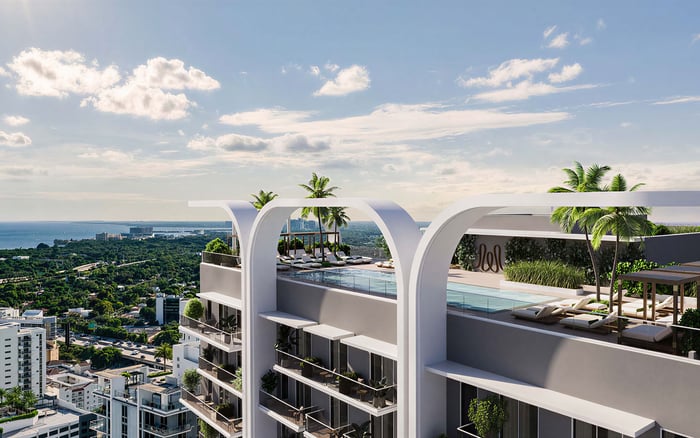
For yacht owners, a Midtown Miami condo search should account for both the residence and the practical fit of a separate or associated berth. Vessel dimensions, access arrangements, marina rules, and transferability can influence whether Midtown is the right base or whether the search should extend to other Miami-Dade neighborhoods.

For a yacht owner, the luxury-condo search should begin with the vessel’s practical requirements. Length, beam, draft, clearance needs, berth access, and the route to open water can affect whether a residence supports the owner’s preferred routine.
This framework is especially useful in Midtown Miami. Buyers who favor the neighborhood may need to evaluate the home and marina arrangement as separate but coordinated decisions rather than assuming that a nearby waterfront location provides suitable dockage.
Midtown can remain a compelling residential base when the buyer is comfortable using an off-site marina. The evaluation should consider travel between the residence and berth, crew access, provisioning, parking, security, and storm planning.
If direct or more convenient vessel access is a priority, the search can expand to other Miami-Dade neighborhoods, including Downtown Miami, Brickell, Coconut Grove, Miami Beach, and Fisher Island. The goal is not simply to live near the water, but to align the residence with how the yacht is actually used.
A broader search may include Aston Martin Residences Downtown Miami, St. Regis® Residences Brickell, and The Residences at Six Fisher Island. Miami Beach buyers may also consider The Ritz-Carlton Residences® Miami Beach, while a Coconut Grove search may include Vita at Grove Isle.
These residences should be assessed individually. A project’s waterfront setting, marina association, or boating-oriented positioning does not by itself establish that a compatible berth is included, available, transferable, or suitable for a particular vessel.
Dockage can take different legal and operational forms. A berth may be deeded, leased, assigned, separately acquired, connected to membership, or governed by another use-right arrangement. Buyers should determine exactly what is being offered and whether the right is connected to the residence, the owner, or a separate agreement.
The review should also address availability, recurring charges, transfer restrictions, guest and crew rules, insurance requirements, maintenance responsibilities, and the conditions governing resale or rental. Marketing descriptions should not replace a review of current governing documents and written terms.
A berth that accommodates a yacht at the dock may still be unsuitable if the route presents limitations. Vessel dimensions should therefore be compared with berth dimensions, water depth, bridge clearances, tidal conditions, and the full passage to open water.
Operational services also matter. Buyers should confirm the availability and terms of shore power, water, pump-out service, fueling logistics, security, access procedures, and storm protocols. Any feature that is essential to ownership should be verified before the residential decision becomes binding.
For a yacht-owning buyer, the residence and berth form one lifestyle plan. Midtown may be the preferred home base when its residential appeal outweighs the inconvenience of separate marina storage. Another Miami-Dade neighborhood may be more appropriate when immediate or simpler vessel access carries greater weight.
A disciplined search evaluates both tracks at the same time: the quality of the residence and the usability of the boating arrangement. The right choice is the one that satisfies both without relying on assumptions about dockage, access, or transfer rights.
Can a yacht owner choose a condo in Midtown Miami? Yes. The key is determining whether a separate marina arrangement supports the owner’s routine and vessel requirements.
Does a waterfront residence automatically include dockage? No. Waterfront positioning alone does not establish that a berth is included or available.
Which vessel details should be reviewed first? Start with length, beam, draft, and clearance requirements, then compare them with the berth and navigation route.
Why does the legal form of dockage matter? Different structures can affect control, costs, availability, transferability, and resale.
Should off-site marina access be considered for a Midtown residence? Yes. Buyers should assess travel time, crew logistics, provisioning, parking, security, and storm planning.
Which Miami-Dade areas can broaden the search? Downtown Miami, Brickell, Coconut Grove, Miami Beach, and Fisher Island can be considered alongside Midtown.
What should be confirmed about a berth? Confirm its dimensions, availability, legal structure, fees, access rules, services, and transfer conditions.
Why should the full route to open water be reviewed? Berth compatibility does not resolve possible limitations involving depth, bridges, tides, or passage conditions.
Can marketing materials establish marina rights? No. Essential marina rights and operating terms should be confirmed through current written documentation.
Should the residence or boating arrangement be evaluated first? They should be evaluated together, although an incompatible berth or route can rule out an otherwise suitable home.
For a tailored shortlist and next-step guidance, connect with MILLION.
If branded residences are on your mind — as a home or as an allocation — we would be glad to share what we are seeing, privately.
Begin a quiet conversation