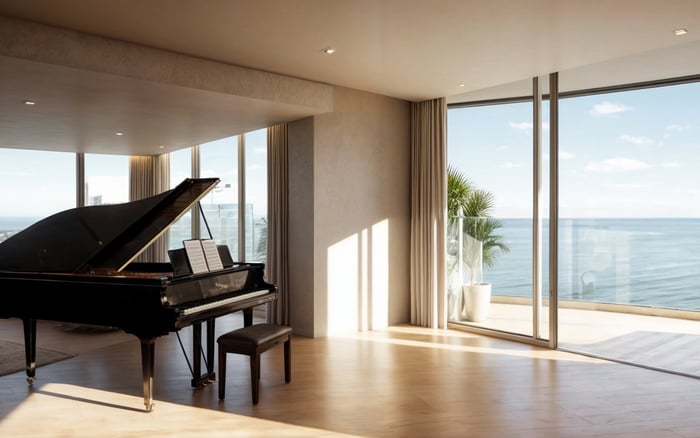
In Bal Harbour, operational rules can shape daily comfort as decisively as views or finishes. A disciplined review of pet restrictions, service-elevator procedures, and guest parking can protect both personal enjoyment and future marketability.

In Bal Harbour, the quality of ownership is shaped not only by architecture, ocean views, and finishes, but also by the rules governing daily life. Pets, deliveries, contractors, visiting family, and overnight guests all move through systems that can feel either discreetly effortless or unexpectedly restrictive.
The first principle is simple: never rely on a broad label such as “pet-friendly.” Policies vary sharply among condominiums, and similar buildings can impose very different limits. Apply the same rigor to service elevators and guest parking, where details are often incomplete. Current condominium documents and written management confirmation matter more than marketing shorthand.
This operational review is especially important for oceanfront ownership, where service standards and controlled access are central to the experience. Buyers considering Oceana Bal Harbour should apply the same document-first discipline they would bring to financial statements, assessments, and insurance.
A building that allows pets may still regulate number, weight, breed, residency status, approval, documentation, deposits, and elevator routes. One Bal Harbour allows owners and renters no more than two pets per residence, with a maximum weight of 40 pounds each and a $250 nonrefundable fee due before move-in. Balmoral Bal Harbour allows owners and tenants one pet per unit weighing up to 20 pounds.
At the other end of the spectrum, Bal Harbour Chateaux does not allow owners or guests to have pets. Service or support cats and dogs are addressed separately, with verifiable documentation required from a state-certified medical professional. This distinction is a reminder that an association’s general pet prohibition and its treatment of assistance animals should not be conflated.
The Plaza of Bal Harbour allows pets for owners and renters, including large pets. Majestic Tower also allows pets. These details are useful starting points, not substitutes for the current declaration, bylaws, rules, application package, and written answers from management.
For every candidate, determine whether limits apply per animal or per residence, whether tenants and guests are treated differently, and whether approvals must be renewed. Also confirm designated entrances, common-area restrictions, waste procedures, and the consequences of violations.
A private elevator can be an elegant residential feature, but it does not explain how moves, deliveries, household staff, or contractors are handled. Majestic Tower residences have private elevators, yet that fact alone does not establish the building’s service-elevator procedures.
Request the complete operating sequence. Can a service elevator be reserved, and how far in advance? Are there deposits, certificates of insurance, protective-padding requirements, restricted delivery windows, or blackout periods? Ask how groceries, flowers, luggage, furniture, art handlers, and renovation crews enter the property. Confirm what happens when the designated elevator is occupied or out of service.
These questions matter in both established and newer luxury properties. A buyer comparing Rivage Bal Harbour with existing condominiums should seek written procedures rather than infer access from design, staffing, or private-entry features. Efficient logistics support lifestyle; cumbersome procedures can turn routine ownership into repeated negotiation.
Guest parking deserves more scrutiny than a simple count of spaces. Determine whether visitors self-park or use valet, whether registration is required, and whether overnight stays are permitted. Ask about charges, validation, maximum duration, holiday restrictions, peak-period capacity, and the treatment of recurring visitors, household staff, nurses, drivers, and vendors.
Hotel and residential rules must be separated carefully. The St. Regis Bal Harbour Resort’s hotel operation charges $65 per day for valet parking. Its hotel pet policy permits one pet per room up to 25 pounds, with a $200 charge per stay plus $20 per night. Those terms illustrate how paid, valet-based hospitality may operate, but they do not establish the residential condominium association’s entitlements. Residential St. Regis pet terms remain subject to breed, size, and number restrictions.
Harbour House is located at 10275 Collins Avenue, but that fact does not establish pet, service-elevator, or guest-parking entitlements. This is precisely when management confirmation becomes essential.
Nearby luxury properties can sharpen the comparison. When viewing The Surf Club Four Seasons Surfside or Fendi Château Residences Surfside, ask the same questions about visitor arrival, overnight vehicles, deliveries, and contractor access. The objective is not to assume equivalence, but to compare how clearly each property defines hospitality.
Resale value is not determined by permissiveness alone. A highly permissive policy can concern some owners, while a restrictive policy can exclude otherwise qualified buyers. The more useful test is whether the rules are broad enough for the likely buyer pool, clear enough to summarize accurately, and consistent enough to withstand due diligence without surprises.
Pet limits can immediately narrow demand among households with multiple or larger animals. Uncertain guest parking may concern buyers who entertain frequently or host family for extended stays. Tight delivery and contractor windows can matter to owners planning renovations or operating a seasonal residence. Each point can become either a reassuring answer or a source of transaction friction.
For investment analysis, consider how the rules treat tenants as well as owners. One Bal Harbour and Balmoral Bal Harbour extend pet permission to renters within stated limits, while The Plaza of Bal Harbour allows pets for both owners and renters, including large pets. Future leasing flexibility can influence marketability even when the initial purchaser intends to occupy the residence.
Before an offer becomes nonrefundable, collect the current declaration, bylaws, rules, application package, move procedures, parking policies, and fee schedules. Submit a concise written questionnaire to management and retain the responses with the transaction file.
Then score each property across three dimensions: personal fit, operational clarity, and future explainability. Personal fit asks whether the rules suit the buyer’s actual household. Operational clarity tests whether staff and documents provide consistent answers. Future explainability asks whether a broker can present the policy to the next purchaser without qualifications or ambiguity.
This is the quiet discipline behind durable luxury ownership. The best choice is not necessarily the building with the fewest rules. It is the one whose rules align with the owner’s life and remain intelligible to the next discerning buyer.
Does pet-friendly mean every animal is permitted? No. Number, weight, breed, approval, residency status, and fees may still be regulated.
Can hotel pet rules be used for a condominium residence? No. Hotel operating terms should not be assumed to establish residential association rules.
What should a buyer request about service elevators? Ask for reservation procedures, delivery windows, deposits, insurance requirements, contractor access, and blackout periods.
Does a private elevator confirm easy moving access? No. A private elevator does not establish the building’s separate procedures for movers, deliveries, or contractors.
What guest-parking terms matter most? Confirm registration, valet or self-parking, overnight permission, fees, duration limits, and peak-period restrictions.
Why obtain written management confirmation? Available details may be incomplete, while written answers can clarify how current rules are administered.
Can strict pet limits affect future demand? Yes. Limits on size, number, or breed can reduce the pool of otherwise interested purchasers or tenants.
Is a permissive policy always better for resale? Not necessarily. Clear, practical, consistently administered rules may matter more than maximum permissiveness.
Should seasonal owners examine delivery rules closely? Yes. Luggage, groceries, household staff, repairs, and furnishings can all depend on controlled-access procedures.
When should operational due diligence be completed? Review documents and secure written clarifications before the offer becomes nonrefundable whenever possible.
For a tailored shortlist and next-step guidance, connect with MILLION.
If branded residences are on your mind — as a home or as an allocation — we would be glad to share what we are seeing, privately.
Begin a quiet conversation