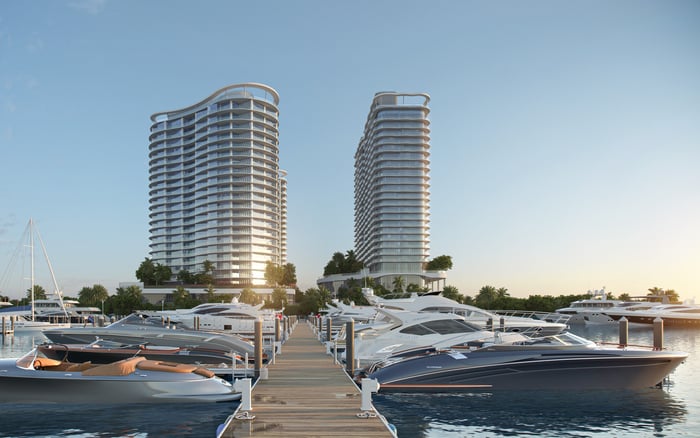
A diligence-first review of Sixth & Rio should focus on verified flood information, master and unit coverage, deductibles, reserves, exclusions, ownership terms and property-specific insurance quotes.

Buyers considering Sixth & Rio Fort Lauderdale should evaluate waterfront insurance through current documents rather than assumptions. The word “waterfront” alone does not establish flood exposure, insurance requirements, available limits or likely premiums.
The review should connect four areas: site-specific flood information, the condominium association’s insurance, the buyer’s unit policy and the operative ownership documents. Each area can affect the others, so completing them in isolation may leave important gaps.
Ask the appropriate insurance, lending and legal professionals to confirm the current flood designation, applicable elevation information and any documentation needed for underwriting. Marketing descriptions and information associated with another building should not substitute for a review of the relevant property and residence.
If an elevation certificate or similar record is available, confirm that it applies to the correct structure and remains acceptable to the parties relying on it. Buyers should also ask insurers to explain which flood-related inputs they used when preparing a quote.
This process should be repeated for every property under consideration. A comparison with Riva Residenze Fort Lauderdale may help organize a search, but conclusions about one development should not be transferred to another.
Request the current master-policy certificate and the complete policy terms available for review, together with flood and wind coverage information, deductibles, exclusions, association budgets and reserve disclosures. Counsel and an insurance adviser can then assess how the governing documents allocate responsibility between the association and individual owners.
A unit policy may need to address interests that are outside the association’s coverage. Buyers should discuss interior property, improvements, personal property, liability, loss assessment and temporary living costs with a qualified adviser, without assuming that every category applies or is available on identical terms.
Deductibles deserve particular attention. The review should establish how each deductible operates, whether an owner could face an assessment and whether the association’s financial documents indicate resources for an uninsured or underinsured event. These points should be confirmed from current documents rather than inferred from general market practice.
Other Fort Lauderdale options, including Four Seasons Hotel & Private Residences Fort Lauderdale and St. Regis® Residences Bahia Mar Fort Lauderdale, can provide useful search context. Their insurance programs, governing documents and ownership terms should not be treated as proxies for Sixth & Rio.
Property-specific quotes are more useful when each insurer receives the same information about the residence, intended occupancy and requested coverage. Ask for written clarification of the assumptions, limits, deductibles, exclusions and conditions included in each proposal.
If financing is involved, the buyer should coordinate the insurance and lending reviews before contractual deadlines. A lender’s requirements and a buyer’s preferred level of protection are separate considerations, and both should be evaluated against the available policies.
Quotes can change as underwriting information or policy terms change. Buyers should therefore confirm that any proposal remains current and applicable to the intended ownership and use at the relevant stage of the transaction.
Insurance diligence should follow the operative offering and governing documents. Counsel should verify the ownership format, permitted occupancy, rental provisions, deposit obligations, closing conditions and any responsibilities associated with waterfront features or common elements.
Intended use matters because occupancy and leasing details may affect underwriting. Buyers should disclose the planned use accurately and ask the insurer to confirm that the proposed policy reflects it.
Sixth & Rio may fit a buyer who is prepared to make document review and insurability part of the acquisition decision. The relevant conclusion should remain conditional until current flood information, association coverage, unit-policy options, deductibles, reserves and ownership terms have been reviewed by the buyer’s advisers.
The strongest diligence file is coordinated: legal counsel reviews the contract and governing documents, the insurance adviser evaluates available coverage, and the lender confirms any financing requirements. That process gives the buyer a clearer basis for deciding whether the opportunity aligns with personal risk tolerance.
Why is waterfront insurance diligence property-specific? Flood information, building documents, policy terms and underwriting inputs can differ by property and residence.
What flood information should a buyer verify? Confirm the current flood designation, relevant elevation information and any documentation requested by the insurer or lender.
What association insurance documents should be requested? Ask for the current master-policy certificate, available policy terms, flood and wind information, deductibles and exclusions.
Why should reserves be reviewed with insurance documents? Reserves may be relevant when evaluating how the association could address deductibles, uninsured costs or assessments, subject to the governing documents.
Does a master policy eliminate the need for unit coverage? Buyers should not assume so; an insurance adviser should identify what the master policy covers and what protection may be appropriate for the residence.
Why are deductibles important? Buyers should understand their size, how they apply and whether governing documents permit costs to be allocated to owners.
Should quotes use the same assumptions? Yes. Comparable occupancy, residence details and requested protections make differences between proposals easier to evaluate.
How can financing affect the review? A lender may impose insurance conditions, so buyers should coordinate the lender and insurer before contractual deadlines.
Why must intended use be disclosed? Occupancy and rental plans may affect underwriting, eligibility or policy terms and should be described accurately.
When is the diligence review complete? It is complete only when current property documents, coverage options, ownership terms and any financing requirements have been evaluated for the contemplated transaction.
For a tailored shortlist and next-step guidance, connect with MILLION.
If branded residences are on your mind — as a home or as an allocation — we would be glad to share what we are seeing, privately.
Begin a quiet conversation