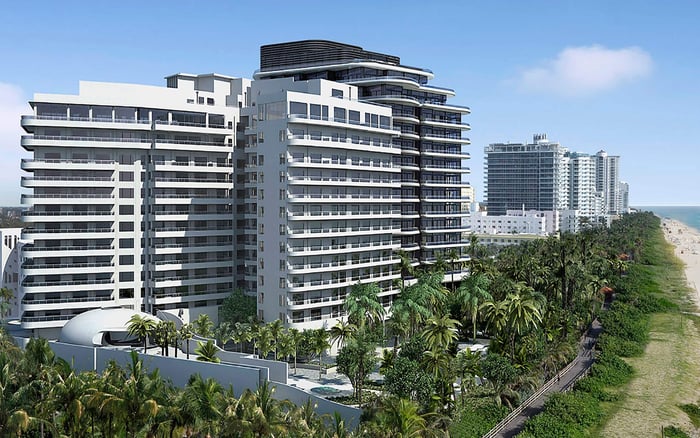
Three prominent Miami Beach residential names illustrate why hospitality associations, coherent identity, and operational clarity matter to discerning buyers.

At the upper end of the Miami Beach residential market, buyers may evaluate more than architecture. They may also consider the experience implied by a property’s name, the coherence of its identity, and whether the ownership proposition appears suited to their routines. Branded hospitality offers a readily understood framework: a residence is presented not simply as a private interior, but as part of a broader lifestyle proposition.
That proposition should not be mistaken for a guarantee. A name can establish expectations, but buyers must still understand what is included, who is responsible for delivery, and how standards are governed. The relevant question is not whether the branding sounds compelling, but whether the documented residential framework supports the buyer’s preferred way of living.
Shore Club Private Collections Miami Beach enters the discussion with a name that emphasizes place, privacy, and collection. For buyers, those elements create a lens through which to assess the project. The practical task is to separate the identity’s emotional resonance from the contractual details governing ownership.
Private-collection language may be especially relevant to purchasers who value discretion and curation. A careful evaluation should go further by asking how the project defines its residential experience, which obligations attach to ownership, and which elements are fixed in governing documents.
The Perigon Miami Beach provides a useful comparison because its name presents a standalone project identity. This distinction matters within the category: some residences lead with an established hospitality name, while others position the property itself as the defining brand.
Neither approach is inherently superior. A standalone identity may appeal to someone seeking a residence understood on its own terms, while a familiar hospitality name may suit a buyer who values immediate recognition. In either case, the decision should rest on the ownership structure and lived proposition rather than the name alone.
With The Ritz-Carlton Residences® Miami Beach, the hospitality association is explicit in the project name. That clarity may help buyers place the residence within an initial comparison, particularly when they are reviewing several ownership options.
Brand familiarity is only the beginning. Buyers should verify which services apply to residents, how those services are governed, and whether the obligations align with anticipated use. Hospitality positioning is most valuable when expectations, documentation, and everyday experience are closely matched.
Interest in branded residences can be understood partly as a preference for reduced ambiguity. Purchasers balancing multiple homes, complex schedules, or extended periods away may value a clearly articulated residential identity that helps them imagine arrival, absence, return, and ongoing stewardship.
There is also an emotional dimension. A coherent name and hospitality-oriented narrative can suggest consistency across private and shared spaces. The discerning response is to test that impression against the documents and responsibilities that define the ownership experience.
Miami Beach adds the identity of the destination to the comparison. The project name and location work together, but each should be evaluated separately. A buyer may prefer one residential model over another even when considering properties in the same market.
Branding helps define the questions, but it does not answer them. A shortlist should be refined through careful comparison of governance, use, privacy, service scope, financial obligations, and long-term personal relevance.
Begin with intended use. A primary resident, seasonal owner, and internationally mobile purchaser may assign different value to the same hospitality association. Buyers should map their expected occupancy patterns before deciding which services or operational qualities matter most.
Next, review governance. Determine which parties control residential operations, how standards may be maintained, and which mechanisms address change. The applicable legal documents matter more than broad assumptions attached to any brand category.
Then examine cost in context. Rather than asking whether a branded proposition is expensive in the abstract, buyers should determine whether its obligations correspond to services they expect to use and value. A feature essential to one household may be irrelevant to another.
Finally, consider identity and potential resale positioning without treating either as certain. A recognizable name can help communicate a property’s proposition, while a distinctive standalone identity can create its own appeal. Future outcomes cannot be assumed, so the strongest purchase remains one that works first as a home.
The broader South Florida market also gives buyers other examples of hospitality-associated residential naming. The Ritz-Carlton Residences® Pompano Beach can serve as a Broward County comparison for buyers considering how a familiar hospitality association appears in another coastal market. Any comparison should remain project-specific because documents, obligations, and the intended ownership experience may differ.
The three Miami Beach projects demonstrate why branded hospitality is a productive lens for residential comparison. Shore Club Private Collections Miami Beach foregrounds a curated identity, The Perigon Miami Beach offers a project-led name, and The Ritz-Carlton Residences® Miami Beach makes its hospitality association explicit.
The lesson is not to select the most recognizable label automatically. It is to identify the proposition that best aligns with personal expectations and then confirm that alignment through disciplined review. In luxury real estate, clarity means understanding what ownership entails, why it matters, and how naturally it supports daily life.
What does branded hospitality mean in a residential context? It describes a residential proposition shaped by a defined hospitality identity or association. Buyers should verify the exact scope through project documents.
Are all three Miami Beach projects positioned in the same way? No. Their names communicate different approaches to identity, recognition, and residential positioning.
Why can brand recognition matter to buyers? Familiarity can make a property easier to place within an initial comparison. It does not replace legal or financial review.
Is a hospitality name a guarantee of service? No. Buyers should confirm services, responsibilities, limitations, and governance in the applicable documents.
What should buyers compare first? Start with intended use, then compare ownership structure, service scope, privacy, governance, and recurring obligations.
Can a standalone project identity compete with a familiar hospitality name? Yes. Some buyers may prefer a property defined on its own terms rather than primarily through external recognition.
Does branding automatically support resale value? No future value is automatic. Branding is one consideration among ownership terms, property characteristics, buyer preferences, and market conditions.
Should seasonal owners evaluate these projects differently? They should focus on how each ownership model corresponds to their expected periods of occupancy and absence.
Why is Miami Beach central to this comparison? The three featured projects share a Miami Beach setting while presenting distinct residential identities.
What is the most important due-diligence question? Ask whether the documented ownership experience genuinely matches the lifestyle suggested by the project’s positioning.
For a confidential assessment and a building-by-building shortlist, connect with MILLION.
If branded residences are on your mind — as a home or as an allocation — we would be glad to share what we are seeing, privately.
Begin a quiet conversation