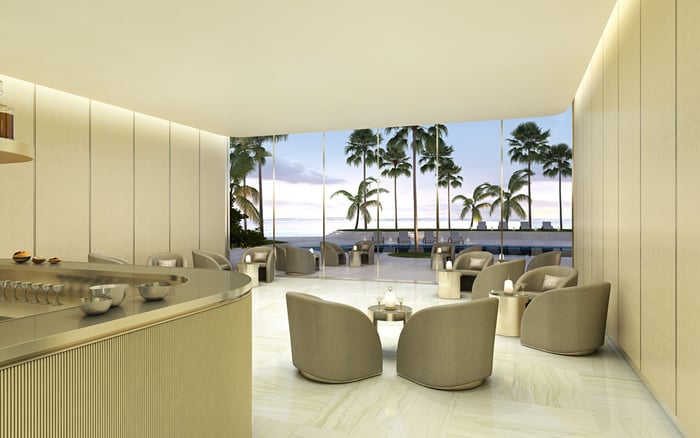
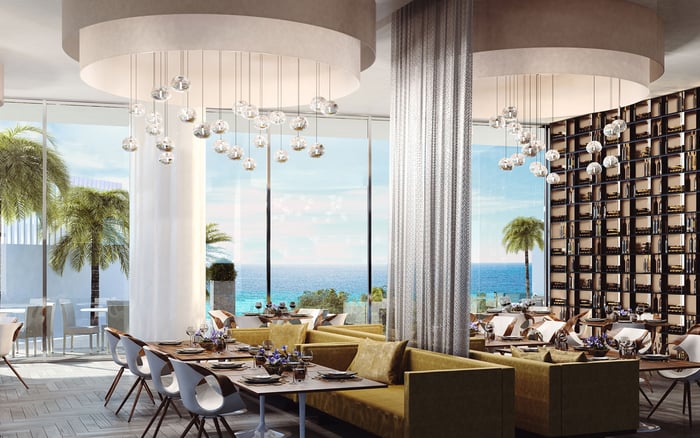
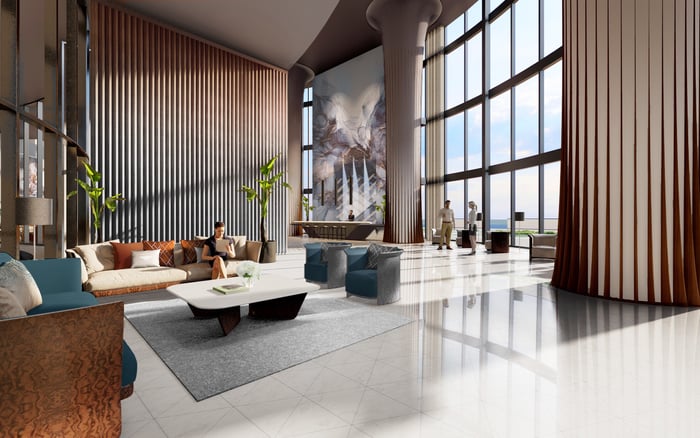
Two oceanfront, residence-only properties show how branded service can support private ownership without the transient traffic associated with a conventional hotel.
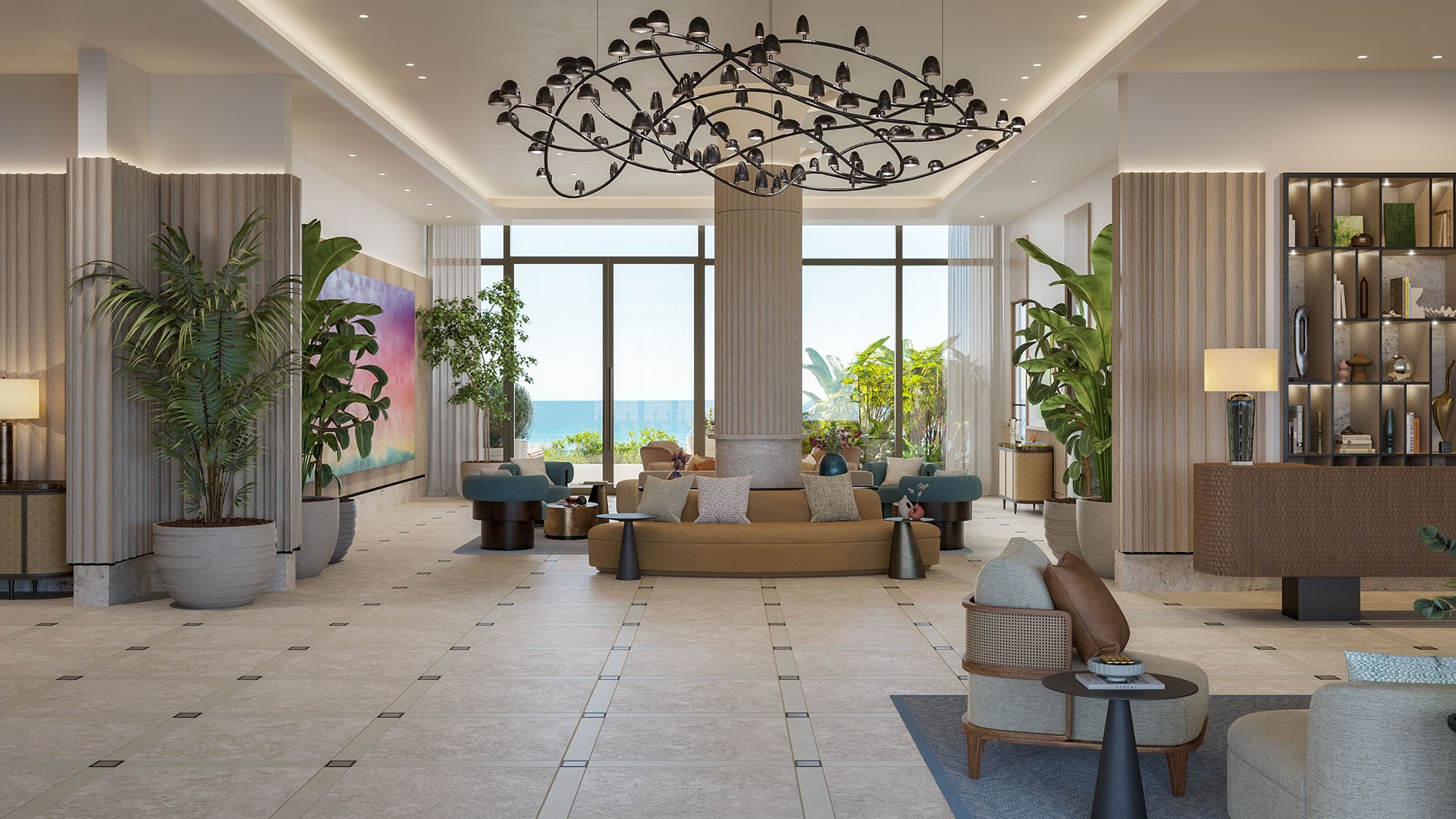
For buyers entering 2026, residential hospitality is becoming less about replicating a resort than refining the experience of home. The essential question is not simply which services are available, but whether they can be delivered while preserving discretion, calm, and meaningful separation from transient activity.
That distinction places Rosewood Residences Hillsboro Beach and The Ritz-Carlton Residences® Sunny Isles in a particularly relevant conversation. Both are oceanfront branded-residential properties, and both position hospitality within a private residential setting rather than a conventional hotel-residence hybrid. Their shared premise is straightforward: owners receive professionally managed branded service without treating home as an extension of a transient hotel.
This residence-only structure forms the foundation of the privacy proposition. It does not answer every question about privacy, but it removes one recurring variable: the regular circulation of hotel guests. For an owner, that separation can shape the emotional quality of arrival, the rhythm of shared spaces, and the sense that service is calibrated to residents rather than a changing visitor population.
Rosewood Residences Hillsboro Beach combines private homeownership with a five-star hospitality identity. Its positioning emphasizes seclusion supported by professional management, with the absence of transient hotel guests central to the owner experience. The resulting expression of luxury is measured and residential: hospitality is present, yet the property is framed first as a place to live.
The Ritz-Carlton Residences Sunny Isles
Beach applies an established hospitality identity to private residential ownership through a similar residence-only model. Here, branded service is likewise separated from traditional hotel traffic. The comparison, therefore, is not between service and privacy, but between two interpretations of how service can operate within a private home environment.
Location remains integral to that interpretation. Hillsboro Beach and Sunny Isles Beach are distinct South Florida settings, and buyers should consider how each aligns with their patterns of use. Relevant questions include where family, business, dining, recreation, and transportation sit within an owner’s routine. Privacy is not limited to what happens inside a property; it also encompasses how readily a residence supports daily life without unnecessary friction.
Buyers focused on Sunny Isles Beach may broaden their visual and market comparison to Bentley Residences Sunny Isles. That wider review can help clarify whether the decisive attraction is the neighborhood, a particular brand culture, or the residence-only structure itself.
A conventional hotel-residence model asks permanent owners and short-stay guests to coexist within one hospitality ecosystem. A purely residential property changes that baseline. Service remains an organizing principle, but the community is structured around homeowners rather than hotel occupancy.
For privacy-minded buyers, the distinction can shape expectations around familiarity, continuity, and the tone of common areas. It can also define the brand’s role more clearly: not as a host to the public, but as a service platform for a residential population.
Neither name alone should substitute for due diligence. Buyers should ask how arrival sequences, guest authorization, deliveries, staff access, resident requests, and shared-space protocols operate in practice. They should also examine governing documents and operating policies with appropriate advisers. These details determine whether the promise of residential hospitality aligns with an owner’s personal definition of discretion.
A broader branded comparison might also include The Ritz-Carlton Residences® Pompano Beach, particularly for buyers evaluating how a familiar hospitality identity is expressed across different South Florida locations. The purpose is not to assume equivalence, but to identify which questions remain consistent from one property review to another.
Lifestyle is where the two propositions become personal. Rosewood is positioned for buyers who want seclusion alongside professionally managed branded service. The Ritz-Carlton property is directed toward buyers seeking private homeownership supported by a globally established hospitality identity. Both frame privacy through the absence of a transient hotel component, yet each carries its own service culture and sense of place.
Declaring one objectively more private would be imprecise without comparable information about density, access controls, elevators, entrances, staffing, or beach use. A sophisticated comparison should instead begin with the owner’s priorities. Some buyers place the greatest value on a secluded setting. Others prioritize a specific location, established routines, or confidence in a hospitality brand they already know.
The strongest choice will be the residence whose operations feel nearly invisible when desired and immediately responsive when required. That balance is the essence of discreet service. It is also why privacy should be tested through practical scenarios rather than inferred from a logo or architectural rendering.
Begin with the residence-only premise, then investigate how it is executed. Ask who can enter residential areas, how visitors are received, where service personnel circulate, and how deliveries are handled. Consider the route from vehicle to private interior and the degree of exposure encountered along the way.
Next, evaluate the service relationship. Buyers should understand which requests are routinely supported, how preferences are retained, and where boundaries exist between convenience and intrusion. The ideal arrangement is highly individual. One owner may value anticipatory attention; another may prefer service to remain entirely in the background.
Finally, examine the property in the context of actual use. A primary home, seasonal residence, and family gathering place can each create different privacy requirements. Review peak occupancy, guest patterns, household staffing needs, and frequency of arrivals. This approach turns an abstract promise of exclusivity into a practical ownership assessment.
For 2026 buyers, Rosewood and Ritz-Carlton offer a useful shared lesson: residential hospitality can be defined by controlled service rather than public-facing activity. Their relevance lies not in proving that one model prevails, but in showing that five-star care and private ownership need not depend on hotel traffic.
Are both properties oceanfront? Yes. Both are presented as oceanfront branded-residential developments in South Florida.
Do either of these properties include a transient hotel component? Both are framed as private residential properties without a transient hotel component.
Why does a residence-only format matter for privacy? It separates branded residential service from the recurring traffic associated with traditional hotel guests.
Does residence-only automatically mean one property is more private? No. A reliable comparison also requires details about access, circulation, density, staffing, and operations.
What defines Rosewood’s hospitality proposition? It combines private homeownership with a five-star hospitality identity, with seclusion central to its positioning.
What defines the Ritz-Carlton proposition in Sunny Isles? It applies Ritz-Carlton hospitality to private ownership within a residence-only oceanfront setting.
Should buyers compare the brands or the locations first? Buyers should assess both, as service culture and everyday location can be equally important to privacy.
Which operational questions deserve priority? Focus on visitor authorization, arrivals, deliveries, staff circulation, shared spaces, and service protocols.
Can these residences work as seasonal homes? Buyers can assess either property for their intended use, but should verify all operating and ownership terms before proceeding.
What is the central takeaway for 2026 buyers? Branded service and private ownership can coexist without relying on transient hotel activity.
If you'd like a private walkthrough and a curated shortlist, connect with MILLION.
If branded residences are on your mind — as a home or as an allocation — we would be glad to share what we are seeing, privately.
Begin a quiet conversation