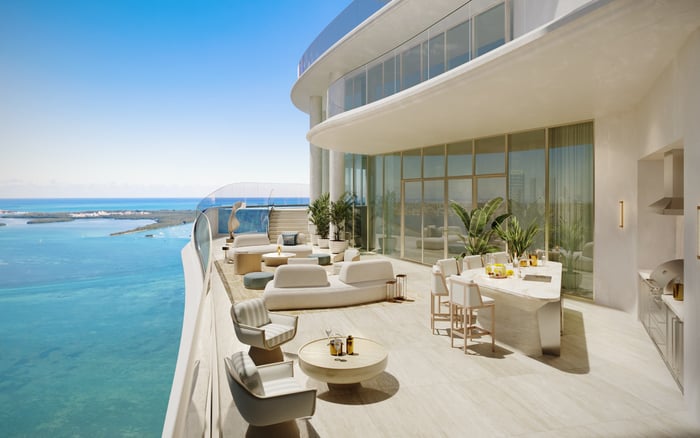
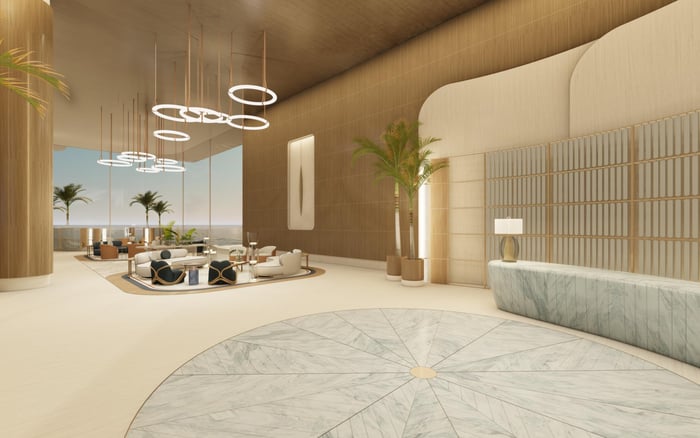
Two branded oceanfront residences present distinct visions of privacy: Rosewood through boutique seclusion in Hillsboro Beach, and St. Regis through managed discretion within a vertical resort in Sunny Isles.
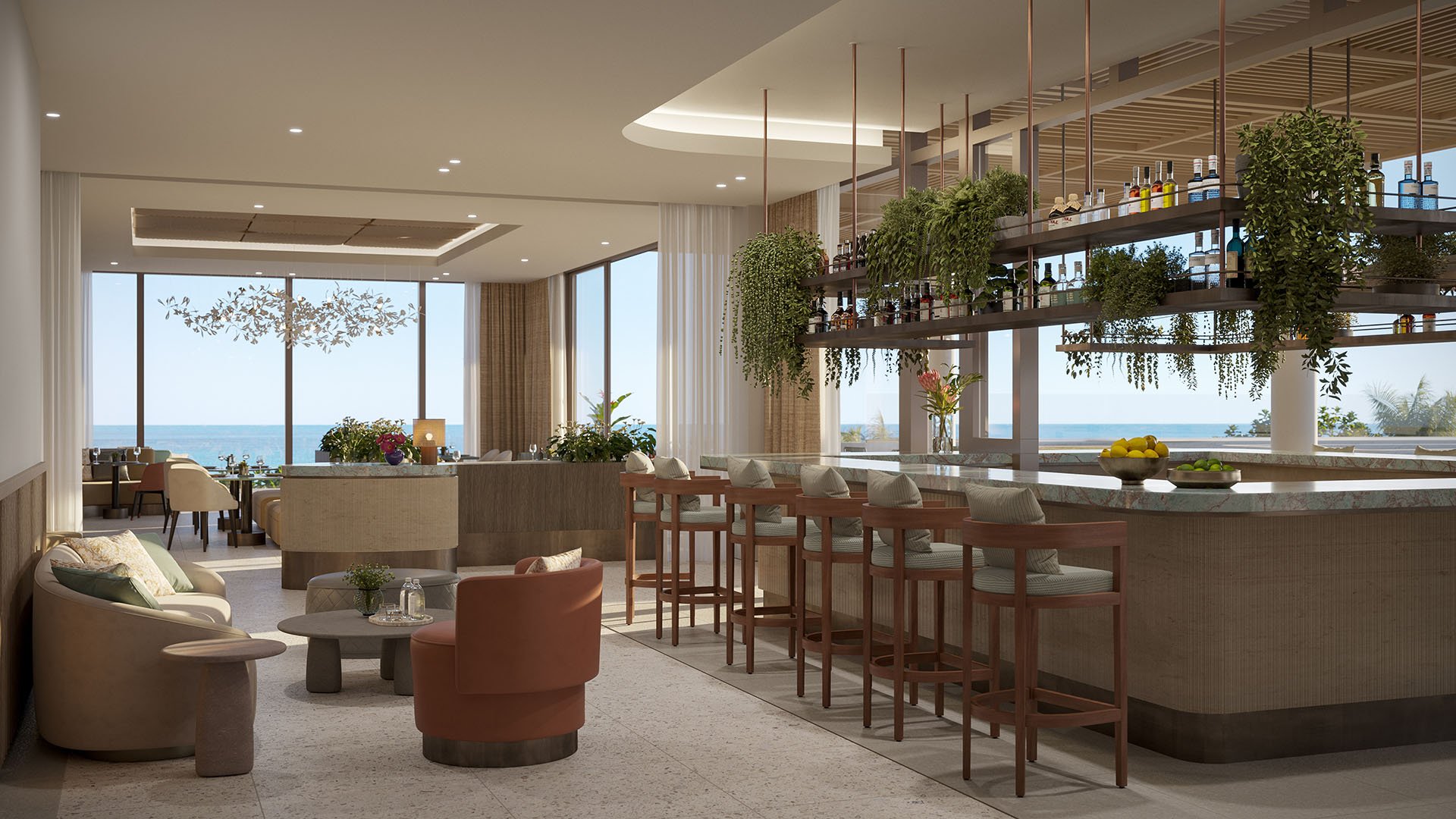
For South Florida buyers in 2026, privacy is no longer defined by a guarded entrance or an elevated residence alone. It emerges through the full choreography of arrival, service, circulation, amenities, and social exposure. Residential hospitality is therefore especially consequential: the brand may establish expectations, but the operating environment determines how discreetly daily life unfolds.
Rosewood Residences Hillsboro Beach and St. Regis® Residences Sunny Isles present sharply differentiated interpretations. Rosewood frames privacy through boutique scale, geographic seclusion, and a low-key oceanfront atmosphere. St. Regis places discretion within a prominent high-rise setting, using planning, service protocols, and operational control to maintain a private-residence identity.
Neither model is categorically more private. The essential question is which form of privacy best suits a buyer's routines, appetite for amenities, and desired level of visibility.
At Rosewood Residences Hillsboro Beach, privacy begins with context. Hillsboro Beach offers a geographically secluded backdrop, allowing the project to present itself as a refuge rather than a stage. Its boutique, low-density character supports anonymity and limited exposure-qualities likely to resonate with owners who favor intimacy over a socially animated resort environment.
Hospitality is presented as personalized service embedded within private residential life. Its value lies not merely in its presence, but in its ability to feel quiet, anticipatory, and proportionate to the setting. Boutique scale and environment work in concert, making discretion integral to the project's program rather than an amenity added afterward.
For buyers surveying Broward, the proposition is especially distinct: oceanfront living shaped by retreat and restraint. Rosewood's central argument remains its combination of place, low exposure, and residential calm.
St. Regis® Residences Sunny Isles approaches the same priority from a different direction. Its setting is visible, dynamic, and vertical. Rather than depend on geographic isolation, the project frames privacy through spatial organization, controlled operations, and service protocols within a larger amenity ecosystem.
This is residential hospitality at resort scale, with an emphasis on separation from transient hotel activity. Recognizable architecture and an expansive amenity experience coexist with a private-residence identity. For an owner seeking depth of service and a broader range of spaces without relinquishing discretion, managed privacy may prove more useful than seclusion.
Sunny Isles Beach also offers buyers a wider field of high-rise choices. Considering The Ritz-Carlton Residences® Sunny Isles can help clarify location preferences, while the St. Regis proposition remains defined by privacy sustained within a prominent vertical-resort environment.
Both developments use established hospitality identities to shape expectations of service and stewardship, while presenting themselves as private residences rather than conventional hotel-condominiums. The distinction, then, is not brand versus no brand. It is environmental privacy versus operational privacy.
Rosewood's model is strongest for buyers who want minimal exposure to be intrinsic to the address. Scale, setting, and atmosphere diminish the sense of public visibility. St. Regis is oriented toward buyers who accept a more conspicuous urban beachfront profile in exchange for resort-scale amenities, provided circulation and service maintain separation.
This distinction should guide due diligence. Buyers should examine how often private and shared spaces intersect, how service reaches the residence, and whether the amenity culture feels contemplative or social. Privacy is experienced repeatedly, not granted once at the front door.
Begin with the rhythms of a typical week. Owners who want to arrive, withdraw, and remain largely unseen may find Rosewood's refuge narrative more closely aligned with their habits. Those who expect wellness, leisure, and hospitality spaces to be part of daily life may prefer the breadth implied by St. Regis, particularly when paired with controlled residential separation.
Next, distinguish privacy from solitude. A secluded setting can minimize exposure, but some buyers want access to an active environment on their own terms. Conversely, abundant amenities offer limited value if using them creates unwanted visibility. The ideal model allows an owner to control engagement without complicating daily routines.
Finally, assess service as an operating relationship. Personalized hospitality should feel present when requested and unobtrusive when not. In both cases, the premium proposition rests on how convincingly the brand translates its standards into residential life.
Rosewood offers the clearer narrative of quiet exclusivity: a restrained setting where scale and geography perform much of the privacy work. St. Regis presents a sophisticated alternative: discretion actively maintained within a larger, recognizable beachfront destination.
For the privacy-oriented purchaser, the choice is not between retreat and hospitality. It is between hospitality that recedes into a secluded environment and hospitality that manages access within a richly programmed one. In 2026, that distinction may matter more than the length of an amenity menu.
Which project is better suited to buyers seeking minimal exposure? Rosewood presents the stronger case for minimal exposure through boutique scale, geographic seclusion, and a low-key atmosphere.
Does St. Regis® Residences Sunny Isles offer privacy? Yes. Its model relies on spatial planning, service protocols, and operational control within a visible high-rise environment.
Is Rosewood's privacy based mainly on security? Its proposition is broader, using scale, setting, and residential programming to create refuge and limit exposure.
What defines the St. Regis vertical-resort model? It combines an extensive amenity experience and hospitality service with a distinct private-residence identity.
Are these conventional hotel-condominiums? Both are positioned as private residences shaped by established hospitality brands rather than conventional hotel-condominiums.
Which model favors a quieter lifestyle? Rosewood is more closely aligned with buyers who prioritize intimacy and a low-key environment over social visibility.
Which model favors a broader amenity experience? St. Regis is more closely aligned with buyers seeking resort-scale amenities while maintaining residential separation.
Why does location matter to the privacy comparison? Hillsboro Beach supports seclusion, while Sunny Isles requires privacy to be managed within a more dynamic beachfront setting.
What should buyers examine beyond the brand name? Buyers should consider circulation, service delivery, amenity culture, and the frequency of interaction with shared spaces.
Does 2026 indicate a completion date for either project? Here, 2026 is the buyer-decision timeframe and should not be read as a verified delivery date.
For a confidential assessment and a building-by-building shortlist, connect with MILLION.
If branded residences are on your mind — as a home or as an allocation — we would be glad to share what we are seeing, privately.
Begin a quiet conversation