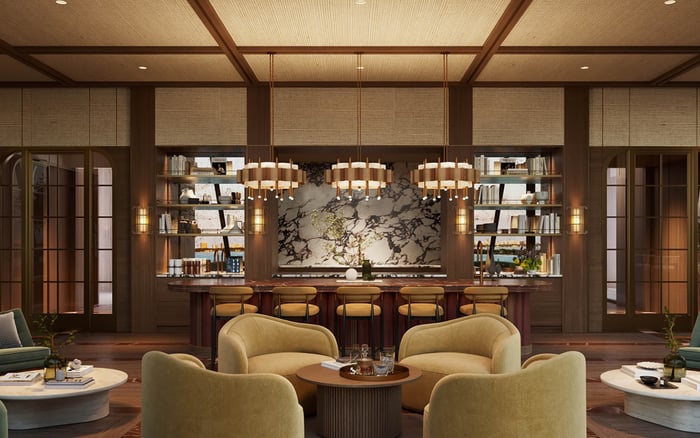
Private dining can serve as a useful due-diligence lens for socially active luxury buyers. Buyers can assess entertaining space alongside privacy, service logistics and booking rules.

For buyers whose South Florida calendars include benefit dinners, committee gatherings and intimate post-event suppers, a home can serve as both a retreat and a setting for entertaining. Private dining access may therefore become part of the purchase conversation when buyers want to host without compromising discretion.
A well-conceived private room can accommodate a dinner beyond the practical limits of a residence, provide neutral ground for guests or allow an owner to host without opening the private home. During a concentrated social calendar, that separation may be valuable.
This is not a universal requirement, and buyers should not assume every formal dining room performs equally well. Relevant questions include privacy, operations and control. Buyers can assess the full arc of an evening, from guest arrival through departure.
Buyers evaluating Palm Beach homes may look beyond square footage and finishes to consider how a property supports hosting before or after a formal engagement. A private room within the residential environment may create flexibility for smaller dinners, donor conversations or family gatherings without requiring a restaurant reservation.
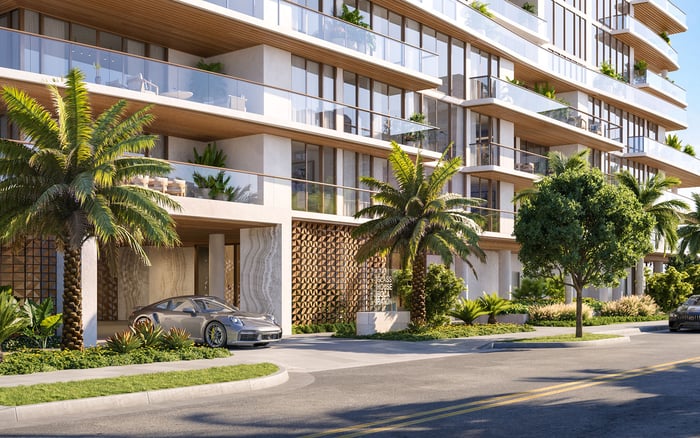
Location matters, as does the transition between public and private life. Prospective owners reviewing Palm Beach Residences can consider private entertaining as one lens within a broader assessment of the residence. The relevant inquiry is not simply whether a dining space photographs beautifully, but whether guests can arrive gracefully, staff can work unobtrusively and the host can preserve the privacy of the home.
For a second-home buyer, these considerations may carry additional weight. An owner arriving for a compressed series of engagements may favor a residence where entertaining does not require assembling temporary infrastructure for each occasion. Access policies and service arrangements still warrant careful review.
Miami can play a different role in the same social strategy. A buyer may want a city residence that supports dinners around business, culture and personal travel while maintaining a separate Palm Beach base. In that context, private dining can form part of a two-market lifestyle rather than an isolated amenity.
In Brickell, ORA by Casa Tua Brickell may be considered by buyers drawn to a hospitality-oriented residential setting. The prudent approach is to verify precisely what private dining access includes, how reservations are prioritized and which services incur separate charges.
Miami Beach presents another hosting profile, with owners potentially valuing a setting suited to both formal and relaxed occasions. Buyers considering Shore Club Private Collections Miami Beach should weigh the practical dimensions of entertaining alongside aesthetics. Guest circulation, valet coordination, sound management and closing times are among the details to verify.
For waterfront city living, Villa Miami may also enter the conversation. When evaluating branded residences, buyers should distinguish the appeal of a hospitality name from the written details of residential access and service.
A buyer can begin with capacity, but should not end there. A stated seat count has limited meaning if the room feels crowded, lacks suitable acoustic control or cannot accommodate the preferred table configuration. Buyers should determine whether furnishings are fixed, whether owners may engage approved vendors and whether floral, lighting or audiovisual requirements can be accommodated.
Service flow deserves equal scrutiny. Buyers can review the relationship among the dining room, preparation area, loading access, elevators and waste removal. They should clarify whether a dedicated catering kitchen exists, what equipment may be used and whether outside chefs must satisfy building requirements.
Privacy is another consideration. Buyers should determine whether guests pass through heavily trafficked common areas, whether arrivals can be coordinated and how resident security procedures apply to larger parties. Hosts may also wish to understand photography policies, staff access and the handling of guest lists.
Governance can determine whether an amenity suits an owner’s needs. Reservation windows, cancellation terms, deposits, cleaning charges, corkage, staffing minimums and event-frequency limits should be verified where applicable. If the room is shared, buyers can ask how competing requests are resolved on popular evenings and request written rules rather than relying on informal assurances.
Some buyers may prefer a home with a large formal dining room, generous terrace and service kitchen. That arrangement can provide control and immediate access, but it also brings guests into the private residence and places greater operational responsibility on the owner.
A shared private salon can create separation and reduce strain on the home. The tradeoff may be dependence on building rules, availability and service standards. For some buyers, a hybrid may be suitable: an intimate dining area at home for family and close friends, complemented by reservable space for larger occasions.
The right answer depends on actual behavior. Buyers should consider how often they host, their typical party size, preferred level of formality and tolerance for advance planning. A room used infrequently may still be valuable when needed, but its costs and restrictions should be understood within the complete ownership proposition.
Private dining access offers one way to assess residential amenities beyond visual presentation. A beautiful room that is difficult to reserve or cumbersome to service may offer limited utility, while a discreet, well-managed setting can function as an extension of the residence.
For buyers moving between Miami and Palm Beach, suitable properties should align location, privacy and hosting infrastructure with the rhythm of their lives. The objective need not be constant entertaining; it can be confidence that the residence is capable of supporting an occasion when needed.
Why might private dining access matter to charity-season buyers? It can provide a discreet setting for intimate gatherings while maintaining separation from the private residence.
Is a private dining room the same as an event space? Not necessarily. Buyers should verify permitted uses, capacity, operating hours and event restrictions.
What should buyers inspect beyond the dining room itself? They can review preparation space, service routes, elevators, guest-arrival procedures, acoustics and waste removal.
Are outside chefs permitted? Policies can differ by property, so buyers should confirm vendor approval, insurance, equipment and staffing requirements in writing.
How important are reservation rules? Booking windows, priority policies and frequency limits can determine practical access to a shared room.
Should buyers prioritize in-residence dining instead? In-residence dining can offer greater control, while a shared salon may protect privacy and accommodate gatherings beyond the home’s scale.
What costs might accompany private dining access? Buyers should ask whether room fees, deposits, staffing, cleaning, catering or beverage-service charges apply.
How can a buyer compare Miami and Palm Beach options? Each property can be assessed against personal travel patterns, event locations, hosting frequency and preferred formality.
Can private dining suit owners who entertain rarely? It may, provided the space is available when needed and its costs align with broader ownership priorities.
What should a buyer request before purchasing? The buyer should request complete written rules governing access, services, guests, fees and cancellations.
For a confidential assessment and a building-by-building shortlist, connect with MILLION.
If branded residences are on your mind — as a home or as an allocation — we would be glad to share what we are seeing, privately.
Begin a quiet conversation