Miami Music Week sharpens the conversation around luxury residences near Miami Design District, where buyers increasingly weigh entertainment, privacy, wellness, and flexible design as seriously as finishes and views.
Miami Music Week does more than fill calendars. For luxury-home buyers considering Miami Design District and its surrounding neighborhoods, it sharpens the question of how a residence should perform when the city is at its most social. The week’s energy reinforces a familiar South Florida truth: a prime home is not merely a place to sleep between events. It is a private setting for hosting, recovery, creativity, and controlled access.
That distinction matters in and around the Design District, where art, fashion, dining, music, and private entertaining often overlap. A buyer may begin with architecture, views, and brand pedigree, but the deeper priorities quickly become experiential. Can the living room absorb a dinner for twelve without feeling staged? Can guests move from arrival to terrace to lounge without crossing the owner’s private quarters? Can a home feel animated at midnight and restorative the next morning?
In this context, projects such as Kempinski Residences Miami Design District speak to a buyer who wants immediate cultural proximity without sacrificing residential composure. The most attractive homes are not the loudest homes. They are the ones designed to manage intensity gracefully.
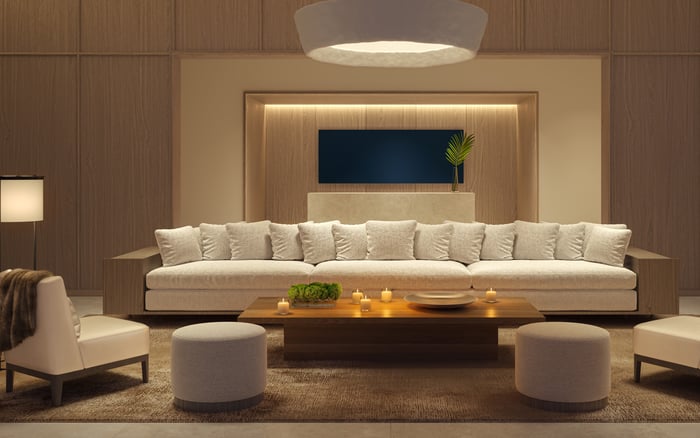
The Music Week lens tends to reorder the old checklist. Square footage still matters, but the arrangement of that footage matters more. Buyers should study ceiling heights, wall lengths, bar placement, kitchen concealment, service circulation, powder room positioning, and where conversations naturally gather. A home with one beautiful room may photograph well. A home with a sequence of connected social zones lives better.
Sound is another quiet luxury. Not simply louder audio, but cleaner sound, stronger separation, and the ability to host without surrendering the entire residence to one mood. A media room, salon, den, or enclosed lounge can become a listening space, screening room, after-dinner retreat, or informal creative studio. The value is flexibility.
The same thinking applies to lighting. Buyers drawn to the Design District lifestyle should ask whether a residence can move from daylight gallery to evening lounge. Warm dimming, layered fixtures, concealed lighting, and well-positioned art walls can make the home feel composed rather than improvised. During high-energy weeks, refinement is often measured by what feels effortless.
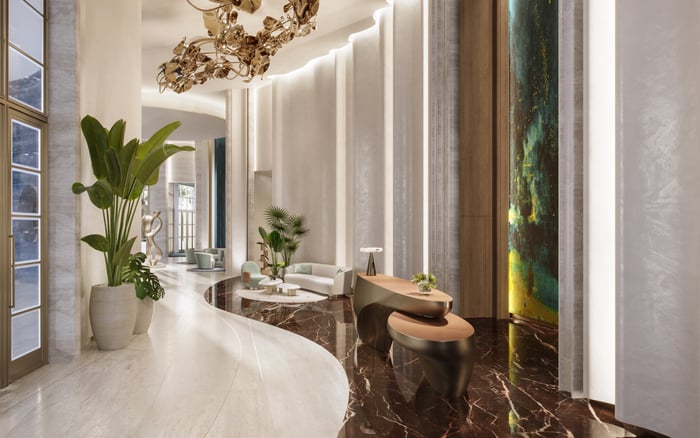
The closer a buyer wants to be to Miami’s cultural core, the more privacy becomes non-negotiable. That does not necessarily mean isolation. It means controlled thresholds: secure entry, thoughtful elevator access, discreet parking, acoustic separation, and a layout that keeps bedrooms away from social movement.
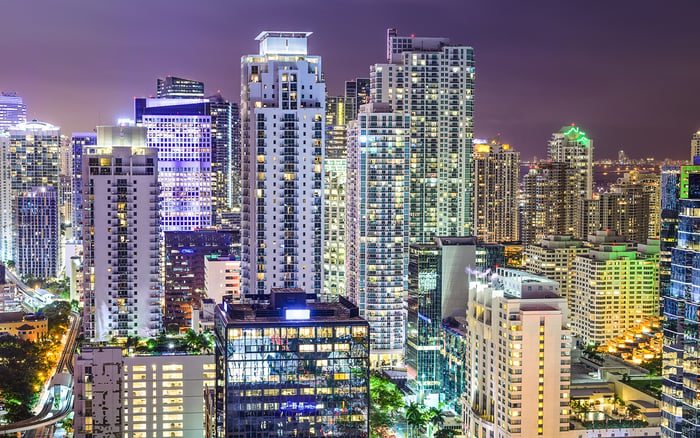
For many buyers, Brickell remains an important comparison point because it offers a vertical, service-rich lifestyle with strong access to dining, business, and nightlife. A residence such as 888 Brickell by Dolce & Gabbana shows why branded design and a cosmopolitan address can appeal to owners who divide time between business, culture, and entertaining. The Design District buyer may not want the same rhythm, but the expectations are similar: arrival should be elegant, service should be fluent, and privacy should never feel like an afterthought.
This is where floor-plan discipline becomes decisive. A glamorous primary suite is less persuasive if it sits directly beside the party. A large terrace is less useful if guests must pass through private rooms to reach it. Music Week simply exposes these weaknesses faster than an ordinary showing.
The morning after matters. Buyers attracted to Miami’s event calendar increasingly value the home as a wellness instrument, not only a social platform. Natural light, fresh air, quiet bedrooms, spa-like baths, plunge or lap-pool access, fitness spaces, steam, sauna, and recovery-oriented amenities can shape daily satisfaction long after the week ends.
This is especially relevant for owners who host frequently. A residence should allow hospitality without exhaustion. That may mean a separate guest suite, a butler’s pantry, discreet storage for serveware, or building amenities that let an owner entertain beyond the private unit when desired.
The most compelling new-construction residences are often those that blend hospitality cues with genuine livability. In Edgewater, EDITION Edgewater may appeal to buyers who want a polished residential base near Miami’s cultural corridors, with a calmer waterfront sensibility than the most event-driven addresses. The goal is balance: access when the city is calling, recovery when it is not.
Miami Music Week also reminds buyers that a luxury home can be a creative workplace. Not every owner needs a recording studio, but many want a room that can support music, content, collecting, design work, calls, or private meetings. The old hierarchy of formal living room, dining room, and den is giving way to rooms with multiple identities.
In and around the Design District, that flexibility feels natural. The neighborhood’s cultural gravity encourages homes that can accommodate artists, collectors, founders, designers, and guests moving between disciplines. A secondary bedroom that becomes a listening room may be more valuable than a rarely used formal space. A gallery-like corridor may become part of the entertaining experience. A library may double as an intimate salon.
Nearby options such as Miami Design Residences Midtown Miami fit into this broader conversation because Midtown and the Design District share a lifestyle radius. Buyers should look less at neighborhood labels alone and more at how the residence supports their actual Miami pattern: dinners, previews, private gatherings, work sessions, recovery, and occasional escape.
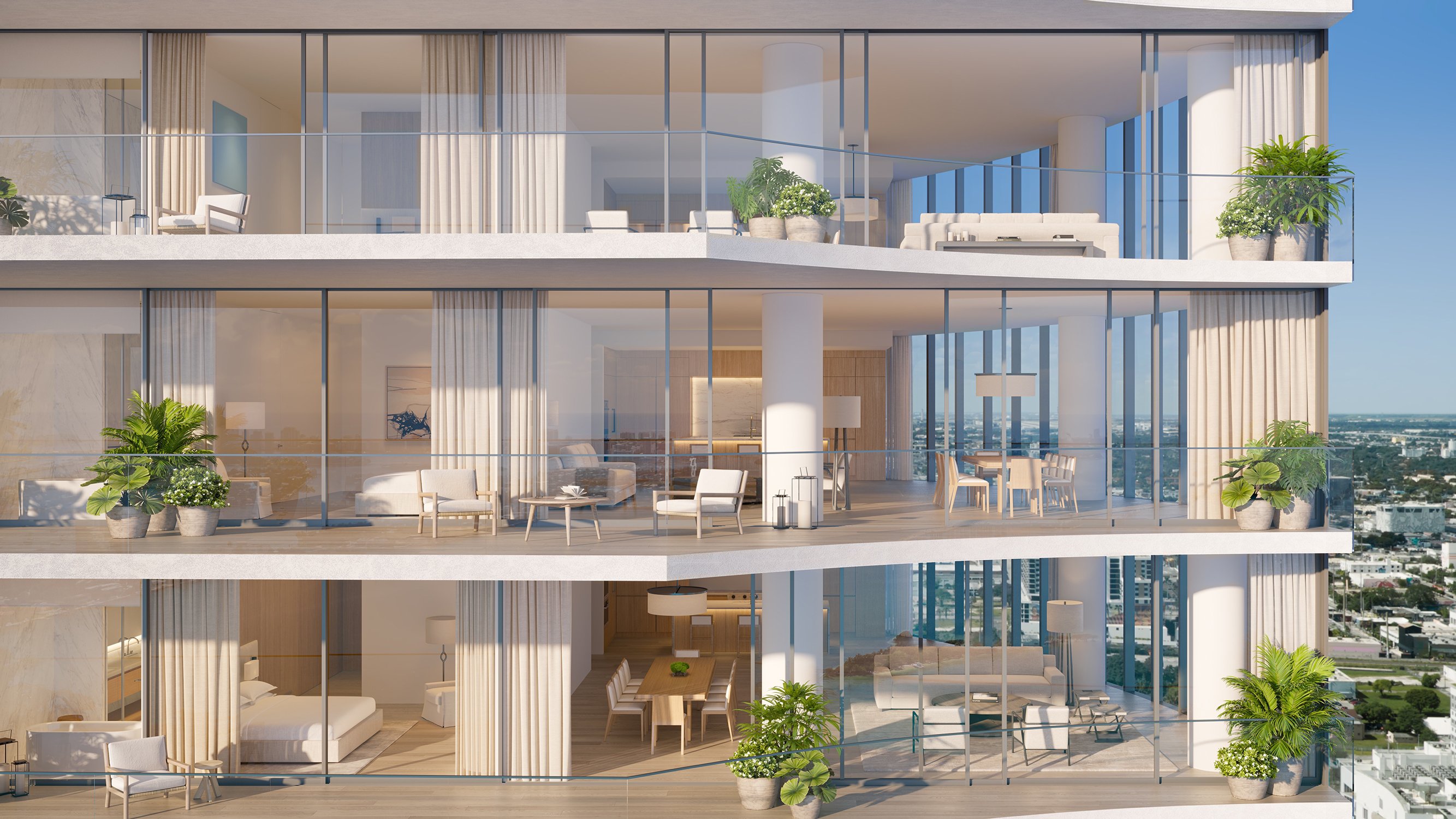
A terrace is not just a view platform in this market. It is a pressure valve. During active cultural weeks, outdoor space gives a home another mood without requiring guests to leave the residence. The best terraces feel integrated with the interior, large enough for real seating, shaded when necessary, and connected to the social heart of the home.
Outdoor priorities vary by buyer. Some want a quiet morning coffee setting. Others want an evening lounge with skyline atmosphere. Some prize bay views, while others prefer architectural outlooks and urban texture. What matters is usability. If outdoor space is too narrow, too exposed, or too disconnected, it becomes decoration rather than lifestyle.
Edgewater and nearby waterfront corridors remain useful comparisons for buyers who want proximity to the Design District with a broader sense of sky and water. Villa Miami offers another example of how the surrounding market is translating hospitality, dining culture, and residential design into a more complete ownership experience.
For a Design District-oriented purchase, the most important question is not whether a home can impress during Miami Music Week. Many can. The better question is whether it can return to calm afterward. Buyers should evaluate how the residence handles three states: private daily life, intimate entertaining, and peak-season hosting.
Start with circulation. Then study sound, lighting, storage, guest access, service access, and the relationship between indoor and outdoor space. Consider whether the building’s amenity program complements the private residence or merely duplicates it. A pool, lounge, wellness suite, dining room, or private event area can reduce pressure on the home itself when hosting becomes frequent.
The ideal residence near Miami Design District should feel culturally connected, technically capable, and emotionally quiet. Music Week makes these needs visible, but it does not create them. It simply compresses Miami’s luxury lifestyle into one vivid week and reveals which homes are prepared for it.
Why does Miami Music Week matter to Design District buyers? It shows how a home performs when Miami becomes more social, from hosting flow to privacy and acoustic comfort.
Should buyers prioritize entertainment space over bedroom count? Not automatically. The strongest residences balance private sleeping areas with flexible rooms that can host, support work, or aid recovery.
Is soundproofing important in a luxury condo? Yes, especially for buyers who entertain or value quiet recovery. Acoustic separation can shape daily comfort as much as finishes.
What makes a terrace useful during event-heavy weeks? A useful terrace connects naturally to the main living area, supports real seating, and offers privacy from neighboring sightlines.
Are branded residences relevant to this lifestyle? They can be, particularly when the brand expression supports service, design coherence, and a polished arrival experience.
How should buyers compare the Design District with Brickell? The Design District emphasizes cultural proximity and creative energy, while Brickell often offers a denser vertical lifestyle.
Is Edgewater a practical alternative? Yes. Edgewater can offer waterfront calm while remaining close to Miami’s cultural and dining corridors.
What room is most often underestimated? The flexible den is frequently underestimated because it can become a listening room, office, guest lounge, or media space.
Does new construction always mean better for hosting? Not always. Buyers should inspect layout, service paths, terrace depth, amenity quality, and privacy before assuming superiority.
What is the best way to shortlist comparable options for touring? Start with location fit, delivery status, and daily lifestyle priorities, then compare stacks and elevations to validate views and privacy.
For a confidential assessment and a building-by-building shortlist, connect with MILLION.
If branded residences are on your mind — as a home or as an allocation — we would be glad to share what we are seeing, privately.
Begin a quiet conversation