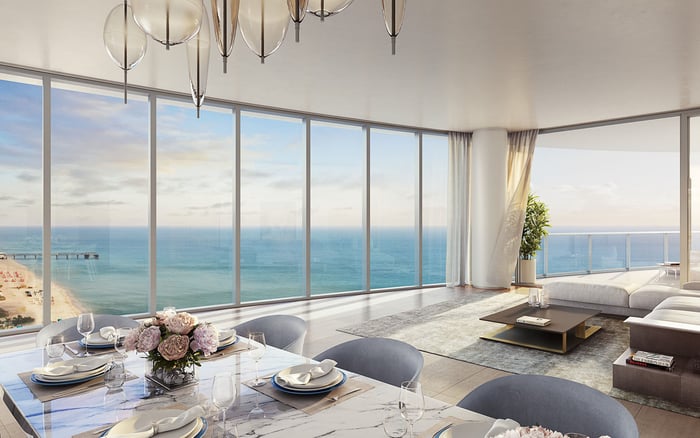
A disciplined comparison of Fort Lauderdale and West Palm Beach should separate cultural routines, fine-art freight requirements, and building-level access. Buyers should verify each factor directly rather than relying on unsupported citywide assumptions.

Collectors comparing Fort Lauderdale and West Palm Beach should begin with their own priorities rather than a presumed hierarchy between the two cities. Cultural proximity, freight access, and residential suitability are separate questions, and each requires direct verification.
The useful distinction is therefore personal. One buyer may prioritize a residence that supports frequent cultural outings, while another may place greater weight on receiving, storing, and installing valuable works. The preferred city should emerge only after the buyer tests both the surrounding routine and the individual property.
A Fort Lauderdale search can begin with Sixth & Rio Fort Lauderdale and Four Seasons Hotel & Private Residences Fort Lauderdale. These project pages give buyers concrete residences to include in a property-level comparison without assuming that every building offers the same conditions for art ownership.
For each candidate, collectors should ask how the location fits their preferred cultural routine and how the building manages deliveries, contractors, insurance documentation, and installation work. Answers should be confirmed directly with the relevant building representatives and specialist advisers.
In West Palm Beach, buyers can similarly compare Mr. C Residences West Palm Beach and Forté on Flagler West Palm Beach. The goal is not to infer a citywide advantage from a project name or location, but to identify which residence best supports the collector’s intended routine.
A useful review should consider access to preferred cultural destinations, the practicality of receiving artwork, available interior display areas, and the procedures that apply when outside specialists enter the property. Buyers should request current, property-specific information before making a decision.
General transportation convenience does not establish fine-art freight capability. Collectors should confirm who will handle each shipment, where works can be received, whether temporary storage is needed, what environmental controls apply, and how the final transfer into the residence will occur.
The physical route deserves equal attention. A specialist should evaluate the loading area, elevator, corridors, doorways, turning points, and final installation location. Oversized, fragile, or unusually heavy works may require a separate plan, and buyers should not assume that a standard residential delivery process will be sufficient.
Cultural proximity is most meaningful when measured against the buyer’s real schedule. Collectors should identify the institutions, galleries, fairs, advisers, and events they expect to visit, then assess how each prospective residence supports those plans.
This approach avoids unsupported claims that one city is categorically better for collecting. Fort Lauderdale and West Palm Beach can serve different buyers because buyers have different cultural routines, property preferences, and logistical requirements-not because a city label resolves every consideration.
Before selecting a home, buyers should document the dimensions and handling needs of important works, review likely display locations, and identify any installation constraints. They should also confirm applicable building procedures, contractor requirements, insurance expectations, and delivery scheduling rules.
The final choice should integrate three evaluations: the buyer’s cultural life, the specialist freight plan, and the residence’s physical suitability. A property that performs well across all three is more relevant than an unsupported assumption about either market.
Which city is better for an art collector? The answer depends on the collector’s cultural routine, preferred residence, and verified freight and installation requirements.
Can citywide reputation establish fine-art freight capability? No. Freight handling should be confirmed with qualified specialists for the specific shipment, route, and residence.
What should buyers compare in Fort Lauderdale? They should compare individual residences, cultural routines, delivery procedures, and installation constraints rather than relying on broad assumptions.
What should buyers compare in West Palm Beach? They should assess each property’s location, handling route, building procedures, and fit with their preferred cultural activities.
Why does the loading route matter? Artwork must move safely from the delivery point to its final position, so elevators, corridors, doorways, and turning points require review.
Should buyers verify elevator dimensions? Yes. Dimensions and operating procedures should be checked against the size and handling needs of the collection.
What building procedures deserve attention? Buyers should confirm delivery scheduling, contractor access, insurance documentation, and installation requirements directly with the building.
How should cultural proximity be measured? It should be measured against the institutions, galleries, fairs, advisers, and events the buyer genuinely expects to visit.
Can every artwork use a standard residential delivery process? Buyers should not assume so, especially for oversized, fragile, or unusually heavy pieces that may require specialist planning.
What is the best final decision framework? Evaluate cultural fit, freight planning, and property-level suitability separately, then select the residence that performs convincingly across all three.
For a tailored shortlist and next-step guidance, connect with MILLION.
If branded residences are on your mind — as a home or as an allocation — we would be glad to share what we are seeing, privately.
Begin a quiet conversation