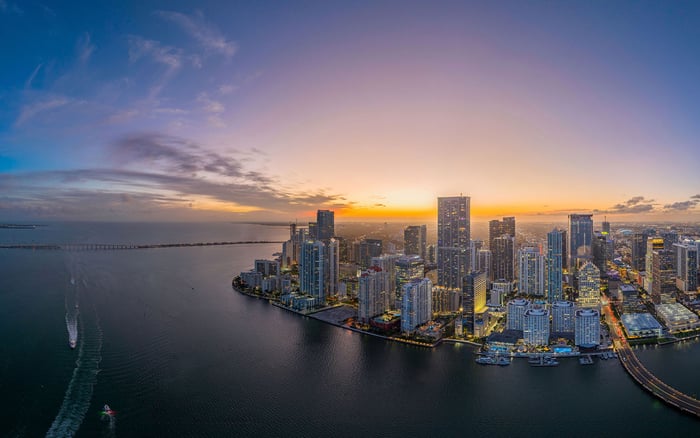
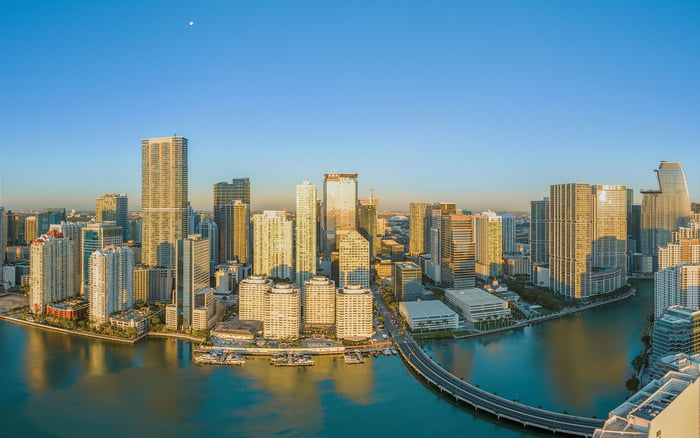
For international purchasers, the closing calendar can be as consequential as the contract price. Currency timing, document coordination, deposit schedules, financing readiness, and association approvals can all affect the effective cost of ownership in a South Florida full-service tower.

For a foreign buyer, the contract price of a South Florida full-service tower residence is only the visible number. The more revealing figure is the effective cost by the time the deed is recorded, funds have settled, the residence is accessible, and ownership is ready to function as intended. In that interval, timing can either add cost or preserve value.
The issue is not simply whether a closing is fast or slow. It is whether the timeline is synchronized with currency movement, banking logistics, legal review, tax planning, document execution, lender requirements, if any, and the building’s own approval rhythm. A buyer may negotiate elegantly on price, then lose leverage through rushed documentation, late wires, or avoidable extensions.
In a market where international buyers often weigh lifestyle, privacy, service, and long-term optionality, the calendar should be treated as a financial instrument. It can protect liquidity, reduce friction, and give the buyer enough time to make a precise decision rather than an emotional one.
A full-service tower closing usually involves more than the buyer, seller, and escrow agent. There may be international banks, local counsel, wealth advisers, entity managers, insurance providers, lenders, translators, and building administration. Each participant works at its own pace, and the slowest step can control the transaction.
The first pressure point is fund readiness. International wires may require internal bank reviews, intermediary routing, and additional documentation. A buyer who assumes same-day movement can be surprised by a sequence that feels routine to the institution but urgent inside a contract. When the contract requires deposits or final funds by a defined moment, the practical question is not whether the buyer has the capital. It is whether the capital can arrive in the required form, at the required time.
The second pressure point is document execution. If the buyer uses an entity, trust, or family office structure, signatures may need to be coordinated across jurisdictions. Authority documents should be reviewed before the closing window narrows. The cost of delay is not always a penalty. Sometimes it is a weakened negotiating posture.
The third pressure point is building readiness. Full-service towers place a premium on order, security, and resident experience. That can mean applications, approvals, orientation, insurance confirmations, move scheduling, and rules for vendors. These steps are manageable when sequenced early. They become expensive when compressed into the final week.
The closing rhythm can vary by submarket and property type. A buyer considering a financial district address such as The Residences at 1428 Brickell may be thinking differently from a buyer focused on a beachfront or island setting. The urban buyer may prioritize access, work patterns, and immediate usability. The waterfront buyer may place greater weight on privacy, seasonal occupancy, and long-range family planning.
In buyer shorthand, Brickell, Miami Beach, Sunny Isles, and Bay Harbor each carry a different cadence; investment and new-construction decisions should be paced accordingly. Those labels are not merely geographic. They often imply different expectations around due diligence, service culture, personal use, leasing intentions, and the sophistication of the closing team.
For a Miami Beach buyer evaluating The Perigon Miami Beach, timing may be tied to seasonal use and design planning. For a Sunny Isles buyer considering St. Regis® Residences Sunny Isles, the timeline may be more closely connected to international travel schedules and family office coordination. For a Bay Harbor Islands buyer looking at The Well Bay Harbor Islands, the key may be balancing a quieter residential setting with the administrative precision of a new acquisition.
The correct timeline is not universal. It should be built around the buyer’s source of funds, intended use, legal structure, and tolerance for operational detail.
Pre-construction and completed residences create different forms of timeline risk. In a completed or resale purchase, the closing horizon may feel more immediate. Due diligence, association review, lender coordination, insurance, final walk-through, and funds transfer can converge quickly. The advantage is visibility. The buyer can usually understand the physical residence, the building experience, and the closing path in a concentrated period.
New-construction planning is different. The buyer may be making commitments across staged deposits, evolving completion expectations, and a longer window between contract and possession. That longer horizon can be useful for currency planning, design decisions, and estate structuring. It can also create exposure if the buyer does not track liquidity needs over time.
A residence such as Baccarat Residences Brickell may attract a buyer who values brand, service, and a central Miami setting. The timing strategy should reflect that the emotional decision and the financial obligation may not occur on the same day. For foreign buyers, separating enthusiasm from funding logistics is essential.
Delay does not need to be dramatic to be expensive. A few misaligned steps can alter the economics of the purchase. Currency conversion may occur at a less favorable moment. Short-term liquidity may need to be repositioned. Travel may need to be rearranged. Legal or advisory teams may need to accelerate work. A seller may resist extensions or ask for consideration. A lender, if involved, may require updated documents.
There is also opportunity cost. Capital reserved for a closing is capital not being deployed elsewhere. If the buyer keeps excess cash idle because the closing date is uncertain, the transaction carries a shadow cost. If the buyer waits too long to organize funds, the transaction carries a stress cost. Neither appears elegantly on a closing statement, yet both shape the real experience of ownership.
For ultra-premium buyers, the greater concern is often discretion. A rushed timeline creates more emails, more escalations, and more people pulled into the process. A calm timeline protects privacy because each party knows what is expected before urgency appears.
Sophisticated buyers should consider timeline terms at the offer stage. Price receives attention, but timing provisions can be just as meaningful. Deposit due dates, inspection periods, financing dates if applicable, association application deadlines, closing windows, extension rights, and document delivery obligations all shape the buyer’s risk.
The goal is not to stretch the closing unnecessarily. Sellers value certainty, and a clean buyer remains powerful. The goal is to create a calendar that is credible. A foreign cash buyer with funds already positioned may offer speed as leverage. A buyer using international structures may be better served by a slightly longer but more certain closing.
The strongest offer is not always the fastest. It is the one the seller believes will close smoothly. That credibility can be worth more than a symbolic concession.
Before signing, a foreign buyer should confirm who will sign, where funds will originate, whether currency must be converted, what documents the escrow and closing teams will require, and whether the building has application or approval steps. The buyer should also decide whether the residence will be held personally or through another structure before deadlines begin.
Travel should be planned with the closing in mind, but not made dependent on perfect timing. If remote execution is expected, the buyer should understand what can be signed electronically, what may require notarization, and what needs original documentation. These details sound administrative, yet they often determine whether a luxury acquisition feels effortless or unnecessarily exposed.
Finally, the buyer should maintain a single point of coordination. Too many voices can slow a transaction. A disciplined adviser, working with the proper legal and financial professionals, can keep the calendar quiet, realistic, and aligned with the buyer’s broader intentions.
Why does closing timing matter for a foreign buyer? Timing affects funding, document readiness, currency planning, and the buyer’s leverage if an extension is needed.
Is a faster closing always better? Not always. Speed is valuable only when funds, documents, and approvals are already organized.
Can currency timing affect the effective purchase cost? Yes. If funds must be converted before closing, the chosen conversion moment can influence the buyer’s final outlay.
Should funds be moved before signing a contract? Buyers should discuss fund positioning with their banking and legal advisers before deadlines begin.
Do full-service towers add extra timing steps? They can. Applications, approvals, insurance, move procedures, and building rules may need to be addressed before occupancy.
How should entity ownership be handled? The ownership structure should be reviewed early so signing authority and documents are ready before closing.
What is the biggest avoidable mistake? Waiting until the final week to coordinate wires, signatures, approvals, and advisory review.
Can timeline terms be negotiated? Yes. Closing windows, deposit timing, and extension mechanics can often be part of the offer strategy.
Is pre-construction easier for foreign buyers? It can offer more planning time, but it also requires disciplined tracking of future deposits and obligations.
Who should coordinate the closing calendar? A trusted adviser should align counsel, banking, building administration, and the buyer’s decision makers.
To compare the best-fit options with clarity, connect with MILLION.
If branded residences are on your mind — as a home or as an allocation — we would be glad to share what we are seeing, privately.
Begin a quiet conversation