For family buyers, the most valuable address is the one that performs smoothly across school mornings, weekends, social occasions, and changing household needs.
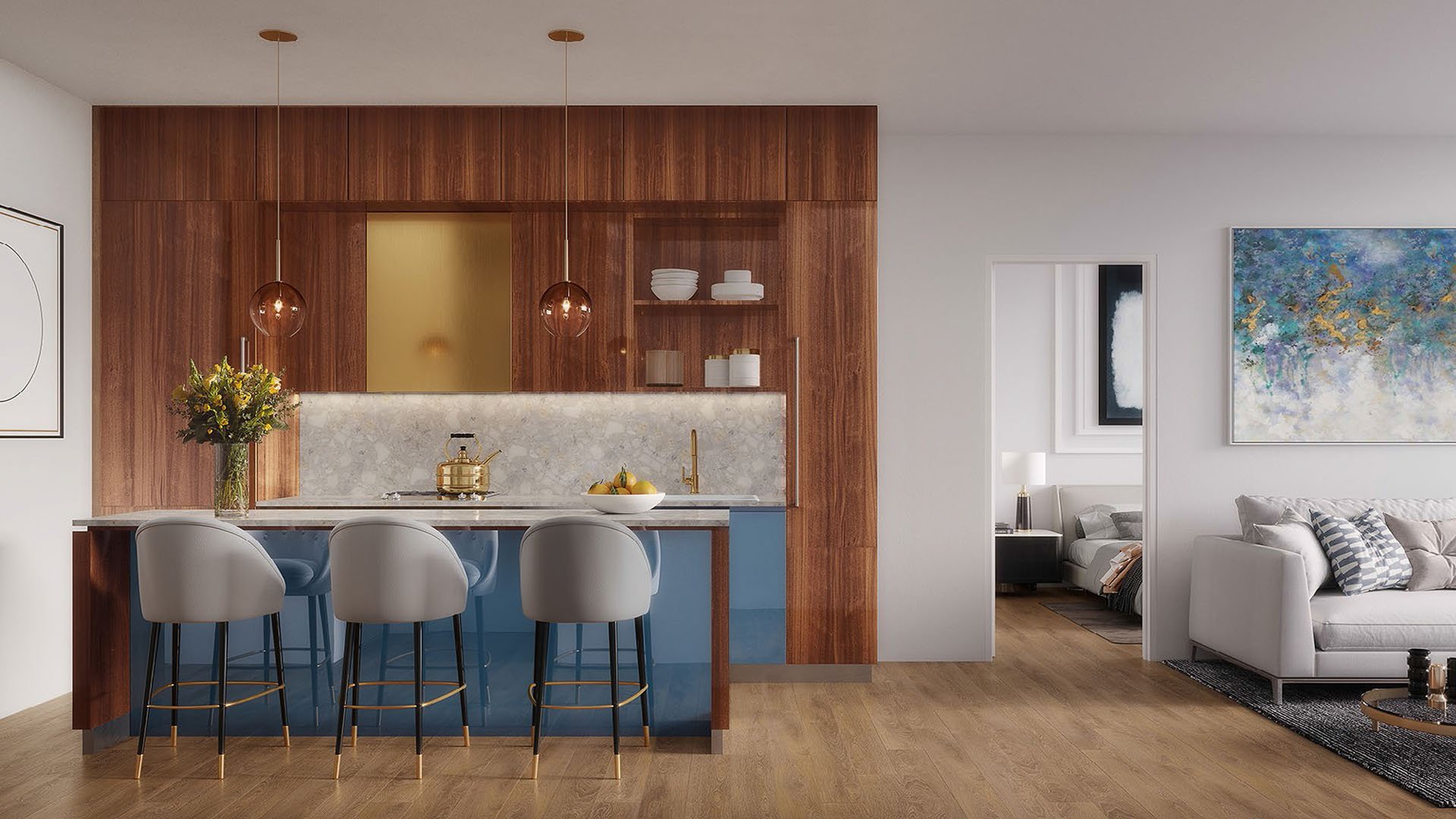
For a family considering the Design District, the decisive question is not whether an address feels fashionable during a polished afternoon tour. It is whether the location and residence can support the household’s actual week with less friction.
Begin by mapping recurring journeys: school departures, extracurricular activities, medical appointments, grocery stops, exercise, dinners, playdates, airport runs, and visits from grandparents. Then distinguish trips that can realistically happen on foot from those that will still require a car and driver. Walkability has value only when it serves the moments your family repeats.
This is especially important for buyers comparing Miami Beach, Brickell, and Coconut Grove. Each candidate should be measured against the same family calendar, not a generalized image of urban convenience or resort living.
A map radius is a useful starting point, but it cannot reveal how a walk feels with young children, a stroller, shopping bags, or an older relative. Before buying, repeat the relevant routes at the times your family would actually use them. Observe crossings, shade, weather exposure, drop-off activity, construction interfaces, and the ease of returning home after dark.
Evaluate the building threshold as carefully as the surrounding streets. A short walk can still feel inconvenient if reaching the residence involves slow retrieval, awkward entrances, multiple elevator transitions, or limited space for strollers and bicycles. Conversely, a route that appears slightly longer may perform well when departure and arrival are intuitive.
Buyers considering Kempinski Residences Miami Design District can use this exercise to turn an abstract location preference into a door-to-destination test. The objective is not to prove that every errand is walkable, but to identify which recurring trips can reliably become simpler.
The word “club” can describe markedly different arrangements. Family buyers should request the governing documents and operating details behind any club-related promise. Confirm who receives access, whether privileges are tied to the unit or to individual residents, how children and household staff are treated, and what happens when a home is rented or transferred.
Reservations matter as much as access. Ask how peak periods are managed, whether guests are permitted, which spaces have age restrictions, and whether private events can reduce availability. Review dues, minimum spending requirements, initiation costs, cancellation terms, dress expectations, and the process for changing rules.
Most importantly, determine whether the club fits the family’s natural behavior. A beautifully presented membership has limited practical value if using it demands advance planning that conflicts with school nights or weekend travel. The right club should remove decisions, not create another scheduling system to manage.
Private dining can be highly valuable for households that entertain frequently, celebrate multigenerational occasions, or prefer discretion. Yet the room itself is only one part of the proposition. The operating structure determines whether it becomes an extension of the home or an amenity used twice a year.
Ask who provides the food and service, how menus are created, how far in advance reservations must be made, and whether outside chefs or caterers are allowed. Clarify minimum charges, gratuities, cancellation policies, corkage, children’s menus, dietary accommodations, guest limits, and cleanup responsibilities. Inspect the route from arrival to the dining room, restrooms, and departure. An otherwise minor circulation issue can compromise privacy.
For comparison, families may tour Villa Miami and 2200 Brickell while asking precisely the same operational questions. The purpose is not to compare amenity labels, but to assess how each residence would support an actual birthday dinner, Sunday lunch, or last-minute gathering.
A disciplined scorecard prevents a dramatic lobby or singular amenity from eclipsing more consequential factors. Assign weights based on household priorities, then score each residence on walkable routines, vehicle logistics, club usability, private dining operations, residence layout, acoustic privacy, storage, guest accommodation, and service consistency.
Include a separate “friction” column. Record every small dependency, such as a required reservation, valet handoff, elevator change, guest registration, or age limitation. Individually, these details may appear modest. Collectively, they define the quality of daily life.
New-construction buyers should distinguish between what is contractually documented and what remains conceptual or subject to future operating decisions. Resale buyers should examine how systems perform in practice. In both cases, written rules and costs deserve the same scrutiny as finishes.
Use The Well Coconut Grove as an additional comparison point if that location is already under consideration. A consistent scorecard makes different settings easier to evaluate without assuming that one model of luxury suits every family.
The strongest purchase is not necessarily the home with the longest amenity inventory. It is the residence whose location, access privileges, and service model align with the family’s most frequent and least flexible needs.
Some households will place the greatest premium on spontaneous walking. Others will value controlled entertaining, a club that functions as a social extension of the home, or vehicle logistics that make school mornings predictable. Establish the proper hierarchy before negotiations begin.
A family should also consider how priorities may change. Children gain independence, entertaining patterns evolve, and household staffing can shift. Favor access and layouts that remain useful across several plausible versions of family life. That is a more durable definition of luxury than novelty alone-and a more precise way to approach the Design District.
Is a short map distance enough to establish walkability? No. Test the complete door-to-destination route at the times and in the conditions your family expects to use it.
Should school proximity be the first filter? It should be weighted according to the household’s actual school plan, transportation arrangements, and extracurricular schedule.
What should buyers verify about club access? Confirm eligibility, guest policies, age restrictions, reservations, dues, spending obligations, transfer terms, and the authority to change rules.
How can families assess whether a club will be used? Compare its hours, programming, reservation process, and location with the family’s recurring weekly calendar.
What makes private dining genuinely useful? Reliable service, workable booking terms, privacy, flexible menus, clear costs, and easy guest circulation matter more than decorative impact alone.
Should buyers rely on an amenity rendering? No. Request contractual descriptions, operating details, applicable rules, and written clarification of services and costs.
How many neighborhood walks should a family conduct? Conduct enough visits to experience the routes during school mornings, afternoons, evenings, weekends, and less favorable weather.
What belongs on a family scorecard? Include daily routes, vehicle logistics, club usability, dining operations, layout, privacy, storage, guest needs, service, costs, and restrictions.
How should future family needs affect the decision? Test each home against several scenarios, including older children, visiting relatives, changing staff needs, and more frequent entertaining.
Is the residence with the most amenities usually the best choice? Not necessarily. The better choice is the one whose most usable amenities reduce friction in the household’s real routine.
For a confidential assessment and a building-by-building shortlist, connect with MILLION.
If branded residences are on your mind — as a home or as an allocation — we would be glad to share what we are seeing, privately.
Begin a quiet conversation