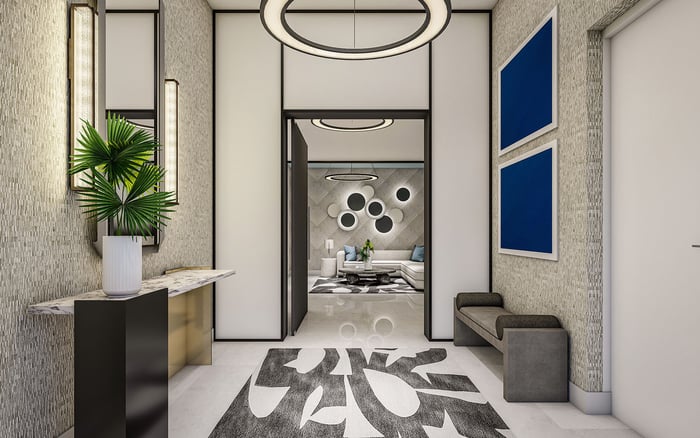
A practical framework for weighing school routines, recurring drives, household security, and residential fit before a family commits to Palm Beach Gardens.

For family buyers, choosing Palm Beach Gardens is less about finding an impressive residence than establishing a dependable operating base. The decision should begin with a calendar that captures school arrivals, afternoon activities, office commitments, airport runs, social plans, household staffing, and weekend rituals. A home can be beautifully resolved yet poorly suited to the way a family actually moves.
This is why the first viewing should not determine the shortlist. Before comparing architecture, acreage, views, or club access, buyers should define the nonnegotiable movements of an ordinary week. The most useful principle is simple: evaluate the address through repetition. One convenient journey matters less than the cumulative effect of every recurring journey.
The same discipline applies across property types. A family considering The Ritz-Carlton Residences® Palm Beach Gardens can apply the same calendar test as one evaluating a single-family home. The relevant question is not which option sounds most prestigious, but which one supports daily life with the least friction.
A private-school strategy should begin well before enrollment paperwork. Families should map the full door-to-door sequence: leaving the residence, navigating building or community exits, completing drop-off, returning home or continuing to work, and repeating the process at dismissal. Add siblings, separate campuses, sports, tutoring, and occasional schedule changes before judging whether the rhythm is sustainable.
School choice and home choice should remain parallel decisions until both are sufficiently clear. Selecting a residence around one assumed campus can create unnecessary rigidity if admissions, grade progression, or a child’s needs later change. A stronger shortlist preserves access to more than one plausible educational path without making any single route a permanent household burden.
During property tours, buyers should ask practical questions. Where do backpacks and sports equipment land? Can children enter without crossing service traffic? Is there a calm place for a driver or caregiver to wait? Does the kitchen support an early breakfast while another child prepares upstairs? These details reveal whether the residence works at 7:00 in the morning, not merely during a polished afternoon showing.
Commute analysis should unfold as a series of rehearsals. Drive the likely school route at the intended departure time, then repeat it on another day. Test the return, afternoon collection, an evening activity, and the route to the household’s most frequent professional destination. Record departure and arrival times, but also note stress points, awkward turns, and places where one delay disrupts the next commitment.
Think in terms of rhythm rather than a single commute. One parent may travel south while another works from home. A caregiver may handle dismissal while older children follow independent schedules. Household staff, deliveries, guests, and service providers create their own circulation patterns. The ideal address allows these movements to coexist without turning the residence into a dispatch center.
Comparison shopping can sharpen the analysis. Touring a Palm Beach option such as Palm Beach Residences or a West Palm Beach alternative such as Mr. C Residences West Palm Beach can help buyers distinguish an attachment to a particular property from a preference for a broader daily geography. The purpose is not to widen the search indefinitely, but to understand what each location requires of the family calendar.
Security should be assessed as an operating system, not a marketing term. Begin at the outer boundary and move inward: arrival, visitor verification, vehicle access, pedestrian entry, deliveries, service personnel, common areas, private thresholds, and emergency procedures. Buyers should ask who controls each layer, how exceptions are handled, and what happens when technology or staffing is unavailable.
A gated-community setting and a staffed residential building create different patterns of privacy and oversight. Neither format is automatically more appropriate. The better choice depends on the children’s ages, the household’s visibility, travel frequency, domestic staffing, tolerance for shared spaces, and preferred level of control over visitors.
Families should also distinguish discretion from inconvenience. Strong protocols need not make everyday movement cumbersome, but they should be consistent. Observe whether family members, guests, vendors, and deliveries follow clearly different paths. Ask how temporary permissions are created and revoked. Consider whether a child returning with a friend, a new tutor, or an unfamiliar driver can be handled calmly and predictably.
For buyers drawn to waterfront living, the security review should include every practical point of approach associated with the property, without assuming the front entrance is the only relevant threshold. A comparison with Mandarin Oriental Residences, West Palm Beach can also clarify whether the family prefers a managed residential environment or a home with more individually directed systems.
Once the shortlist is tight, create a common scorecard. Use categories such as school flexibility, morning departure, afternoon recovery, work commute, staff circulation, guest handling, privacy, storage, outdoor use, and weekend convenience. Weight each category according to the household rather than assigning every factor equal importance.
Then stage a normal day mentally, room by room. Children arrive with equipment. A delivery appears while a guest is expected. One parent takes a call, another leaves for dinner, and staff complete evening tasks. The right plan absorbs these overlaps. The wrong one requires constant negotiation, regardless of its finishes.
Lifestyle should be treated as recurring behavior, not an image. If weekends center on the home, prioritize the spaces the family will repeatedly use. If the household is frequently away, controlled access and low-friction oversight may carry more weight. If grandparents or adult children visit often, privacy between generations deserves explicit consideration.
Finally, examine optionality. Children mature, schools can change, work patterns evolve, and staffing needs shift. A residence that remains functional through those transitions may offer more durable value than one optimized for a narrow moment. The best Palm Beach Gardens choice is therefore the address that performs quietly across many versions of family life.
Should school selection come before the home search? The two decisions should advance together until the family understands its realistic educational options and residential preferences.
How should buyers test a school commute? Rehearse the complete trip at the times the household would actually travel, including dismissal and activity schedules.
Is the shortest route always the best route? No. Predictability, ease of access, and compatibility with other commitments can matter more than nominal distance.
What should families ask about residential security? Ask how residents, guests, vendors, staff, deliveries, and emergencies are handled across every access point.
Is a staffed building preferable to a private home? It depends on the household’s desired control, privacy, service model, travel habits, and tolerance for shared protocols.
How can parents compare unlike property types? Apply one weighted scorecard and test each option against the same weekly calendar and household scenarios.
Should buyers include children in the evaluation? Age-appropriate input can reveal practical concerns involving routines, privacy, storage, and comfort that adults may overlook.
How should household staff factor into the choice? Review arrival, parking, access permissions, work areas, storage, and circulation so service remains discreet and efficient.
What makes a residence adaptable for a family? Flexible rooms, manageable circulation, and security procedures that can evolve with changing ages and schedules are valuable.
What is the final test before making an offer? Confirm that the address supports an ordinary week without relying on ideal traffic, perfect timing, or constant workarounds.
If you'd like a private walkthrough and a curated shortlist, connect with MILLION.
If branded residences are on your mind — as a home or as an allocation — we would be glad to share what we are seeing, privately.
Begin a quiet conversation