For family buyers, private elevator access and valet design should be tested as daily operating systems, not treated as decorative amenities.
For a family choosing Coral Gables, the most revealing luxury may be the least photogenic: a calm, legible journey from vehicle to front door. Private elevator access and valet flow shape the daily experience of school mornings, dinner arrivals, caregiver handoffs, luggage, deliveries, and visiting relatives. They deserve the same scrutiny as the kitchen, terrace, and primary suite.
The guiding principle is simple: evaluate the arrival system as a sequence, not a collection of amenities. The driveway, porte cochère, valet podium, resident parking route, lobby threshold, elevator call process, and residential entry must work together. Polished finishes cannot compensate for a sequence that requires family members to cross traffic, wait without shelter, or improvise during a busy handoff.
Private elevator access warrants equally precise attention. The phrase can describe distinctly different experiences, so buyers should ask what is private, when it becomes private, and how access is controlled. The objective is not exclusivity alone. It is a predictable transition that supports the household's lifestyle without unnecessary friction.
Begin at the street and rehearse the household's actual week. One parent may leave early, another may manage a private-school drop-off, children may return with a caregiver, and grandparents may need an intuitive route with minimal thresholds. Evening guests, grocery arrivals, sports equipment, strollers, and wet-weather entries present different tests.
Schedule more than one visit if possible. Rather than judging the porte cochère while it is empty, observe the space at times that resemble your expected arrivals. Ask the representative to explain what happens when several cars appear at once, where each vehicle waits, how keys are tracked, and whether residents who self-park rejoin the same circulation path.
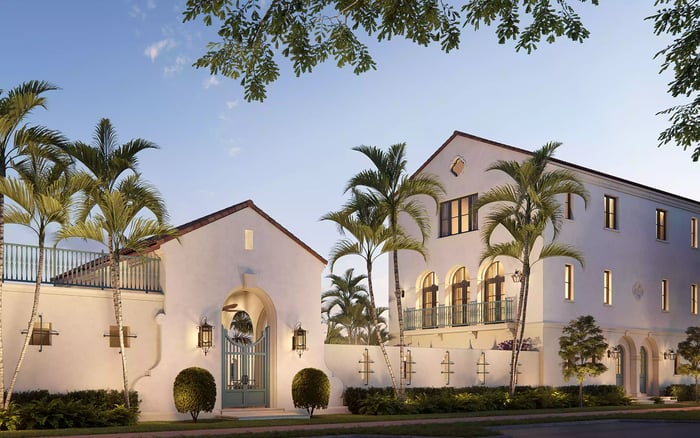
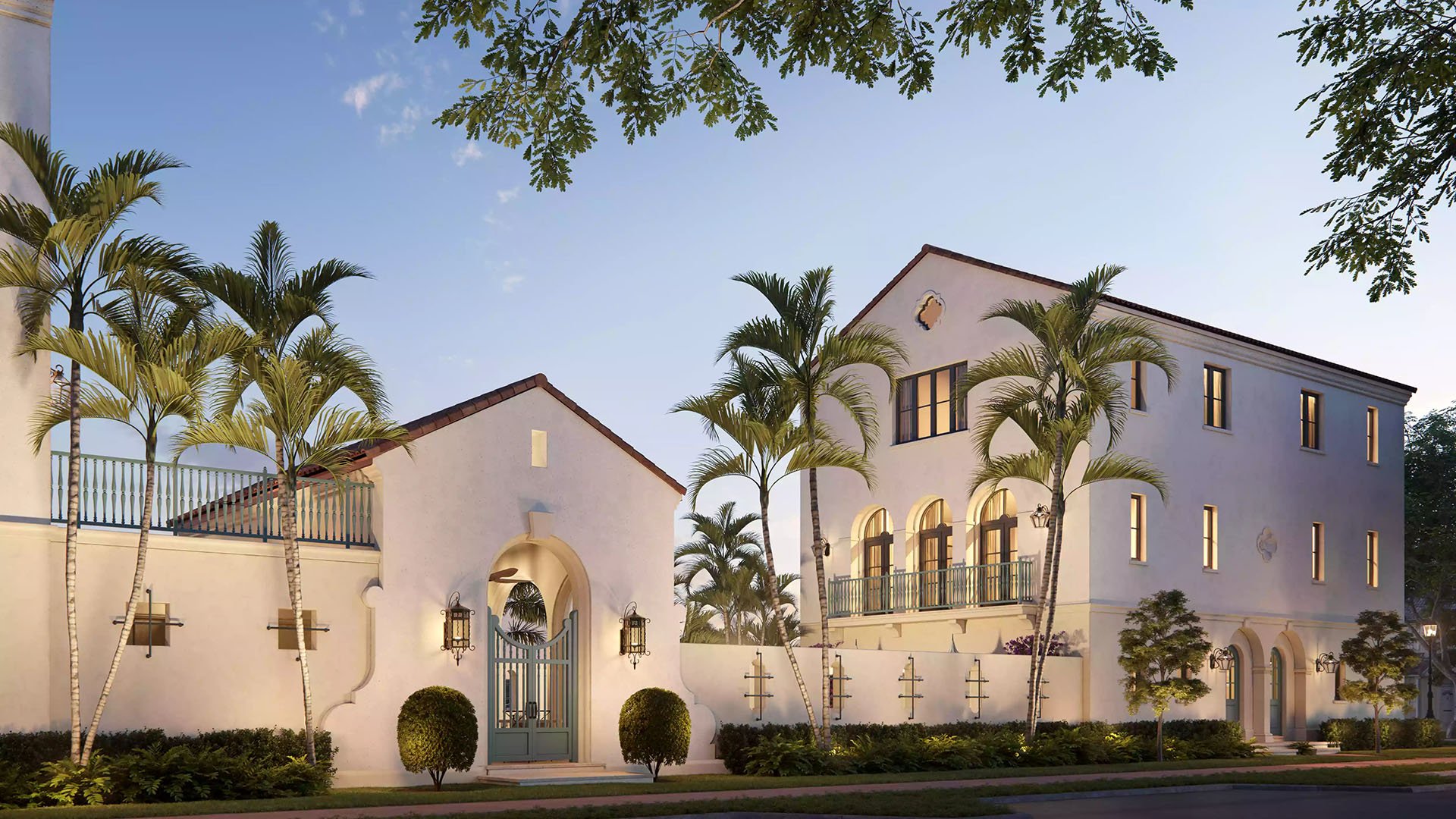
When touring Cora Merrick Park, trace one uninterrupted journey from curb to residence. Apply the same exercise at Ponce Park Coral Gables. Focus the comparison on clarity and fit for your household, not a single feature label.
A private landing can create a composed sense of entry, but family buyers should look beyond the reveal. Ask how residents summon the elevator, whether credentials are required inside the cab, how guests are authorized, and where visitors wait before access is granted. Clarify whether the elevator opens directly into the residence, into a private vestibule, or onto a shared corridor serving a limited number of homes.
Capacity and resilience matter as much as privacy. Bring the stroller, mobility aid, luggage, or sports bag most likely to travel with the family, and confirm that the route feels comfortable. Ask what happens during maintenance, a move, or a service interruption. Any secondary route should be intuitive, appropriately secured, and workable for every household member.
The door condition also deserves scrutiny. If an elevator opens into the home, ask how privacy is maintained when children are nearby, how guest access expires, and what protects the residence from an unintended call. Buyers considering The Village at Coral Gables can make these questions part of a broader assessment of family entry and internal circulation.
Valet service is part hospitality, part traffic design. Families should identify the passenger standing zone, the path children take when exiting a vehicle, the location of waiting guests, and the point where luggage or packages change hands. The most reassuring arrangement is often the one in which every movement is obvious, crossings are limited, and verbal direction is unnecessary.
Ask management-oriented questions even when purchasing before completion. Who can retrieve a car? How are recurring drivers, caregivers, and relatives recognized? Is there a protocol for car seats, oversized vehicles, bicycles, or a child who has left something upstairs? How does the system distinguish a resident arrival from a delivery or ride service?
Do not assume that a staffed arrival eliminates the need to analyze self-parking. Some families value the option to park independently when timing is tight. Walk that route as carefully as the valet route, noting gates, turning movements, elevator access, lighting, and the distance from parking space to residence.
Choosing Coral Gables is also a decision about the family's recurring geography. Plot the places that define the week, then consider whether the quality of arrival at home complements those journeys. A graceful final hundred feet can matter when the day already involves several timed transitions.
For households comparing nearby residential settings, a tour of Four Seasons Residences Coconut Grove can sharpen the brief. The objective is not to declare one model universally superior. It is to determine whether the family prefers a highly managed threshold, a more independent arrival, or a hybrid that can adapt as children and older relatives develop different needs.
Before selecting a residence, create a concise scorecard with separate marks for vehicle approach, passenger unloading, weather protection, stroller and luggage handling, guest authorization, elevator waiting, backup access, self-parking, and staff communication. Weight each category by frequency. A rare gala arrival should not outrank the school run if the latter defines every weekday.
Request clear explanations of operational details, and distinguish current arrangements from future expectations. Where procedures are discretionary, consider how they could change under different staffing or management. Where circulation is architectural, judge whether it remains comfortable when more than one household arrives at once.
The strongest decision is personal, not generic. Privacy may be paramount for one family, while another values speed, redundancy, or an effortless route for grandparents. In Coral Gables, private elevator access and valet flow should ultimately support the home's emotional promise: composure, autonomy, and the sense that daily life has room to unfold.
Does private elevator access always mean direct entry into the residence? Not necessarily. Ask where the doors open, who shares the landing, and how access is controlled.
What should families test during an elevator demonstration? Test the route with the people and objects that travel regularly, including children, luggage, strollers, or mobility aids.
Why inspect valet flow at different times? A quiet visit may not reveal how simultaneous arrivals, departures, deliveries, and guest vehicles are handled.
Should buyers ask about a backup elevator route? Yes. Confirm how residents reach the home during maintenance or an interruption, and whether that route works for every family member.
How should a caregiver be included in the access plan? Ask how recurring access is granted, limited, monitored, and withdrawn without relying on improvised arrangements.
What matters most during the school-run window? Prioritize predictable vehicle retrieval, a clear passenger zone, and a route that does not force children across active traffic.
Is valet service enough if the family sometimes self-parks? No. Evaluate gates, turning space, pedestrian circulation, lighting, and elevator access from resident parking.
How can buyers assess guest arrivals? Follow the visitor journey from vehicle to residence, confirming where identity, permission, waiting, and elevator access occur.
What should multigenerational households prioritize? Favor intuitive circulation, manageable distances, reliable backup access, and thresholds suited to different mobility needs.
Should these systems affect the final purchase decision? Yes. Their value lies in how consistently they support the household's real routines, privacy preferences, and need for flexibility.
If you'd like a private walkthrough and a curated shortlist, connect with MILLION.
If branded residences are on your mind — as a home or as an allocation — we would be glad to share what we are seeing, privately.
Begin a quiet conversation