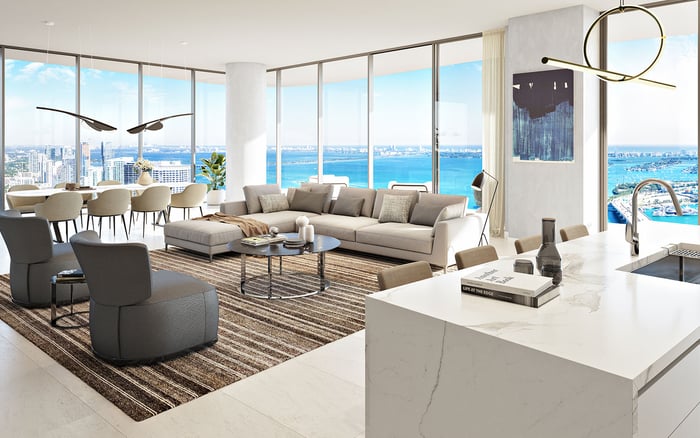
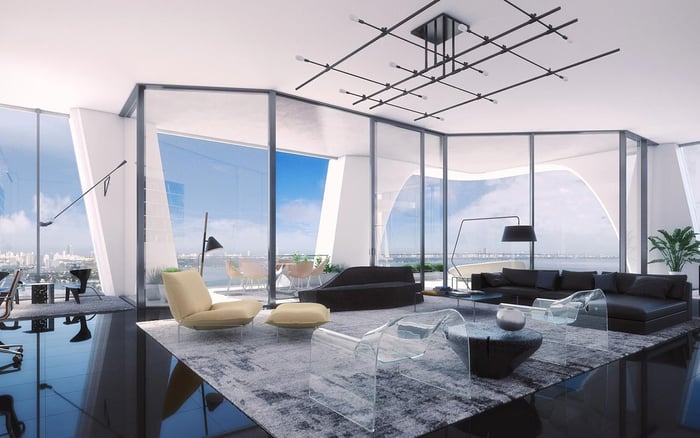
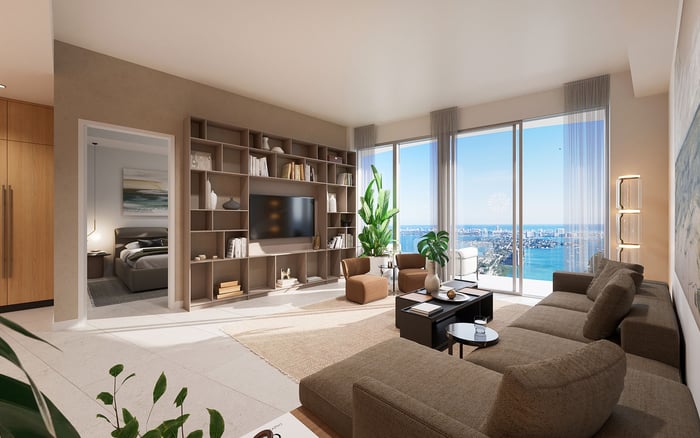
Three branded Downtown Miami residences show how private space, shared settings, and hospitality service are shaping the luxury buyer’s approach to entertaining.
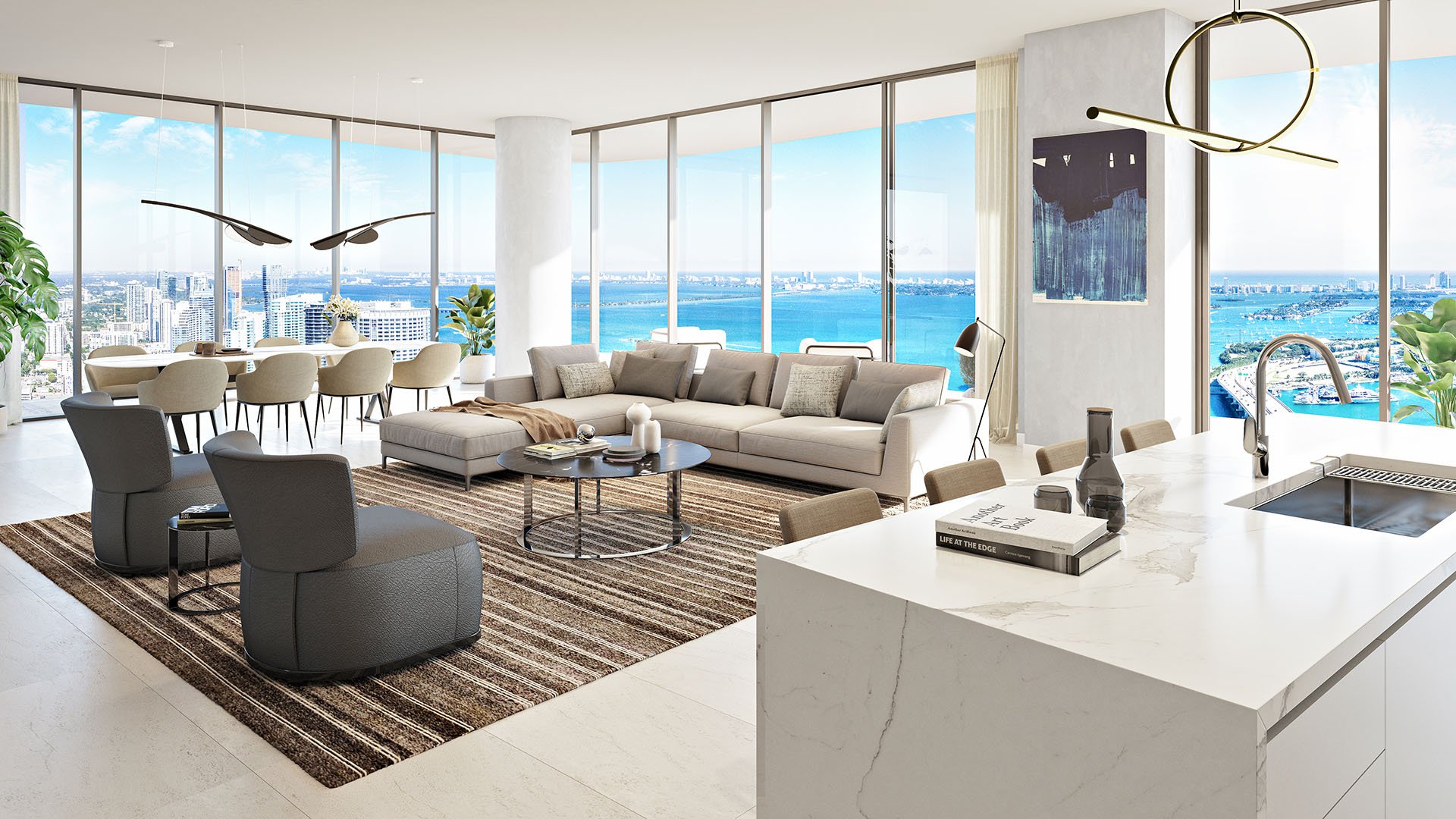
In Downtown Miami, the luxury residence is increasingly considered not only a private sanctuary, but also a setting for social life. Buyers may still value outlook, location, and architectural presence, yet the practical question has broadened: How gracefully can a home accommodate a quiet dinner, a family gathering, or a more ambitious occasion?
Three branded residences offer distinct answers. Casa Bella by B&B Italia Downtown Miami emphasizes international design identity and the home as a composed social environment. Faena Residences Miami Downtown Miami connects private hosting with a broader hospitality and cultural proposition. Waldorf Astoria Residences Downtown Miami adds a service model associated with luxury hospitality.
Together, they suggest that entertaining capacity is no longer defined by square footage alone. It is an ecosystem of private space, shared settings, operational support, and access to the city.
Entertaining capacity begins inside the residence, but it does not end there. A buyer evaluating a home for social use is likely to consider whether private and guest-facing areas can coexist comfortably, whether gatherings of different scales feel natural, and whether the building’s broader environment can extend an occasion beyond the front door.
This is as much a lifestyle question as a spatial one. A residence may serve as a retreat one evening, a family setting the next, and the opening chapter of a night in Miami after that. Flexibility, rather than spectacle, is the more enduring luxury.
The same logic elevates service. When building operations and hospitality support complement private hosting, residents can shift their attention from managing logistics to spending time with guests. That distinction is especially relevant in a market where convenience and experience are closely intertwined.
Casa Bella’s relevance lies in moving beyond the familiar view-led condominium narrative. Its positioning treats the residence as both a personal refuge and a place where gathering is integral to daily life. The B&B Italia association gives that idea an international design vocabulary, making design and architecture part of the entertaining proposition rather than a decorative afterthought.
For buyers, the defining idea is coherence. Entertaining feels most assured when the private setting has a clear aesthetic identity and social use appears considered from the outset. Casa Bella represents a design-led interpretation of hosting: the residence itself creates the atmosphere.
That approach may appeal to owners who favor intimate dinners and polished gatherings without sacrificing the sense that the home remains distinctly private. The value proposition is not simply visibility or grandeur, but the ability to move between retreat and sociability with composure.
Faena Residences Miami approaches entertaining through a broader hospitality and lifestyle concept. Its positioning responds to occasions ranging from intimate moments and family-scale gatherings to larger social events. That range matters because buyers rarely entertain in only one mode.
The Downtown setting adds another dimension. Residents can begin an evening privately, then continue into Miami’s dining, cultural, or nightlife landscape. In this model, the home need not contain every element of the experience. It serves as an elegant base from which the city becomes part of the itinerary.
This hybrid relationship between residence and destination is central to Faena’s appeal. Hospitality branding can frame the condominium not as an isolated asset, but as the private center of a broader social life. For buyers who value both discretion and engagement, that balance can be compelling.
Waldorf Astoria Residences brings hospitality service directly into the interpretation of entertaining capacity. Its positioning combines private hosting potential with shared social spaces and hospitality-supported experiences, showing how a residence’s usefulness can extend beyond its walls.
For buyers, this broadens the meaning of capacity. The relevant question is not only how many people a private room might hold, but also whether amenity programming and operating services can support different occasions with consistency and ease.
This is the service-led model of residential entertaining. Private space remains essential, reinforced by a building environment intended to support social life. The result is a more layered proposition, particularly for owners who want the refinement associated with hospitality while retaining the control and privacy of home.
These projects should not be reduced to a contest over which offers the most entertaining space. The more meaningful distinction is how each interprets the relationship between host, home, building, and city.
Casa Bella places design identity at the center. Faena emphasizes the continuum between private occasions and Miami experiences. Waldorf Astoria highlights the role of service and shared settings. Each reflects a different hosting style, and the strongest fit depends on how an owner actually lives.
Buyers can begin with three scenarios: the gathering they host most often, the largest occasion they realistically expect, and the level of assistance they prefer. They should also distinguish between spaces they will use regularly and settings that appeal mainly in theory. Entertaining capacity has value when it aligns with habit, not merely possibility.
In Downtown Miami, that alignment is becoming part of the definition of luxury. The most persuasive residence is not necessarily the one that promises the grandest event. It is the one that makes every scale of hospitality feel natural.
What is entertaining capacity in a luxury residence? It is the home’s ability to accommodate gatherings comfortably, together with the shared spaces, services, and city access that can extend the experience.
Why does entertaining capacity matter in Downtown Miami? Downtown Miami supports a hybrid social life in which residents can host privately before continuing into the city’s dining, cultural, and nightlife settings.
How does Casa Bella approach entertaining? Casa Bella frames the residence as both a private retreat and a design-led setting for gatherings.
What does the B&B Italia association contribute? It brings an international design identity to Casa Bella’s entertainment-oriented positioning.
How does Faena Residences Miami differ? Faena connects private entertaining with a broader hospitality, lifestyle, and city experience.
What types of occasions does Faena’s concept address? Its positioning encompasses intimate, family-scale, and larger social occasions.
How does Waldorf Astoria expand hosting capacity? It combines private residential use with shared social settings and hospitality-supported experiences.
Are shared amenities part of entertaining capacity? Yes. Shared spaces and amenity programming can broaden how residents host beyond the individual home.
Should buyers focus on private space or building services? Buyers should assess both, then prioritize the combination that best matches their usual gatherings and preferred level of support.
Which of the three projects is best for entertaining? The answer depends on whether the buyer most values design identity, a broader cultural ecosystem, or hospitality-led service.
For a tailored shortlist and next-step guidance, connect with MILLION.
If branded residences are on your mind — as a home or as an allocation — we would be glad to share what we are seeing, privately.
Begin a quiet conversation