A buyer-focused comparison of marketed wellness amenities at Kempinski and Mr. C, with practical checks for capacity, indoor air, water treatment, access rights, and ongoing costs.
The most valuable wellness amenity is the one that fits effortlessly into an owner's day. A serene treatment suite or beautifully appointed studio offers limited practical value when availability, access rights, or operating costs remain unclear. For buyers comparing Kempinski Residences Miami Design District with Mr. C Residences West Palm Beach, the decisive question is not which program looks more extensive, but which can support their actual routine.
Both properties market substantial wellness offerings, but their descriptions provide different kinds of information. Neither establishes peak-hour availability or enhanced indoor environmental performance. A useful comparison separates four subjects: usable capacity, air quality, domestic-water treatment, and enforceable access rules. Advertised facilities must also be distinguished from delivered amenities and commitments in purchase documents.
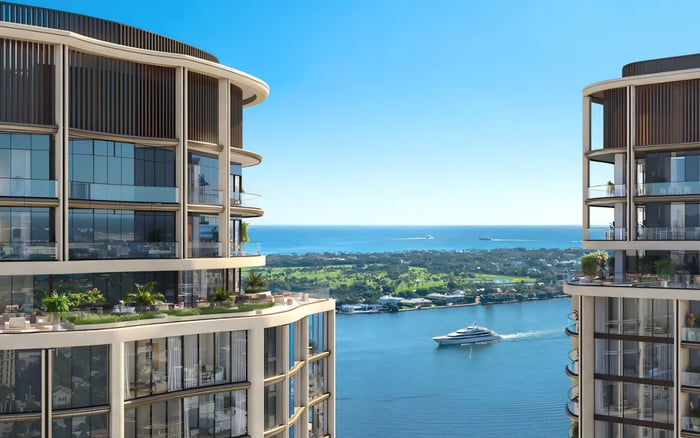
At Kempinski Residences Miami Design District, the amenity program spans two towers connected by an elevated third-floor bridge. The advertised figures-approximately 70,000 square feet of amenities and 508 square feet per residence-encompass wellness, recreation, dining, and social spaces, not wellness alone.
The North Tower's marketed Health & Wellness Club includes a fitness center, movement studio, yoga and Pilates studio, meditation/yoga garden, and private spa treatment rooms. The broader recovery offering includes a cold plunge, infrared and steam saunas, spa and recovery zones, and outdoor training areas.
That breadth gives buyers a useful inventory, not a guarantee of availability. Request the wellness-only floor area, equipment schedule, treatment-room count, and studio occupancy limits. Then establish whether the movement and yoga spaces can operate simultaneously and how staffing affects treatment availability.
The South Tower's advertised resort-style pool, splash pad, padel court, simulators, and private dining spaces broaden the lifestyle offering. They should not inflate a comparison intended to measure fitness or recovery capacity.
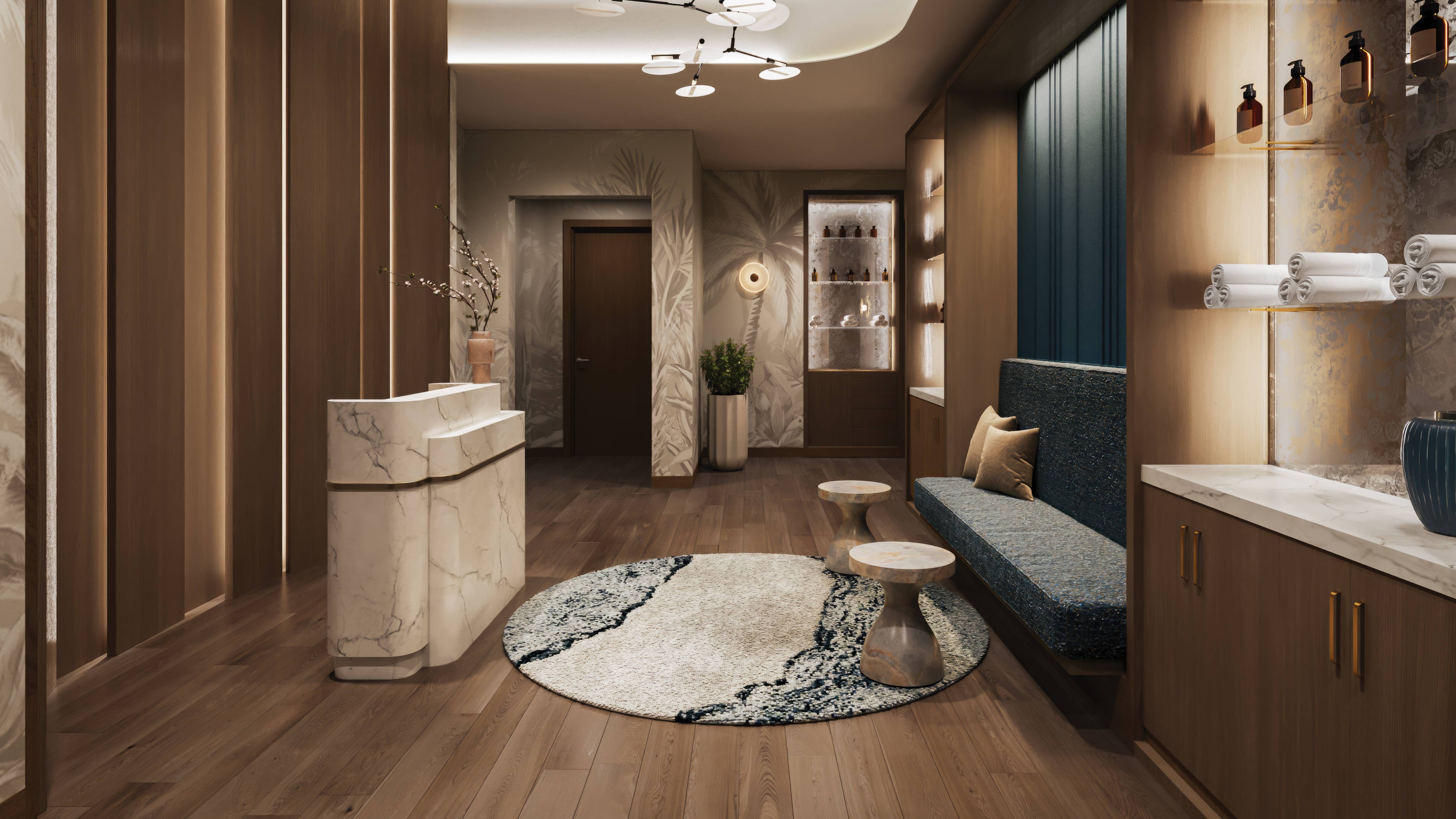
Mr. C Residences West Palm Beach is described as a 27-story tower with 146 private residences. Its marketed fitness offering includes a fully outfitted fitness center, indoor yoga area, and Pilates and Peloton studios. A Signature Spa with sauna and steam rooms forms part of the wellness offering.
The residence count provides useful context, but it cannot establish demand without clarity on who else may use each facility. Access to hotel services makes the distinction between owner amenities and hotel privileges especially important. Request an amenity-by-amenity schedule identifying whether residents, hotel guests, accompanied visitors, or outside customers are eligible, and under what conditions.
Do not treat preferred hotel rates, signature dining benefits, or select-event access as evidence of spa booking priority. Likewise, treat a cold plunge as a feature to confirm, not a settled inclusion, until it appears in current developer specifications.
Mr. C's 146-residence scale and Kempinski's advertised amenity-area ratio are not equivalent metrics. A fair comparison requires the same operating information for both.
Kempinski's advertised pool offering includes an 85-foot lap pool with a sun shelf, hot spas, heated loungers, cabanas, and daybeds. Because pool-length descriptions vary, confirm the dimensions against current plans rather than assume a marketing measurement is definitive.
At Mr. C, the marketed program includes a garden-level lap pool with cabanas and access to the hotel rooftop pool, bar, and lounge. Descriptions of the residential pool's level are not entirely consistent; current plans should establish its location and circulation routes.
For either property, request lap-swimming hours, lane arrangements, guest allowances, cabana reservation rules, and any event closures. Pool dimensions alone do not establish whether uninterrupted swimming will be available at an owner's preferred hour.
Neither project's public amenity disclosures establish specialized in-residence air purification, filtration ratings, or measured fresh-air delivery performance. Kempinski's descriptions do not specify MERV ratings or HEPA filtration; Mr. C's do not establish a specialized residential purification system. These are disclosure gaps, not proof that such systems are absent.
Ask for HVAC specifications covering the residence and shared wellness areas separately. The review should identify filter ratings, outdoor-air delivery rates, humidity-control provisions, and maintenance responsibilities. Request any available commissioning or performance documentation rather than relying solely on equipment descriptions.
A terrace, generous glazing, or a refined spa interior does not prove cleaner indoor air. Buyers with particular environmental requirements should have their technical adviser assess the proposed specifications against those needs before taking reassurance from wellness branding.
Enhanced domestic-water treatment is not established in either project's public amenity descriptions. The disclosed information does not confirm whole-building filtration, reverse osmosis, UV treatment, or comprehensive in-residence drinking-water and shower filtration.
The useful question is not simply whether water is filtered, but which water, at which fixtures, and by which technology. Request plumbing specifications identifying any building-level treatment and any separate systems serving kitchen taps, refrigerators, or showers.
Ask for performance documentation, replacement intervals, and responsibility for servicing and consumables. Do not infer that restaurant water or wellness-café beverages receive particular treatment. If The Well Bay Harbor Islands also enters a buyer's shortlist, apply the same fixture-level questions rather than presume equivalent specifications from a wellness-oriented name.
Kempinski's advertised treatment rooms and wellness spaces do not establish advance-booking windows, resident exclusivity, guest limits, or treatment fees. At Mr. C, hospitality benefits likewise do not resolve owner priority or exclusive use. Obtain written rules for each facility, not a general assurance of access.
The schedule should address booking windows, peak-time restrictions, recurring reservations, usage caps, cancellation penalties, no-show charges, and accompanying guests. Establish whether hotel or public bookings draw from the same appointment inventory and whether any services require a separate membership.
Costs deserve equal precision. Kempinski's advertised Wellness Café with daily breakfast does not establish that breakfast is included in ownership costs. For both projects, distinguish included access from paid treatments, instruction, food, and other services.
Build the comparison around one realistic routine: an early workout, a swim, and a treatment at a preferred time. For each step, record eligible users, capacity, operating hours, booking priority, and additional charges. Ask which answers are reflected in purchase documents, which belong to operating policies, and who may change those policies.
The stronger choice is the residence whose documented systems and access arrangements best support that routine. Neither amenity breadth nor hospitality branding settles the question alone.
For a discreet assessment of residences aligned with your wellness priorities, connect with MILLION.
If branded residences are on your mind — as a home or as an allocation — we would be glad to share what we are seeing, privately.
Begin a quiet conversationNo. The approximately 70,000 square feet and 508 square feet per residence cover all amenities, not just fitness, spa, and recovery spaces.
The offering includes fitness and movement spaces, yoga and Pilates facilities, private treatment rooms, a cold plunge, and infrared and steam saunas. Buyers should confirm final specifications and operating arrangements.
The property is described as a 27-story tower containing 146 private residences. That count alone does not establish demand for amenities that may have other eligible users.
It should remain a verification item until confirmed in current developer specifications. The disclosed Signature Spa offering includes sauna and steam rooms.
The public disclosures described in the article do not establish specialized purification or filtration performance. Request HVAC specifications, filter ratings, fresh-air delivery rates, and humidity-control details.
Enhanced domestic-water treatment is not established by the public amenity descriptions. Buyers should request specifications showing treatment technologies and the taps or showers served.
No. Preferred hotel rates, dining benefits, and select-event access do not establish priority appointments or exclusive amenity access.
The advertised breakfast offering does not confirm inclusion in ownership costs. Obtain a written schedule of included services and additional charges.
Confirm dimensions, location, swimming hours, guest eligibility, and reservation rules. Current plans should resolve Kempinski's differing pool-length descriptions and Mr. C's pool-level descriptions.
Request written booking windows, owner priority, guest limits, usage caps, cancellation penalties, and fees. Also establish whether hotel guests or outside customers share appointment availability.