
A disciplined view-premium analysis for two Brickell residences, focused on residence-level sightlines, neighboring development potential, document review, and risk-adjusted pricing.
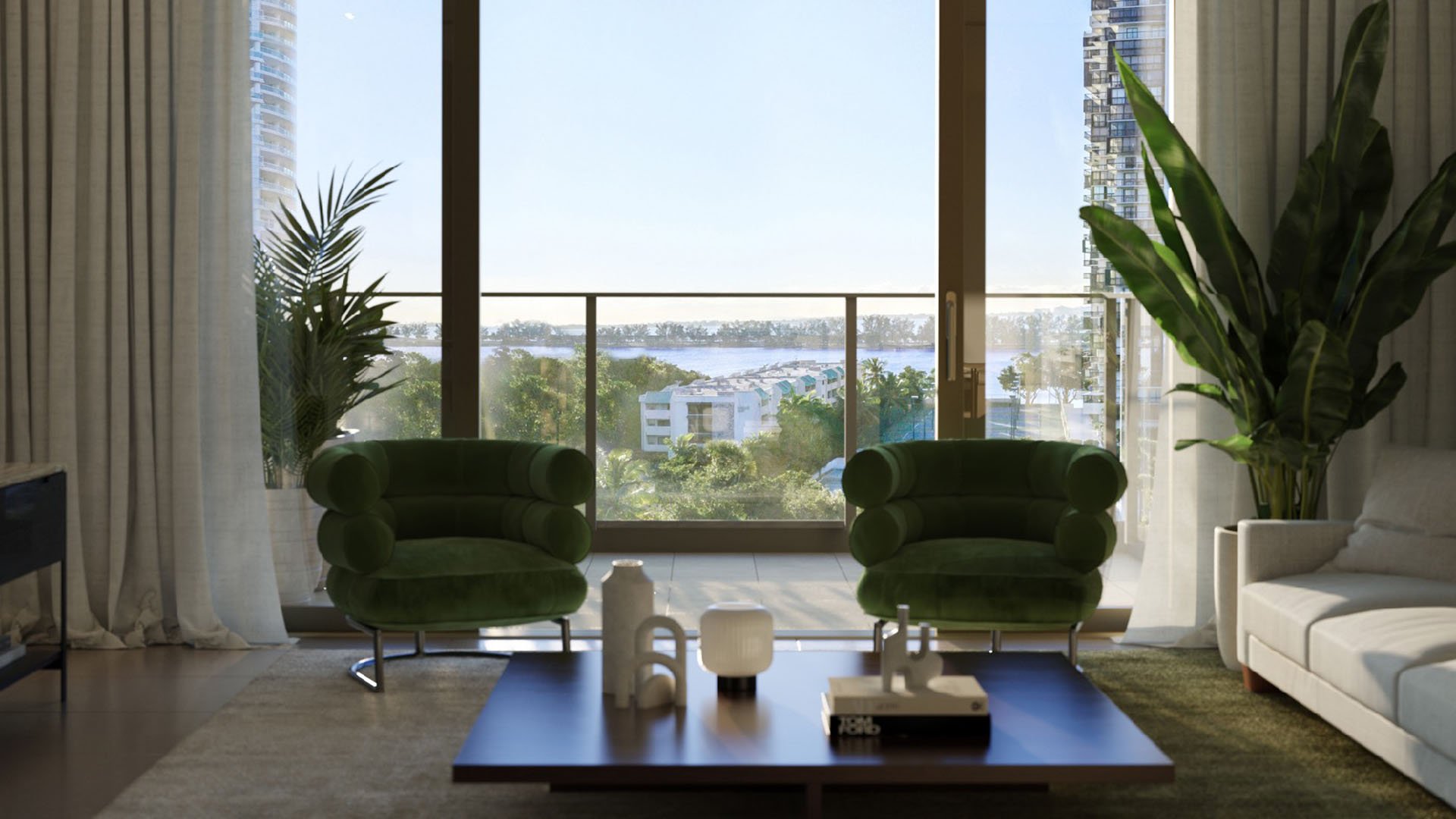
In Brickell, a view should be evaluated as a corridor rather than a single feature. That corridor may cross neighboring parcels whose future condition is outside a condominium buyer’s control.
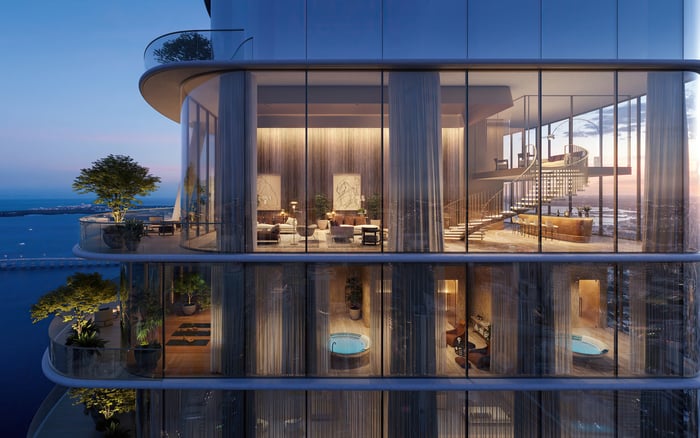
Buyers comparing 2200 Brickell and The Residences at 1428 Brickell should therefore assess each residence individually. Renderings can help illustrate a design concept, but they should not replace floor-specific diligence, document review, and an independent examination of the surrounding sites.
Descriptions such as “protected,” “unobstructed,” or “panoramic” should not be treated as legal guarantees without supporting language in the governing documents. A buyer’s counsel should review the purchase agreement, condominium documents, disclosure materials, and any language addressing representations, design changes, or views.
The review should distinguish among a current view, a projected view, and a legally protected view. It should also identify any disclaimers explaining that neighboring properties may be developed or that depicted conditions may change.
Verbal statements deserve the same scrutiny. Buyers should request that any view-related representation material to the purchase be identified in the documents their counsel reviews rather than relying on a conversation or generalized sales description.
A useful view file begins with the exact residence line, floor, orientation, window placement, and balcony geometry. Images should be labeled so the buyer can determine whether they represent the selected home, another elevation, an amenity area, or a generalized perspective.
The next step is to trace each valued corridor. A water, skyline, sunrise, or sunset component may depend on a broad opening, a narrow angle between structures, or a view over a lower neighboring site. Those configurations do not carry the same degree of future-construction risk.
Buyers should request current-condition and future-massing illustrations from the same viewing position. Consistent camera locations make it easier to compare how a plausible neighboring structure could affect the width, depth, or direction of the outlook.
A low-rise building, vacant site, parking area, or loosely assembled group of lots may look harmless while still requiring careful review. The relevant issue is not simply what occupies the land today, but what could plausibly replace it.
For every parcel intersecting an important sightline, the diligence team should examine current ownership, applicable development rules, recorded restrictions, pending applications, and available public filings. Because conditions can change, the review should be refreshed near the point when the buyer must make a binding decision.
Common ownership across adjoining lots also deserves attention. Separate parcels may be evaluated together if their configuration could support a larger development concept, but buyers should avoid assuming that any particular project will occur without reliable documentation.
A massing study should illustrate reasonable development envelopes on the sites most relevant to the selected residence. It should account for orientation, separation, setbacks, and the location of the sightline rather than placing a generic block somewhere on a map.
More than one scenario may be appropriate. A buyer can compare present conditions with conservative, moderate, and more consequential buildout cases without claiming to know what a neighboring owner will propose.
Independent review is valuable because assumptions can drive the result. The buyer’s architect, land-use adviser, survey professional, or counsel can help determine whether the inputs are suitable for the decision being made.
The same framework should be applied when comparing other Brickell residences, including Una Residences Brickell and St. Regis® Residences Brickell. A similar marketing label does not establish that two residences have equally durable sightlines.
Buyers can score each option using the same criteria: corridor width, viewing angle, elevation, dependence on neighboring land, document language, and the number of parcels capable of affecting the outlook. This creates a more consistent basis for comparing premiums.
The final price decision should account for uncertainty. If an important component of the view relies on a neighboring site remaining unchanged, the buyer can treat that exposure as a valuation risk rather than assuming permanence.
The buyer’s diligence file should identify which views matter most, which parcels affect them, what documents support the representations, and which assumptions remain unresolved. It should also record the date of each image, parcel review, and massing scenario.
Before signing, counsel should confirm which materials are contractual and which are illustrative. The buyer should also understand the deadlines, remedies, and review rights stated in the applicable documents without assuming that a general marketing statement creates protection.
Is an unobstructed view automatically protected? No. A buyer should look for enforceable language in the governing documents and ask counsel to explain its scope.
Why must the exact residence line and floor be reviewed? Sightlines can differ by elevation, orientation, window placement, and balcony geometry, even within the same building.
What neighboring sites deserve the closest attention? Vacant, low-rise, underbuilt, or commonly controlled parcels intersecting a valued sightline merit careful review.
What should a view study show? It should use the selected residence’s viewing position and distinguish current conditions from plausible future-massing scenarios.
Can a rendering confirm the finished view? A rendering is illustrative unless the governing documents give it contractual effect. Buyers should verify its viewpoint, date, and assumptions.
Why review ownership of adjacent parcels? Ownership information can help identify parcel assemblies and clarify which sites may need to be evaluated together.
Should buyers rely on a single future-construction scenario? No. Comparing several reasonable massing cases can reveal how sensitive the sightline is to different outcomes.
When should parcel research be updated? It should be refreshed near the buyer’s binding decision because ownership, applications, and public records can change.
How can two Brickell view premiums be compared? Apply the same criteria to each residence, including corridor width, angle, elevation, neighboring parcels, and document language.
How should unresolved view risk affect an offer? The buyer can incorporate uncertainty into valuation and negotiations rather than pricing the residence as though the outlook were permanent.
To compare the best-fit options with clarity, connect with MILLION.
If branded residences are on your mind — as a home or as an allocation — we would be glad to share what we are seeing, privately.
Begin a quiet conversation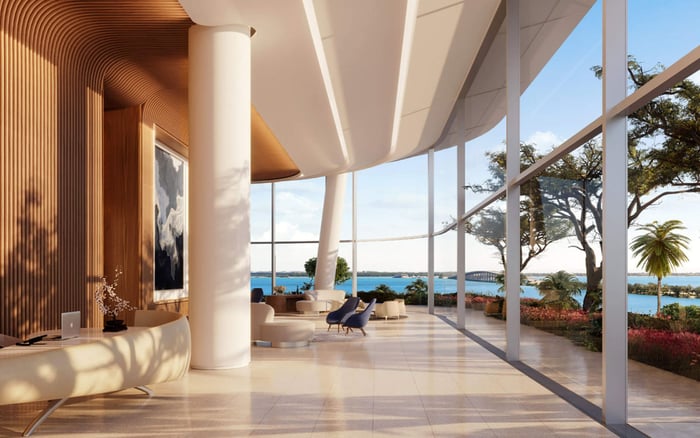
.jpg&width=700&height=438&fit=cover)