A buyer-focused framework for separating brand appeal from resale mechanics, testing ownership costs, and assessing future demand at two South Florida residential addresses.

The appeal of a branded residence is immediate: a distinctive address, a service proposition, and a particular vision of everyday life. The resale proposition warrants equally deliberate scrutiny. A future purchaser must want the residence, accept its recurring obligations, and satisfy the applicable transfer procedures.
At Kempinski Residences Miami Design District and The Residences at Mandarin Oriental Boca Raton, the essential distinction is between lifestyle appeal and documented exit mechanics. Neither brand recognition nor ambitious asking prices establish resale liquidity. Buyers should examine three separate questions: who can approve a transfer, what costs accompany it, and how many purchasers might accept the full ownership proposition.
Resale approval criteria, processing deadlines, rejection rights, and transfer-fee schedules require document verification at both properties. That uncertainty is not evidence of restrictive rules. It is a reason to make written confirmation part of the purchase decision.
At Kempinski Residences Miami Design District, the announced program comprises 132 private residences across two 20-story towers, plus six townhomes, at 3801 and 3883 Biscayne Boulevard. Its position at the gateway to the Design District is part of the location's appeal that a future buyer will weigh.
The program also includes 17 guest suites exclusively for sale to residents. The distinction matters: these are not an unrestricted inventory of hotel rooms. Buyers considering a guest suite should request its ownership, use, and transfer provisions rather than assume it can be sold independently or automatically accompany a residence.
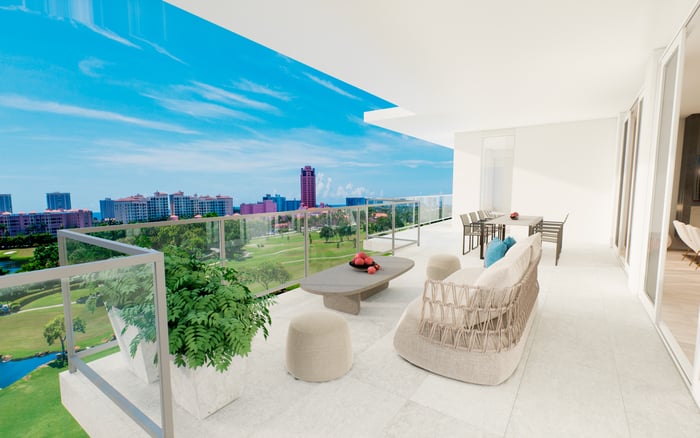
At The Residences at Mandarin Oriental Boca Raton, at 105 E Camino Real, the advertised offering includes ocean and golf-course views, along with exclusive hotel access and signing privileges through a connecting skybridge.
Club membership is mandatory for unit owners and carries additional dues, fees, and costs. This establishes an ownership obligation, not a separate club admission approval process or a resale initiation fee. Those questions require review of the applicable agreements.
Begin with the declaration, bylaws, purchase agreement, rules, management disclosures, and any applicable club agreements. Ask counsel to identify the provisions governing resale of a completed residence and distinguish them from those addressing a pre-closing contract assignment.
The review should produce written answers to practical questions:
Does a transfer require approval, notice, a waiver, or another documented step?
Who has decision-making authority, and what criteria govern that decision?
What constitutes a complete application, and when does processing begin?
Are there deadlines, rejection rights, or procedures for addressing an incomplete submission?
Does the intended ownership structure require additional information or consent?
These are questions to resolve, not confirmed requirements at either project. Do not assume that the association, management, brand, and club each constitute a separate approval layer.
Ask counsel to align contractual milestones with the verified process. A closing timetable should allow for required submissions and responses rather than rest on a verbal estimate. Current statutory fee limits and buyer-eligibility questions also warrant separate legal verification, not assumptions drawn from branding or location.
An association payment, club obligation, refundable deposit, and administrative charge serve different purposes. Combining them into a single transfer-fee estimate can obscure both the amount due and who owes it.
Request a dated schedule of any applicable application, transfer, club, move-in, or administrative charges. For each, establish the amount or calculation, triggering event, responsible payer, payment deadline, refundability, and processing timetable. Ask which document authorizes the charge and whether it may change before the contemplated transaction.
At Mandarin Oriental Boca Raton, establish the mandatory club's recurring costs and any transfer-related provisions separately. Membership alone does not prove that an incoming purchaser owes an initiation fee or that an outgoing owner receives a refund.
For both properties, model acquisition costs and a hypothetical future sale separately. Mark unknown charges as unresolved rather than assigning them a zero value. The result should clearly distinguish confirmed obligations from estimates and open questions.
Kempinski's launch pricing began at approximately $3.7 million for two bedrooms, the mid-$4 millions for three bedrooms, and $5 million-plus for four bedrooms. Individual preconstruction listing snapshots illustrate the recurring commitment: unit 801 showed a $5,120,700 asking price and a $6,042 monthly association fee; unit 1101 showed $6,071,100 and $6,980, respectively.
These are unit-specific examples, not building-wide fee quotations. Preconstruction budgets may change, and association charges should not be assumed to include taxes, insurance, assessments, or every service obligation.
At Mandarin Oriental Boca Raton, listing examples placed unit 912 at $5.75 million, unit 1001 at $9.9 million, and PH12 at $14.6 million. Unit 912 showed a $4,349 monthly association fee without establishing the additional mandatory club charges. These figures are asking prices and fee snapshots, not closed-sale evidence or a complete ownership budget.
Request the current or proposed budget and a unit-specific cost statement. Test higher recurring expenses and a longer resale holding period as scenarios, not forecasts. A purchaser able to fund the acquisition may still reject the annual commitment.
Future buyer-pool depth means more than the number of people attracted to a brand. It concerns purchasers willing and able to buy a particular residence at its price, with its carrying costs, use restrictions, and transaction timetable. The available figures do not quantify that depth for either property.
Request closed resales where available, days on market, discounts from asking prices, and competing inventory. Separate developer offerings from owner resales, and assess comparability by layout, views, size, and total ownership cost. If direct resale evidence is unavailable, treat comparisons as context rather than proof of liquidity.
For a Boca Raton search that also includes Alina Residences Boca Raton, apply the same document and cost review independently. Likewise, buyers considering Miami Tropic Residences alongside Kempinski should verify each property's rules rather than carry assumptions from one address to another.
Verified leasing provisions belong in this analysis. Confirm minimum terms, frequency limits, approval requirements, and any rental caps before assigning value to rental flexibility. Do not underwrite short-term rental income without explicit documentary support.
Kempinski's projected closing schedule anticipates Q4 2029; it is not a guaranteed delivery date. Buyers should distinguish any potential pre-closing assignment from a post-closing resale and test whether their holding horizon accommodates timing changes.
The decision standard is straightforward: understand the residence, document the obligations, and evaluate the exit without assuming appreciation or a ready purchaser. A compelling lifestyle offering can justify a purchase without guaranteeing an uncomplicated sale.
For a discreet discussion of South Florida residences and the questions that shape a considered purchase, connect with MILLION.
If branded residences are on your mind — as a home or as an allocation — we would be glad to share what we are seeing, privately.
Begin a quiet conversationThe actual approval criteria, deadlines, and rejection rights require verification in the governing documents. Buyers should not assume either unrestricted transfers or multiple approval layers.
Mandatory membership establishes additional dues, fees, and costs, but does not by itself establish a separate club admission procedure. Any approval requirements must be verified in the applicable agreements.
Obtain a written schedule of any applicable application, transfer, club, move-in, and administrative charges. No project-specific resale transfer-fee amount is established here.
Request the declaration, bylaws, purchase agreement, rules, management disclosures, association fee schedules, current or proposed budgets, and applicable club agreements.
Preconstruction listings showed monthly association fees of $6,042 for unit 801 and $6,980 for unit 1101. These are unit-specific snapshots that may change, not building-wide quotations.
The $4,349 monthly association-fee snapshot does not establish additional mandatory club charges. Buyers need a separate confirmation of those obligations.
No. Verify the governing documents for permitted lease terms, rental frequency, approval requirements, and any caps before relying on rental income.
Examine closed resales where available, days on market, asking-price discounts, competing inventory, and verified leasing rules. Brand recognition and asking prices alone do not quantify buyer-pool depth.
No. Q4 2029 is a projected closing date, and buyers should evaluate timing flexibility and the purchase agreement's provisions.
No. The announced program includes 17 guest suites exclusively for sale to residents; their use and transfer provisions should be checked separately.