For buyers who entertain, the distinction between an attractive gathering space and a usable private-event program is essential. Compare the advertised dining services at these two residences, then verify vendor access, reservation rights, costs and restrictions in writing.

For a buyer who entertains, luxury is more than a beautifully appointed room. It is the confidence that a dinner will run smoothly: the chef can enter, service arrives discreetly, guests are welcomed and the evening ends without friction. An amenity description establishes only part of that experience.
That distinction matters when comparing Banyan Tree Residences West Palm Beach with The Ritz-Carlton Residences® Palm Beach Gardens. The latter explicitly markets private dining, catering arrangements and event planning. Equivalent services at Banyan Tree are not established by the available amenity descriptions. This is a difference in documented offerings-not proof that one permits every gathering or that the other prohibits entertaining.
For Palm Beach buyers, the decision should turn on three separate questions: what space is offered, what service can be arranged and what the governing rules permit. A compelling answer to one does not settle the others.
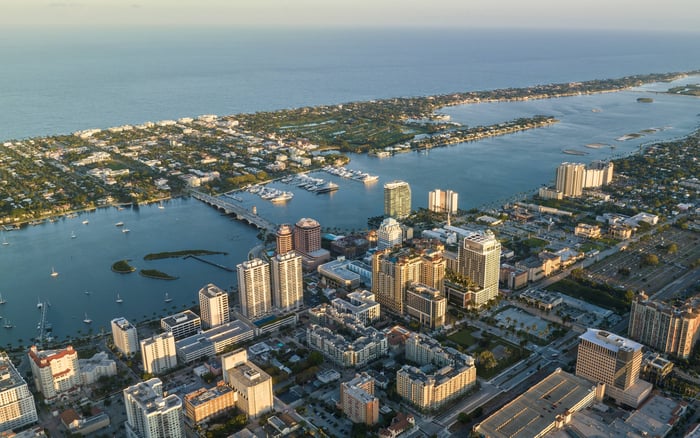
At Banyan Tree Residences West Palm Beach, the brand’s first residential address in the United States, the advertised experience emphasizes wellness and social spaces. Amenities include a resort-style pool, spa treatment rooms, cryotherapy, a hammam and meditation spaces. A Juice Bar is also described, but that does not establish a full-service restaurant or catering operation.
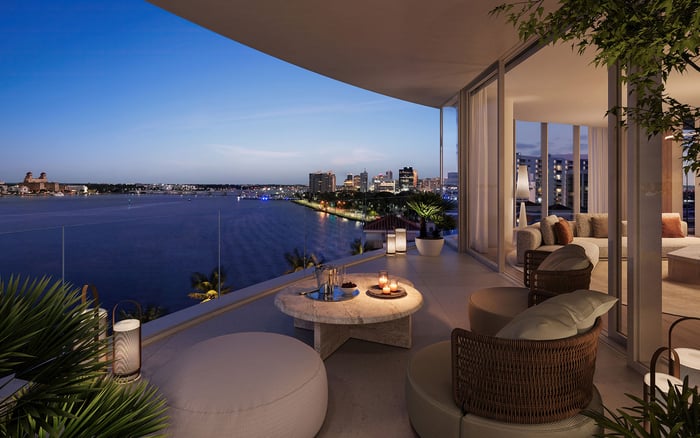
Advertised social amenities include a rooftop deck, open-air cocktail lounge, speakeasy, private screening room and golf simulator room. These suggest settings for spending time with guests. They do not, by themselves, establish whether residents may reserve them exclusively, serve outside food or organize a staffed reception.
Start by asking which spaces, if any, can be reserved for private dining. Distinguish an informal gathering from an exclusive event booking. Ask whether a reservation closes the space to other residents, which food and beverage services are available and who is responsible for execution.
Concierge or management support does not establish an in-residence private-chef service. Nor should Sanctuary Club access be treated as a local private-event entitlement. Obtain a written description of the specific hosting services available at this address.
Set on 14 acres of Intracoastal waterfront, The Ritz-Carlton Residences® Palm Beach Gardens explicitly includes a private dining room within its Waterfront Club. Indoor and outdoor gathering space is marketed for dinner parties and small events, while outdoor grill and dining areas broaden the advertised offering.
The service offering is also more explicit. In-residence dining arrangements include private chefs, catering and service staff, with menus tailored to individual tastes and dietary requirements. Private dining and event planning are marketed for special occasions or intimate gatherings, either at home or in the club’s private dining room.
This gives a frequent host a more clearly defined offering to evaluate. It does not establish unrestricted access. “Small events” is not a numerical capacity limit, and an arrangement service does not necessarily mean a resident’s preferred outside caterer is approved.
The advertised 24/7 residential service includes kitchen stocking and dinner reservations. Do not equate that availability with round-the-clock event hours, continuous chef service or guaranteed dining-room reservations. Each requires separate confirmation.
A room and a chef are separate parts of the transaction. At both properties, ask whether personal chefs and outside caterers may work inside residences, in reservable common areas or in both. Request the approval process for each setting rather than assuming one authorization covers the building.
Ask whether vendors must carry specified insurance, provide documentation in advance or use designated loading routes and service elevators. Establish the permitted delivery, setup and breakdown windows, along with any rules for equipment, food preparation and waste removal. These are questions to resolve, not confirmed requirements at either property.
Then clarify responsibility for service. Does management merely introduce a provider, coordinate the booking or oversee the event? Who supplies tableware, handles dietary requests and supervises cleanup? Buyers who value discretion should also ask how staff circulation and guest arrivals are managed. The goal is a complete service plan, not a collection of assurances.
Neither property’s advertised offering establishes numerical guest limits, event-frequency limits, curfews, outside-vendor policies or permission for commercial events. Before relying on an entertaining amenity, request the condominium documents, current house rules and applicable event reservation agreement.
Review these documents against the occasions you expect to host:
Capacity and access: Confirm seated and standing limits, guest registration, owner-presence requirements and access to adjoining spaces.
Reservations and timing: Establish booking priority, advance notice, frequency limits, event hours and setup or breakdown allowances.
Permitted uses: Ask about music, alcohol service, business gatherings, fundraising and any distinction between personal and commercial events.
Charges and liability: Request room fees, deposits, food-and-beverage minimums, staffing charges, service charges, cleanup costs and cancellation terms.
Treat every item as an open question until answered in writing. Do not assume advertised services are included in association fees. Likewise, rental restrictions do not establish party rules: leasing policy and permission to host an evening gathering address different uses of a residence.
Finally, confirm whether the relevant facilities and services will be operating when you intend to use them. An advertised amenity is not proof of present availability or a fixed final policy.
Ask each sales or management team to assess the same hypothetical dinner: your intended guest count, preferred date, menu requirements, chef choice and desired setting. Request a written response covering feasibility, approvals, timing, estimated charges and responsibility for each service. This yields a more useful comparison than a tour of attractive rooms.
Banyan Tree’s downtown context also invites consideration of off-site entertaining. Elisabetta’s West Palm Beach offers private events and on- and off-site catering, providing another option to evaluate. Its willingness to cater does not establish permission to serve an event inside Banyan Tree.
If your search also includes Mr. C Residences West Palm Beach, apply the same written-event test rather than carrying assumptions from one branded address to another.
Ritz-Carlton offers the clearer advertised foundation for buyers seeking coordinated private dining. Banyan Tree warrants more preliminary clarification of its hosting program. At either address, the decisive luxury is a documented arrangement that suits your occasions, respects your neighbors and makes the evening feel effortless.
For a considered approach to selecting a residence around the way you entertain, explore MILLION.
If branded residences are on your mind — as a home or as an allocation — we would be glad to share what we are seeing, privately.
Begin a quiet conversationThe Ritz-Carlton Residences® Palm Beach Gardens markets these arrangements for gatherings at home or in the Waterfront Club’s private dining room. Booking rights and operating terms still require confirmation.
The available amenity descriptions do not establish an in-residence private-chef or catering program. Buyers should request a written description of available services.
No. The Juice Bar offering does not establish a full-service restaurant, private dining program or catering operation.
Exclusive reservation rights are not established by the advertised social amenities. Ask which spaces are reservable and whether other residents retain access during an event.
It advertises arrangements for private chefs, catering and service staff, with menus tailored to individual tastes and dietary requirements. It also markets private dining and event planning.
No. The phrase is marketing language rather than a numerical capacity limit; request written seated and standing capacities for the intended space.
Outside-vendor permission is not established for either property. Confirm policies separately for residences and common areas, including any approval, insurance and delivery requirements.
Inclusion is not established. Request an itemized estimate addressing room charges, deposits, staffing, service charges, cleanup and any food-and-beverage minimums.
Request the condominium documents, current house rules and event reservation agreement. Review capacity, booking priority, hours, guest access, permitted uses and cancellation terms.
No. Ritz-Carlton’s advertised 24/7 residential service does not establish unrestricted event hours or continuous chef availability; those terms need separate confirmation.