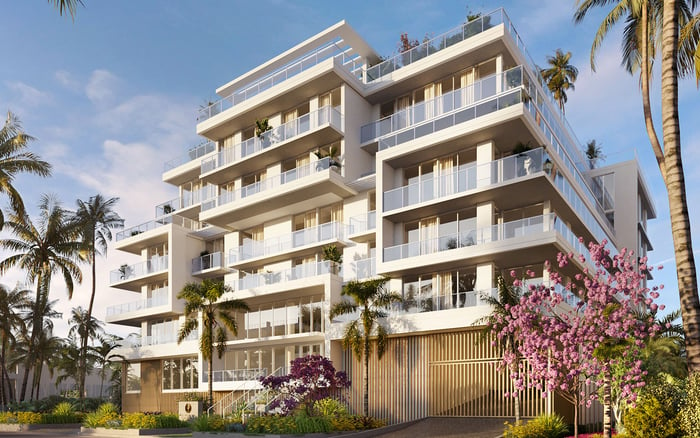
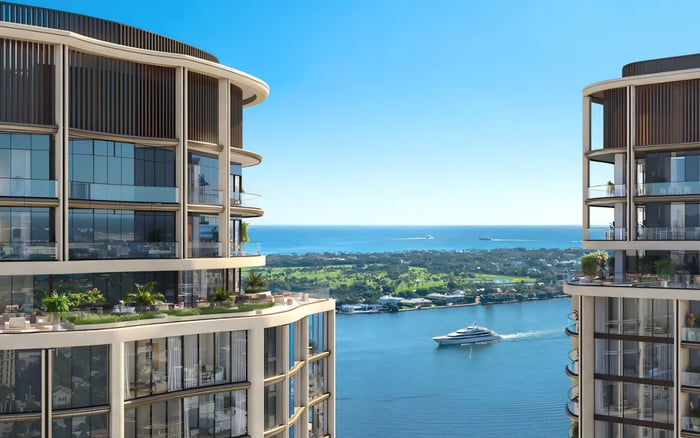
Collectors evaluating Edgeworth West Palm Beach and Maison D'Or South Flagler should verify the complete installation route, building procedures, residential environmental controls, and collection-specific requirements during due diligence.

Buyers considering Edgeworth West Palm Beach or Maison D'Or South Flagler should begin with the works they expect to move, install, display, and protect. The evaluation should account for the largest crate, the heaviest object, the most difficult turn, and the most environmentally sensitive piece.
A residence can appear suitable on a floor plan while presenting practical constraints along the delivery route. Due diligence should therefore examine the journey from the designated arrival point through every controlled area and into the final room, rather than focusing only on the dimensions of the residence.
Request a measured route plan that identifies loading and staging areas, doors, corridors, elevators, thresholds, ceiling clearances, turns, and the final installation location. For each segment, verify usable width and height, weight restrictions, turning space, protective requirements, and any limitations on equipment.
Confirm which elevator installers may use and whether its cab, door opening, controls, and load capacity suit the proposed work. A private elevator should not be treated as proof of freight suitability without written confirmation of its dimensions and permitted use.
Buyers comparing other West Palm Beach options, including Forté on Flagler West Palm Beach and South Flagler House West Palm Beach, can apply the same route-based review. The objective is not to rely on a general description of arrival or service access, but to test a specific collection against documented conditions.
Ask for the rules governing delivery reservations, approved hours, installer access, security coordination, insurance documentation, elevator protection, floor covering, wall protection, and responsibility for damage. Determine whether crates may be opened or held on site and how packing materials, tools, lifts, and rigging equipment are managed.
Structural anchoring requires separate attention. Before assuming that a wall or ceiling can support a work, obtain the applicable plans and approval process, then have the proposed attachment reviewed by qualified professionals. Also verify requirements for drilling, electrical connections, specialty lighting, or other alterations associated with an installation.
Contingency planning matters as much as the preferred route. Buyers should ask what happens if an elevator is unavailable, a delivery cannot be completed within its reservation window, or a crate cannot clear a turn. Written procedures can reveal whether a workable alternative exists.
Comfort cooling and collection protection are not necessarily the same. Request the residence-specific specifications for temperature control, relative humidity, filtration, ventilation, zoning, sensor placement, monitoring, alerts, and system operation during an interruption or maintenance event.
The review should focus on the intended display and storage locations. Glazing, exterior exposure, air supply, lighting, wall construction, and room use can affect where a work should be placed and whether additional controls are appropriate. A conservator and mechanical engineer can help translate the needs of individual works into design and operating requirements.
Monitoring should also be addressed. Determine whether conditions can be tracked continuously, who receives an alert, what response procedure follows, and whether records can be retained. If supplemental equipment is proposed, confirm that the installation, electrical demand, drainage, noise, maintenance, and building approvals are acceptable.
Collection-focused diligence may require input from an art handler, conservator, mechanical engineer, insurance adviser, architect, and attorney. Each adviser answers a different question: whether the work can be moved, whether the environment is suitable, whether alterations are feasible, whether coverage conditions can be met, and whether critical commitments are documented.
Provide advisers with the same materials so their reviews connect. A route that physically accommodates a crate may still conflict with operating rules, while an acceptable room environment may depend on modifications that require approval. Coordinated review helps identify those dependencies before they become installation problems.
If a collection requirement affects the purchase decision, address it during due diligence. Request applicable drawings, specifications, procedures, and written confirmations rather than relying on assumptions or informal descriptions.
The final comparison between Edgeworth West Palm Beach and Maison D'Or South Flagler should be collection-specific. Buyers should assess whether the documented route, installation rules, environmental systems, monitoring plan, and approval process work together for the objects they intend to place in the residence.
Does elevator access establish that oversized art can reach a residence? No. Buyers should verify the permitted elevator, usable dimensions, load capacity, route clearances, and installation rules.
What should a measured freight plan include? It should identify each door, corridor, turn, threshold, elevator, clearance, staging point, and installation location along the route.
Why should the largest crate guide the review? Testing the most demanding planned object can expose route or handling constraints that smaller works would not reveal.
Which delivery procedures should be confirmed? Confirm reservation requirements, approved hours, installer access, security coordination, protective measures, insurance documents, and damage responsibility.
Should structural anchoring be reviewed separately? Yes. The proposed attachment and supporting construction should be reviewed by qualified professionals and processed through applicable approvals.
Is ordinary comfort cooling enough for a sensitive collection? It should not be assumed to be enough. Buyers need residence-specific information about environmental ranges, stability, filtration, zoning, monitoring, and interruption procedures.
What monitoring questions should buyers ask? Ask where sensors are located, how often conditions are recorded, who receives alerts, what response follows, and whether records are retained.
When should specialists become involved? Specialists should review relevant documents during due diligence and before collection-dependent layouts, systems, or installation details are finalized.
Why is a contingency route important? It helps buyers understand whether an installation can proceed if the preferred elevator, staging area, or delivery window becomes unavailable.
Which collection requirements belong in written due diligence? Any requirement material to the purchase decision should be supported by applicable plans, specifications, procedures, approvals, or written confirmations.
To compare the best-fit options with clarity, connect with MILLION.
If branded residences are on your mind — as a home or as an allocation — we would be glad to share what we are seeing, privately.
Begin a quiet conversation