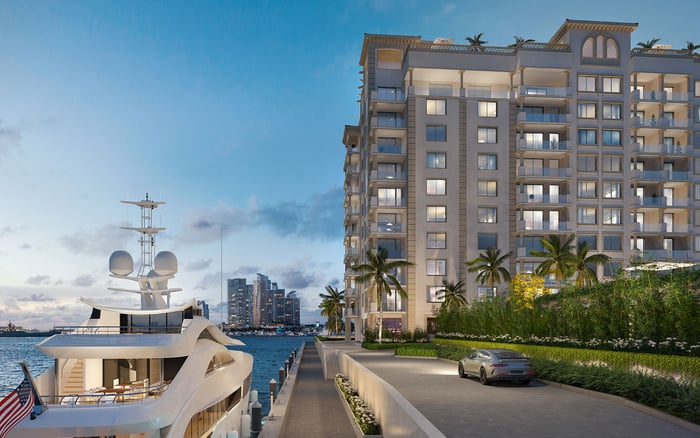
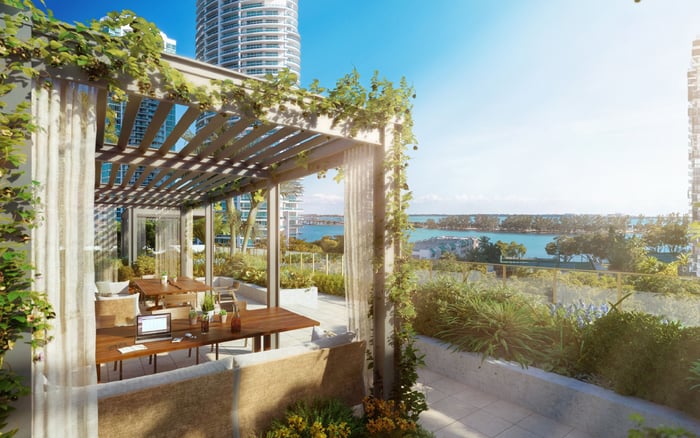
For waterfront condo buyers with boating in mind, bridge clearance is not a minor technicality. It can reshape daily convenience, marina strategy, resale depth, and the true lifestyle cost of a family-scale residence in South Florida.
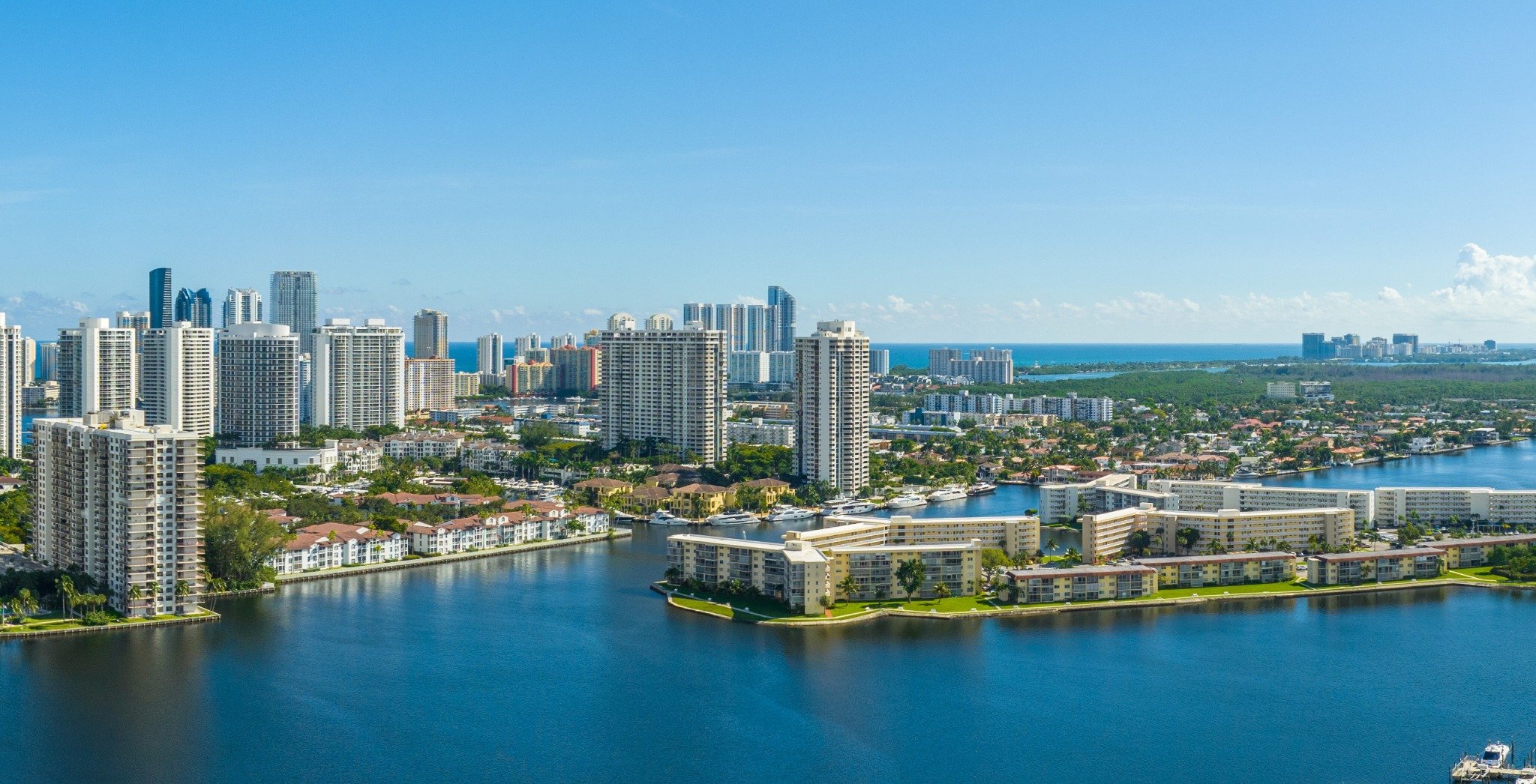
For many South Florida buyers, the first read of a family-scale condo is visual: the width of the terrace, the depth of the water view, the flow between kitchen and living room, the calm of a private elevator arrival. Yet for households that boat, or may one day boat, an equally important question sits outside the residence: what stands between the building and open water?
Bridge clearance is not a nautical footnote. It can influence how often a family uses the water, what type of vessel makes sense, whether a nearby slip is truly practical, and how future buyers may interpret the same residence. Two condos with comparable interiors can carry very different lifestyle economics if one allows easier passage and the other imposes a more constrained route.
This matters most in the larger-residence category, where buyers are often solving for more than a seasonal retreat. They are weighing school-year routines, extended visits from grandparents, teenage independence, staff circulation, pets, storage, cars, tenders, paddleboards, and weekend movement between home, marina, club and airport. In that context, a bridge is not just infrastructure. It is a gatekeeper of rhythm.
The purchase price captures the residence. It does not always capture the operating pattern around it. A family imagining quick afternoon runs, effortless guest pickups, or last-minute dinner by water may value a property differently once bridge timing, vessel height, channel navigation, dock availability and marina location are considered together.
The real cost can appear in subtle ways. A buyer may choose a smaller boat than originally intended. A household may keep the boat at a more convenient marina rather than the closest one. A captain may need to plan around openings, tide, traffic, weather and family schedules. A second slip or off-site storage solution may become part of the ownership equation. None of these variables needs to diminish the appeal of a residence, but each can change the final picture.
For this reason, waterfront value should be read in layers. First comes the residence itself: plan, privacy, services, finish level and view. Then comes the building: valet, pool, wellness, security, staff, pet experience and storage. Finally comes the water logic: bridge clearance, marina options, route quality, approach, congestion and how naturally the household will use what it is paying to be near.
A pied-à-terre buyer may tolerate inconvenience if the residence is used only occasionally. A family-scale buyer has less room for friction. The difference between boating as a planned production and boating as an easy extension of daily life can be meaningful, especially when children, guests and multiple calendars are involved.
In practical terms, a family should map the boating experience the same way it maps the school run or airport drive. Where will everyone board? How long does the route feel on a normal day? Is the vessel compatible with the route, or is the route forcing the vessel decision? Can guests arrive without turning a simple outing into a logistical exercise? How does the plan change if the family wants a larger boat later?
That is why buyers comparing Fort Lauderdale, Aventura, Sunny Isles, Miami Beach and Brickell should resist treating “waterfront” as one uniform category. Each market can offer a distinct relationship between residence, bay, river, ocean, dockage and daily mobility. A condo may be superb without being ideal for a particular boating profile.
In Fort Lauderdale, a buyer drawn to the yachting culture and resort-residential energy around St. Regis® Residences Bahia Mar Fort Lauderdale may think about boating as part of the identity of ownership. The relevant question is not only whether the residence is beautiful, but how the waterfront routine supports the family’s actual vessel use.
In Aventura, households evaluating Avenia Aventura may be weighing proximity, schools, shopping, boating access and the ease of multi-generational living. Bridge clearance becomes one of several filters that determine whether the address functions as a true all-week home or a highly polished compromise.
In Sunny Isles, the appeal of towers such as Bentley Residences Sunny Isles may center on vertical luxury, ocean adjacency and dramatic design. For a boating family, the question extends beyond the tower to the route: where the boat lives, how the family reaches it, and whether the experience feels spontaneous enough to be used often.
In Miami Beach, a buyer considering The Perigon Miami Beach may prioritize sand, architecture, privacy and cultural proximity. If boating is also central, the decision should reconcile oceanfront living with the practical location of dockage, crew, service and family access.
In Brickell, a residence such as Una Residences Brickell can appeal to buyers who want skyline energy and water views without giving up a refined residential atmosphere. Here, the boating calculus is often about pairing an urban condo lifestyle with a marina strategy that does not undermine the ease that made the condo desirable in the first place.
Bridge clearance can also affect the future buyer pool. Not every purchaser owns a boat, and not every boat owner needs the same access. Still, when a residence is marketed as waterfront or water-oriented, knowledgeable buyers often ask more sophisticated questions than the view alone can answer.
A condo that pairs generous family interiors with simple water logistics may feel more flexible to a broader audience. A condo with beautiful water exposure but more constrained boating use may still be exceptional, yet its value proposition must be understood honestly. This is not a negative. It is a matter of aligning price with utility.
The most resilient decisions are usually made before emotion takes over. A buyer who verifies the route, understands the vessel implications, compares nearby marina options and prices the household’s actual behavior can negotiate with a clearer mind. In the luxury segment, clarity is a form of leverage.
Before committing to a family-scale waterfront condo, buyers should walk through a simple sequence. What vessel do we own now, and what might we want next? Would that change the route? Where would the boat be kept if the closest option is not ideal? Is the water use occasional, weekly, or part of the family’s identity? Who will manage the details when the household is busy?
Then consider the non-boating buyer in the future. If the family sells, will the next purchaser understand the same value story? Is the residence strong enough on its own merits if boating is secondary? Does the building offer a lifestyle that remains compelling even if the vessel plan changes?
This is where the best advisory work becomes less about selling a view and more about preserving optionality. A well-chosen condo should support the life a family has today while leaving room for the way that life may expand.
Why does bridge clearance matter for a condo buyer? It can affect the size and type of boat a household can use comfortably, as well as how easy the boating routine feels in daily life.
Is a waterfront condo always better for boat owners? Not necessarily. A waterfront view is different from practical boating access, and both should be evaluated separately.
Should I choose the condo first or the boat first? Serious boating families should evaluate both together, since the route, marina plan and vessel profile can influence the right residence.
Can bridge constraints affect resale? They may influence how future boating buyers assess the property, especially if the residence is marketed around a water-oriented lifestyle.
Does bridge clearance matter if I do not currently own a boat? It can still matter if boating is a future possibility or if you want maximum flexibility for resale.
What should families ask during a showing? Ask where a boat would be kept, how the route works, what vessel types are realistic, and how the plan fits weekday and weekend routines.
Is off-site marina use a drawback? Not always. A well-located off-site marina can be more practical than a nearby option that does not suit the vessel or household schedule.
Do larger condos make this issue more important? Often yes, because larger residences are commonly tied to fuller family use, guests, longer stays and more complex logistics.
Can a non-boating building still be a smart waterfront purchase? Yes. If the residence, services, privacy and view justify the decision, boating may be only one part of the value equation.
What is the best way to avoid a costly mismatch? Test the lifestyle before buying: map the route, review marina choices, consider future boat needs and price the full ownership pattern.
When you're ready to tour or underwrite the options, connect with MILLION.
If branded residences are on your mind — as a home or as an allocation — we would be glad to share what we are seeing, privately.
Begin a quiet conversation