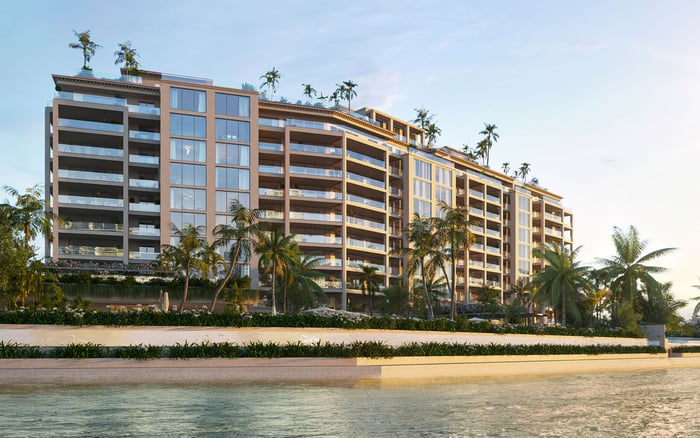
For collectors considering Fisher Island, the decisive questions often sit behind the walls: stable climate conditions, controlled illumination, practical storage, discreet service access, and a clear accounting of collection-specific costs.
Fisher Island spans about 216 acres off Miami Beach and contains roughly 800 residences. Its privacy, waterfront setting, and limited scale create an unusual residential proposition, but collectors should look beyond controlled island access. A home that appears ideal for art can carry meaningful operational demands when storage, lighting, humidity, staff movement, and installation logistics are considered together.
The island’s warm, humid tropical coastal climate and pronounced wet season make moisture management especially relevant. Fine finishes and premium mechanical systems may provide a valuable foundation, yet marketing language alone does not establish museum-grade performance. The practical question is whether a residence can maintain suitable conditions consistently and discreetly, without compromising how its owner wants to live.
Association-style fees on Fisher Island may encompass building maintenance, groundskeeping, security, building insurance, water, sewer, trash removal, pest control, parking, cable, internet, recreational access, and some climate control. Estimated monthly fees range from approximately $1,500 to $3,000 in older buildings, while newer Palazzo properties may reach roughly $4,000 to $8,000 or more. Current figures and inclusions require verification through governing documents.
Those base costs should be separated from collection-specific expenses. Supplemental dehumidification, dedicated HVAC zones, environmental sensors, remote alerts, filter changes, preventive service, backup planning, specialty lighting, window treatments, and conditioned storage can create an additional operating layer. Buyers should also establish who maintains each component and whether alterations require building approval.
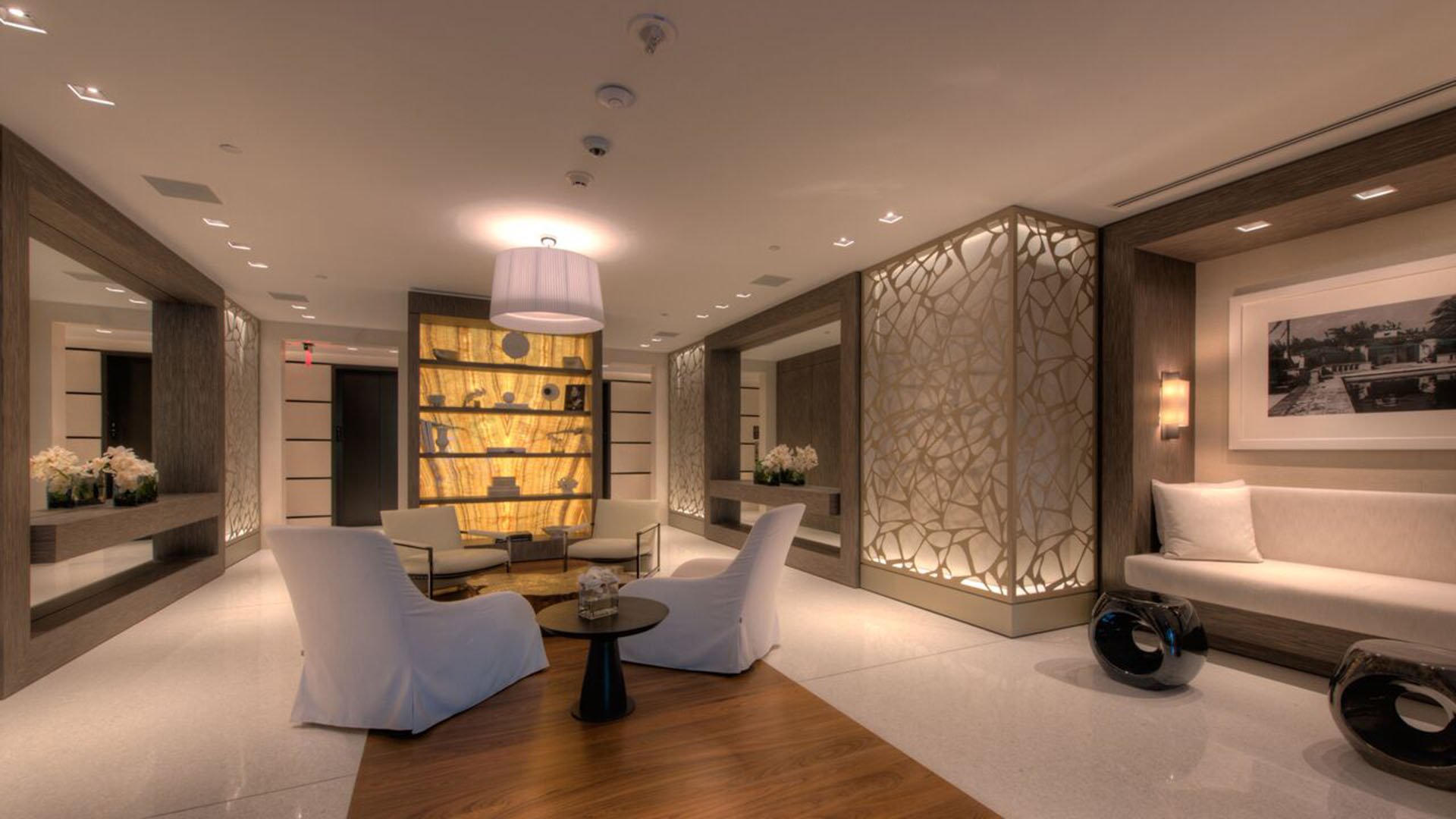
The Palazzo del Sol Fisher Island proposition is instructive. Palazzo del Sol is presented with Bosch HVAC systems, Nest thermostats, linear air diffusers, water- and mold-resistant drywall, a level 5 finish, and Apure lighting designed by Porsche Design Studio. These are notable residential specifications, but collectors still need humidity ranges, system capacity, monitoring details, and performance expectations in writing.
A rare 9-by-18-foot air-conditioned storage unit has been available within a Fisher Island residence. This confirms the presence of conditioned ancillary storage in parts of the market, not a universal standard. Buyers should verify exact dimensions, ceiling height, shelving limitations, power, fire protection, access hours, surveillance, water exposure, and whether the space shares walls or systems with other areas.
Storage location can shape privacy as much as preservation. If handlers must cross a lobby, use a shared elevator, or coordinate repeatedly with building staff, an otherwise private acquisition may create a visible pattern of activity. A rigorous review traces the complete route from arrival to installation, including vehicle staging, loading access, elevator dimensions, door clearances, service corridors, and temporary crate placement.
The same exercise should be applied across Palazzo della Luna, The Residences at Six Fisher Island, and other island options, rather than assuming enclave-level privacy resolves residence-level logistics. Different buildings can create distinctly different experiences for owners, staff, conservators, and installers.
Large waterfront windows are central to the Fisher Island lifestyle, but daylight can introduce direct sun, glare, reflections, and uneven exposure. A thoughtful lighting study should map the sun across seasons, identify sensitive walls, test nighttime reflections, and assess how automated shades interact with daily routines. The objective is not to darken the home, but to create controllable layers.
Ambient, accent, and art lighting should be considered alongside fixture placement, heat, dimming, beam control, and future flexibility. Collections evolve, and a rigid ceiling plan can become costly when works change in scale or location. Linear diffusers and visually integrated mechanical elements may support a clean interior, although discreet airflow should not be assumed suitable for every artwork.
This is where Design & Architecture becomes operational rather than decorative. Lighting scenes, shade controls, thermostats, and monitoring should be intuitive enough for household staff to manage without constant specialist intervention. Buyers comparing residential formats such as The Links Estates at Fisher Island should test these systems as carefully as they inspect stone, millwork, or views.
Island access is only the first layer of discretion. Unit-entry configuration, staff circulation, storage placement, installer access, and the frequency of service visits determine how private collection care feels in practice. A technically sophisticated system requiring frequent on-site attention may be less compatible with a lock-and-leave routine than a simpler, well-monitored arrangement.
Before contracting, buyers should request mechanical specifications, humidity capabilities, service records where available, storage measurements, alteration rules, insurance requirements, and current fee schedules. They should also test controls, determine how alerts are escalated, and clarify responsibility during an outage or extended absence. The right residence aligns collection stewardship with the owner’s preferred rhythm, rather than turning preservation into a permanent household production.
Does standard air conditioning provide museum-grade protection? Not necessarily. Buyers should verify humidity capabilities, monitoring protocols, system capacity, and performance rather than relying on equipment branding.
Are climate-control expenses included in Fisher Island fees? Some fees may include climate control and utilities, but residence-specific equipment, monitoring, and art storage can remain separate expenses.
How much can association-style fees cost? Estimated monthly fees range from approximately $1,500 to $3,000 in older buildings and roughly $4,000 to $8,000 or more in newer Palazzo properties, subject to verification.
Is conditioned art storage available on the island? A 9-by-18-foot air-conditioned storage unit has been available, but availability and specifications vary by property.
Why do waterfront windows require special attention? They can introduce direct sunlight, glare, reflections, and uneven exposure, making controllable shading and careful placement important.
What should buyers request about a storage room? Confirm dimensions, access, power, fire protection, surveillance, environmental controls, water exposure, and any building restrictions.
How can art handling affect privacy? Shared lobbies, elevators, service corridors, and recurring staff visits can make collection movements more visible than expected.
Do premium thermostats prove conservation-grade performance? No. A premium thermostat is a control interface; it does not independently establish stable temperature or humidity conditions.
What should be tested during due diligence? Test lighting scenes, shades, thermostats, alerts, airflow, service routes, door clearances, elevators, and storage access.
What defines the best Fisher Island fit for a collector? It is the residence that balances environmental stability, discreet logistics, adaptable display, manageable costs, and effortless daily use.
For a discreet conversation and a curated building-by-building shortlist, connect with MILLION.
If branded residences are on your mind — as a home or as an allocation — we would be glad to share what we are seeing, privately.
Begin a quiet conversation