A collector-focused guide to evaluating South of Fifth residences through the lens of art placement, privacy, building operations, climate control, storage, insurance coordination, and long-term livability.
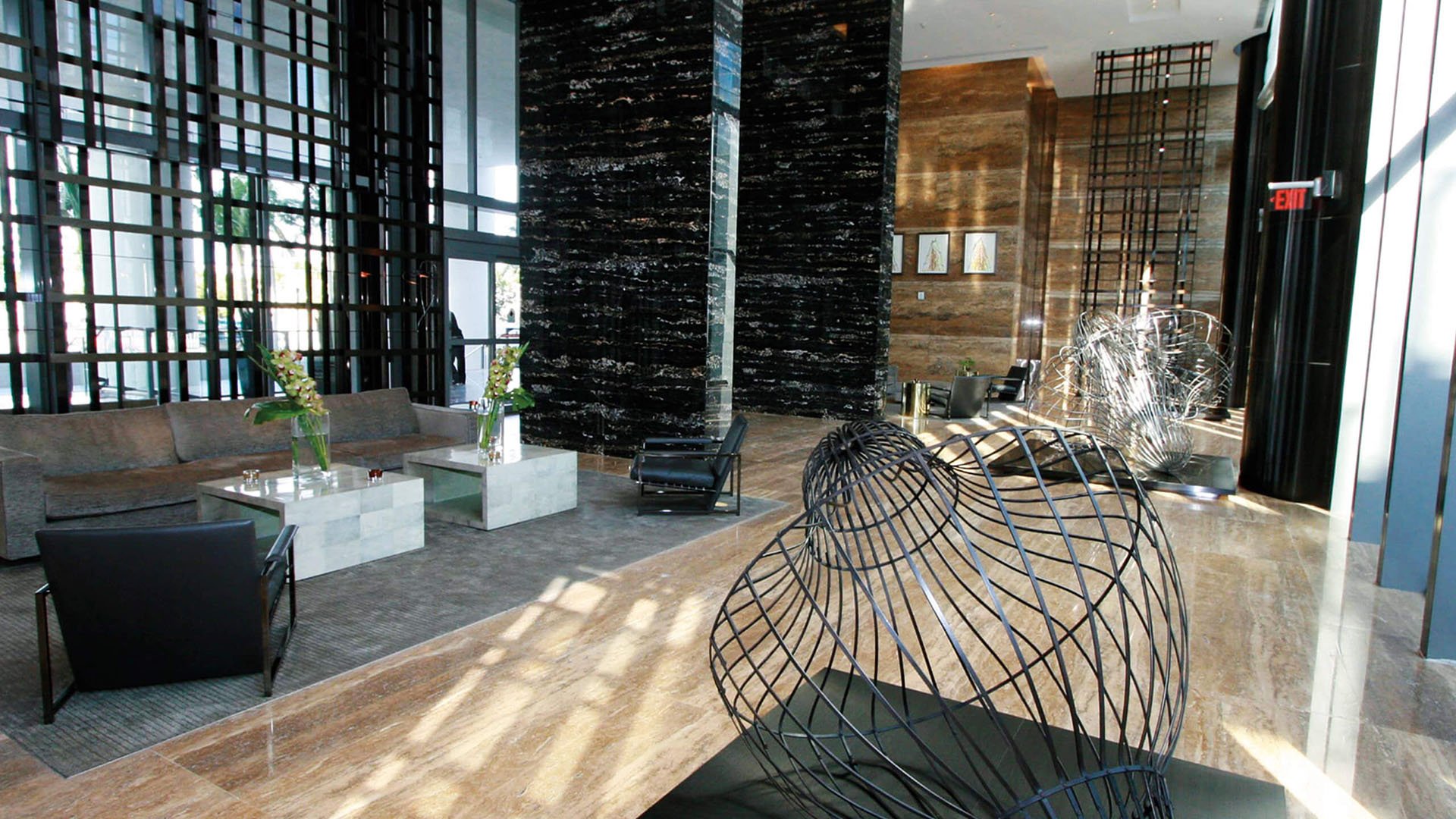
For an art collector, buying in South of Fifth is not simply a question of address, view, or finish level. The residence must perform as a private gallery, a social salon, a climate-sensitive environment, and a discreet retreat. The strongest purchase is the one that protects the collection without compromising the pleasure of living with it.
That calls for a different due diligence process. A traditional luxury buyer may tour at sunset, admire the proportions, and compare amenities. A collector should arrive with a more exacting brief: where large works will land, how sculpture will be moved, how natural light behaves, where crates could be staged, how private deliveries are handled, and whether the building culture respects discretion.
South of Fifth, often shortened in searches to SoFi, carries a particular appeal for buyers who want Miami Beach energy with a more contained residential rhythm. But the name alone is not enough. A collector should pressure-test the micro decision, the building decision, and the individual residence decision before committing capital.
The first mistake is to evaluate the home before evaluating the art. Begin with an inventory-based walk-through. Identify the works that require the greatest wall depth, the most controlled light, the most secure placement, and the most complicated installation. Then test the residence against those requirements.
Wall planes matter more than raw square footage. A glamorous room with continuous glass may be exhilarating for entertaining but limited for hanging significant works. Conversely, a quieter interior corridor, library, or den may become the most valuable part of the plan if it offers protected surfaces, controlled light, and a natural viewing sequence.
Ceiling height should be studied with equal discipline. Monumental works, vertical canvases, and suspended pieces all require more than visual drama. They need safe installation points, appropriate viewing distance, and a room that allows the work to breathe. If a collector intends to live with rotating installations, the residence should allow change without feeling improvised.
A tour of Apogee South Beach or Continuum on South Beach should therefore be approached with a curator’s eye as much as a buyer’s eye. Ask not only whether the residence is beautiful, but whether it can support the collection’s scale, cadence, and long-term care.
The most important art-related questions are often invisible during a showing. A collector should ask how the residence manages temperature consistency, humidity stability, filtration, and sun exposure. The goal is not to turn a home into a museum. The goal is to avoid unnecessary stress on works that are sensitive to heat, moisture, glare, or rapid environmental change.
Window treatments deserve serious attention. Beautiful glass is part of the South Florida experience, but the collector’s question is more nuanced: can light be softened precisely where works are installed, without making the home feel sealed off? Motorized shades, layered treatments, and flexible lighting scenes can make the difference between a residence that merely displays art and one that protects it.
Lighting should be evaluated in the evening as well as during the day. Art is lived with at breakfast, at cocktail hour, and after dinner. A residence that looks perfect at noon may flatten at night if the ceiling plan is inflexible. Look for layered lighting potential, wall-washing opportunities, and the ability to create intimate viewing moments without glare.
Collectors should spend as much time on operations as aesthetics. Ask how large objects enter the building, where they are received, how service elevators are scheduled, and whether installation teams can work without drawing unnecessary attention. The answer will reveal whether the building is truly prepared for serious ownership.
Crate handling is another quiet test. Even when a residence has generous interiors, the path from loading area to elevator to private entry can become the limiting factor. A collector should request a practical route review, especially for large-format canvases, sculpture, design objects, or fragile pieces that require professional handling.
Storage should be evaluated realistically. Not every work belongs on display at all times. If the residence does not support adequate in-unit storage, the owner should plan for professional off-site storage and a clear rotation strategy. The residence still needs short-term staging capacity for installations, deinstallations, and seasonal rehangs.
Discretion is part of the art plan. A building may be architecturally impressive yet still feel too exposed for a collector who values quiet movement of works, private guests, and controlled access. The right residence should allow art to be enjoyed generously inside the home and quietly protected outside public view.
South of Fifth should be tested not in isolation, but against the owner’s actual life. If the residence will be used during collecting events, social weekends, or extended winter stays, the owner should understand how the home will feel in each mode. A residence that works beautifully for a two-night visit may not be the right environment for a month of living, working, hosting, and rotating art.
The comparison set should be thoughtful. A buyer focused on South Beach may include The Ritz-Carlton Residences® South Beach in the broader conversation, while a collector studying a wider Miami Beach lifestyle may also consider Five Park Miami Beach or The Perigon Miami Beach. The point is not to dilute the South of Fifth thesis. It is to confirm it.
If Art Basel is part of the owner’s annual rhythm, the residence should be tested during a socially active period as well as a quiet one. How does the arrival experience feel with guests? Is there space to host without placing works at risk? Can staff, installers, advisors, and friends move through the home without creating friction?
Before signing, ask the questions that rarely appear in glossy presentations. Which walls are best suited for heavy works? Where would a sculpture be safest without interrupting circulation? How would a conservator inspect the home? What happens when a work arrives before the owner does? Who coordinates access if an installation requires several hours?
Insurance coordination should also be part of the purchase conversation. The residence, the building, and the collection may each involve different expectations. A collector should align advisors early so that coverage, documentation, installation standards, and storage decisions are not handled after closing as an afterthought.
Finally, consider emotional durability. Some residences impress immediately but offer limited flexibility. Others reveal themselves slowly because they support daily rituals, private contemplation, and the evolving nature of a serious collection. For a collector, the right South of Fifth residence should feel composed, protective, and adaptable.
The most successful purchase is not necessarily the most theatrical. It is the home that allows the collection to live well, the owner to entertain confidently, and the building to operate quietly in the background.
What should art collectors evaluate first in a South of Fifth residence? Start with the collection’s physical needs, including wall planes, light control, scale, circulation, and installation access.
Is a glass-heavy residence a problem for art? Not automatically. The question is whether light can be controlled with precision where sensitive works will be placed.
Should collectors tour at a specific time of day? Tour in both daylight and evening conditions so you can judge glare, warmth, shadows, and the quality of artificial lighting.
Why do service elevators matter for collectors? They determine how large or fragile works can be moved into the residence safely and discreetly.
Is in-unit storage essential? It is useful, but not always sufficient. Many collectors pair a residence with professional off-site storage and a rotation plan.
How should collectors compare South of Fifth with other Miami Beach options? Compare the daily lifestyle, privacy, building operations, art placement potential, and hosting needs rather than address alone.
What role does privacy play in an art-focused purchase? Privacy affects deliveries, guest movement, security, and the owner’s ability to enjoy the collection without unnecessary exposure.
Should insurance be discussed before closing? Yes. Coverage, installation standards, documentation, and storage expectations should be aligned before the residence is finalized.
Can a residence be both a home and a gallery? Yes, if the plan supports comfort, circulation, proper light, and moments of focused viewing without feeling staged.
What is the clearest sign that a residence suits a collector? It should make the art feel protected, intentional, and easy to live with every day.
When you're ready to tour or underwrite the options, connect with MILLION.
If branded residences are on your mind — as a home or as an allocation — we would be glad to share what we are seeing, privately.
Begin a quiet conversation