A discreet buyer’s guide for Houston executives and founders considering West Palm Beach, focused on timing, advisory coordination, lifestyle fit and residential strategy.
For a Houston buyer considering West Palm Beach, the first mistake is treating the move as a simple change of address. At the ultra-premium level, relocation is usually a coordinated decision involving business structure, family calendar, privacy, tax review, estate planning and liquidity. The residence is the visible asset, but it is rarely the first variable to settle.
The better approach is to define the role the property should play. Is it a primary base, a seasonal residence, a family compound, a pied-à-terre tied to business travel or a long-hold investment? Each answer points to a different search pattern. A buyer expecting full-time residency will think differently about service, schools, medical access and staff logistics than a buyer seeking a refined lock-and-leave apartment near Palm Beach social life.
West Palm Beach has particular appeal because it can support both privacy and proximity. The city can serve as a softer landing than denser urban cores while still allowing a sophisticated residential routine. But a buyer arriving from Houston should not assume the right home is simply the largest or newest option. The right home is the one that fits the operating rhythm of the household.
Before contracting on a residence, assemble the advisory circle. Legal counsel, tax advisors, estate planners, insurance specialists and relocation coordinators should be aligned before the search becomes emotional. The question is not only where to live, but how ownership, financing, residency documentation and business commitments should be coordinated.
This is especially important when a buyer has multiple residences, closely held business interests, family office considerations or succession planning underway. A residential purchase can trigger decisions about domicile, asset titling, trust structures, household staffing and insurance coverage. None should be addressed casually at closing.
From a real estate perspective, the practical sequence is simple: clarify the intended use, set the ownership framework, define the family’s non-negotiables, then tour. Reversing that order creates friction. It is easy to fall in love with a view, a lobby or a terrace, then discover the property does not suit the way the family actually lives.
The West Palm Beach search should be organized around daily life. Some buyers will prioritize a full-service condominium with private amenities and minimal upkeep. Others will need more space, guest capacity, staff support or a quieter residential setting. Still others will want a lock-and-leave environment that allows them to divide time between Houston, South Florida and other residences.
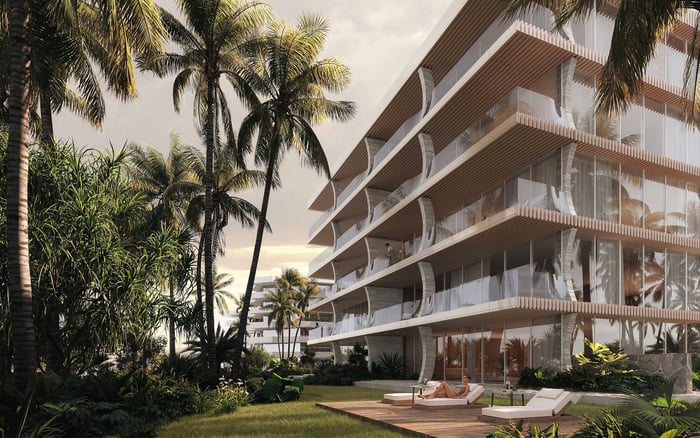
For those considering condominium living, compare projects through the lens of service, discretion and maintenance discipline. A buyer looking along the waterfront conversation may include Alba West Palm Beach in an early review, not as a default choice, but as part of a broader discussion about scale, orientation and lifestyle.
Another buyer may prefer a more formal residential presence and evaluate Forté on Flagler West Palm Beach in relation to how a building supports arrival, guest experience and long-term ownership. The point is not to chase a brand name. It is to identify the residential environment that will remain comfortable after the novelty of the move has faded.
Waterfront property attracts attention because it offers a visual reward that is difficult to replicate. Yet waterfront should not be the only filter. Exposure, privacy, building operations, service culture, parking, storage, guest flow and resilience of the association or ownership structure all matter.
For a Houston buyer accustomed to space, the shift to vertical living can be elegant, but it requires calibration. Large terraces, private elevators, well-planned service entries and generous storage may matter more than a slightly higher floor. A graceful plan can make a residence feel calm; an inefficient plan can make even a trophy view feel compromised.
This is where restraint becomes a luxury discipline. The most impressive residence is not always the most livable one. If a household entertains frequently, hosts family for extended stays or travels with staff, the plan must be tested against real routines. If the buyer values discretion, the building’s culture can matter as much as its architecture.
New construction can be appealing for buyers who want contemporary systems, fresh design language and the ability to enter a building at an early stage of its residential identity. But newness should be examined carefully. Buyers should ask about delivery expectations, deposit structure, customization options, association governance, maintenance assumptions and the long-term character of the resident mix.
Established buildings can offer another kind of certainty. A buyer can study how a property lives, how it is maintained and how residents use the amenities. That transparency is valuable. For some families, an established address may be the more conservative decision; for others, the opportunity to shape a new residence from the beginning may be the point.
Within the West Palm Beach conversation, projects such as The Ritz-Carlton Residences® West Palm Beach may enter the discussion for buyers who value a serviced residential format. Others may compare newer opportunities with more private or boutique alternatives. The best choice depends less on marketing language and more on use, governance and fit.
Many Houston buyers will naturally consider the relationship between West Palm Beach and Palm Beach. The question is not which is better, but which supports the desired routine. Palm Beach may appeal to those who want a more traditional island setting. West Palm Beach may appeal to those who want a different mix of convenience, residential options and access to daily services.
The smartest buyers treat this as a lifestyle map. Where will dinners happen? Where will children or grandchildren stay? How often will the office be used? Will the household keep cars in multiple locations? How much privacy is required when guests arrive? These questions quickly narrow the search.
For some, a West Palm Beach residence paired with access to the broader Palm Beach social orbit is the most balanced answer. A project such as South Flagler House West Palm Beach may be considered in that context, especially by buyers focused on the feel of a long-term residential base rather than a short seasonal stop.
High-net-worth buyers often have flexibility, but flexibility should not be confused with informality. Cash, financing, portfolio lending and entity ownership each require advance preparation. A seller, developer or listing agent will read the seriousness of a buyer through speed, clean documentation and clarity of intent.
Timing also matters. A relocation tied to business movement should include a temporary housing plan if needed. Renting first is not a sign of indecision; it can be a disciplined way to test commute patterns, social rhythm and building preferences before committing capital. Conversely, if the right property appears and the advisory structure is ready, waiting too long can introduce unnecessary uncertainty.
The most effective negotiation posture is calm and informed. Know the must-haves, know the walk-away points and understand the cost of delay. Luxury negotiations are often won by preparation, not volume.
During the first phase, separate exploration from commitment. Tour neighborhoods, compare building types and test daily life at different times of day. Create a written scorecard that includes privacy, arrival sequence, guest capacity, staff logistics, parking, storage, outdoor space, view quality, service level and resale logic.
This is where a buyer’s-guide mindset is useful: do not evaluate residences in isolation. Evaluate them as instruments in a larger life plan. The right West Palm Beach residence should reduce friction, protect time and preserve optionality.
A Houston buyer who approaches the move this way is less likely to overpay for spectacle and more likely to secure a property that feels effortless. In the highest tier of South Florida real estate, effortless is rarely accidental. It is planned.
Should Houston buyers purchase immediately in West Palm Beach? Not always. Many buyers benefit from clarifying advisory, family and business requirements before making a permanent purchase.
Is West Palm Beach better for a primary residence or a seasonal base? It can serve either role, depending on how the household uses the property and how much service, privacy and flexibility are required.
Should I rent before buying? Renting can be useful if you need to test routines, neighborhoods and building preferences before committing capital.
What should business owners review before relocating? Coordinate legal, tax, estate, insurance and operational advisors before finalizing ownership or residency decisions.
Are condominiums practical for buyers moving from large Houston homes? They can be, if the plan, storage, service model, terrace space and privacy match the household’s daily rhythm.
How important is waterfront positioning? Waterfront can be desirable, but it should be balanced against privacy, layout, building quality and long-term usability.
Is new construction always the better option? No. New construction may offer contemporary design, while established properties may offer clearer insight into daily operations.
How should I compare West Palm Beach and Palm Beach? Compare routines rather than labels: dining, guests, transportation, privacy, staff needs and daily convenience.
What makes a relocation purchase different from a second-home purchase? A relocation purchase usually carries more operational consequences, including advisory planning, household logistics and long-term residency intent.
What is the safest way to begin the search? Begin with a written brief, a coordinated advisory team and a clear definition of how the residence should function.
For a tailored shortlist and next-step guidance, connect with MILLION.
If branded residences are on your mind — as a home or as an allocation — we would be glad to share what we are seeing, privately.
Begin a quiet conversation