A buyer-oriented framework for distinguishing private elevator arrival from exclusive use, confirming visitor permissions, and evaluating service circulation in Palm Beach County residences.
For a high-value residence in Palm Beach County, privacy deserves the same attention as the floor plan, terrace orientation, and interior finishes. An elegant arrival can feel secluded while leaving essential operational questions unanswered: where the elevator opens, who can authorize access, and whether household service follows a separate route.
These are three distinct considerations. A private vestibule describes an arrival space. An access credential governs permission. A service entrance concerns circulation. None proves the other two. The most useful buyer conversation moves beyond “private elevator” to the precise experience of arriving home, receiving guests, and admitting vendors.
The properties discussed here advertise relevant features, but those descriptions do not establish complete visitor-authentication or service-entry-separation protocols. Treat them as starting points for residence-specific confirmation, not assurances of operating conditions.
At 550 Okeechobee Boulevard in West Palm Beach, UPH-04 is advertised with private lounges beside the elevators and security-fob access to the top floor. Advertised features also include a front-desk attendant, 24-hour security, key-card entry, a secured lobby, gated parking, and cameras.
Together, these describe several access-related amenities. They do not establish that one elevator serves only one residence. A restricted destination and a dedicated elevator are different arrangements, even when both contribute to a discreet arrival.
Similarly, residence #2202 at 1333 S. Flagler Drive is advertised within a 41-residence property offering private elevator access for every home. That phrase calls for a closer look at the landing arrangement, not an assumption of elevator exclusivity.
Distinguish the elevator car, the floors it serves, and the space beyond its doors. Confirm whether the landing serves one home, whether another secured door separates it from the interior, and which credentials permit arrival there. These questions translate a broad amenity description into a clear access arrangement.
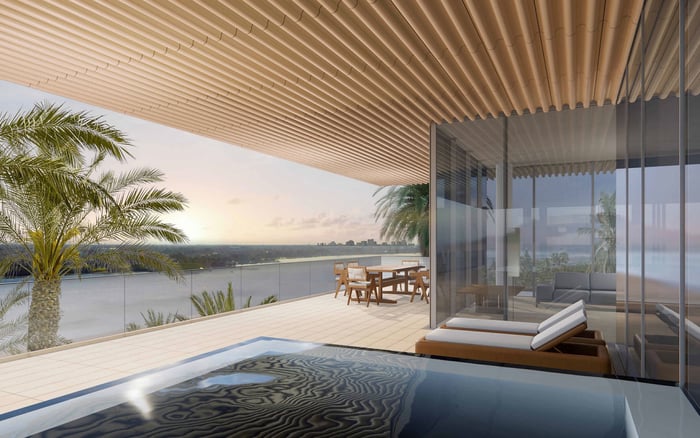
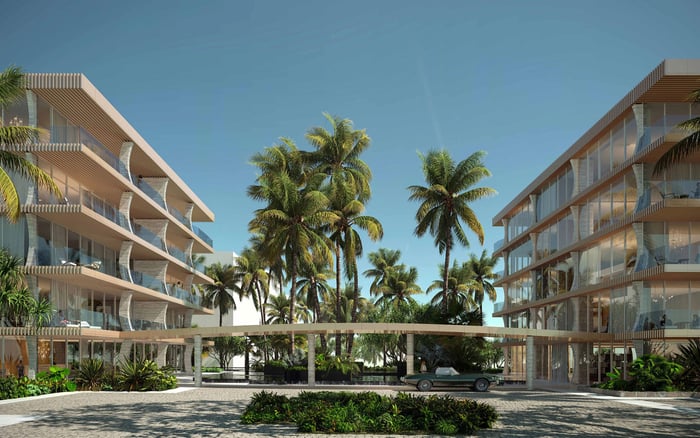
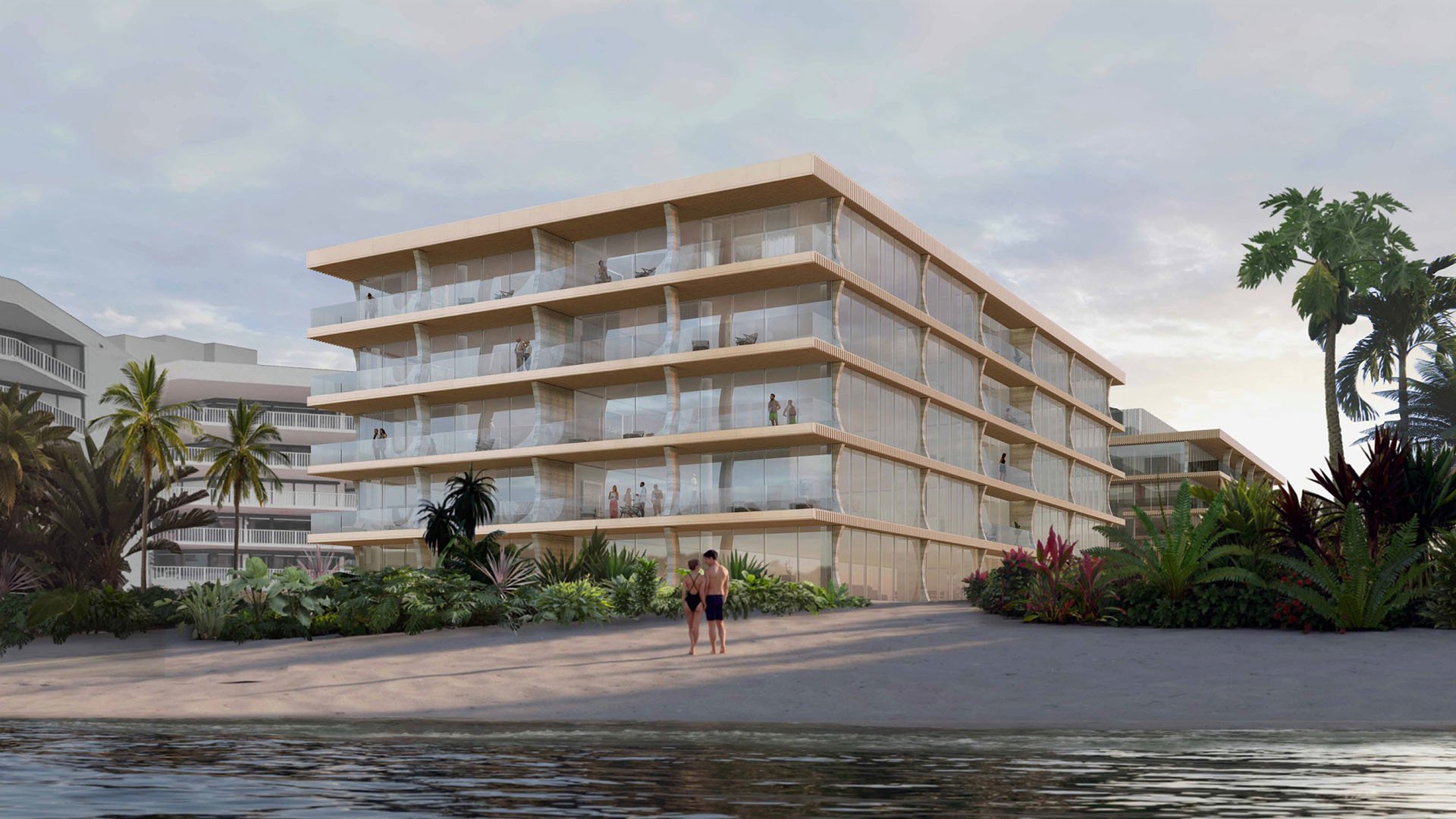
At Alba West Palm Beach, advertised features include 55 residences, private elevator access, and private vestibule entry. The residence mix includes ground-level townhomes with private entries, standard residences, premium residences, and penthouses. That range makes residence-specific review especially important.
Do not assume an arrival description applies identically to every home in a development. Request the plan for the exact residence under consideration, with its entrance, elevator landing, and adjoining circulation identified. For a townhome, examine the private ground-level entry separately from any elevator arrangements.
Alba's advertised features also include 24/7 valet and security, along with smart-home technology. Those features do not establish how residence-entry permissions are administered or whether home controls interact with building access systems. Ask which functions belong to the residence and which remain under building management.
At Mandarin Oriental Residences, West Palm Beach, each residence is advertised with private elevator access. Apply the same discipline: confirm the selected home's landing configuration and access permissions rather than inferring them from the amenity label.
Visitor authentication is the operational counterpart to the floor plan. The essential question is not simply whether a building has a staffed entrance, but how an unfamiliar person receives permission to proceed beyond it.
Request a walkthrough of the proposed or current guest-arrival process. Establish who confirms identity, who contacts the resident, and who releases elevator access. Ask whether permission is limited to a destination and visit window, how it expires, and what happens when the resident cannot be reached. These are matters to verify, not features to presume.
At The Berkeley Palm Beach, advertised privacy features include private elevator access, gated entry, and full-time concierge service. References to keycard or code systems should not be mistaken for a complete visitor-authentication protocol. Likewise, references to app-based entry, biometric recognition, and personalized permissions describe luxury-condominium technologies; they do not confirm every feature at the property.
For households with assistants or regular guests, ask whether authorization can be delegated and later withdrawn. Clarify how a lost credential is disabled and how permissions are reviewed. The objective is a clear division of responsibility, not a longer list of technologies.
Service-entry separation deserves its own review because storage, scheduling, and physical circulation answer different questions. A package room identifies a place for packages. It does not establish a courier's route or whether delivery traffic crosses the resident arrival path.
At Mr. C Residences West Palm Beach, advertised features include a dedicated porte-cochère, a residential lobby with lounge seating, private high-speed elevators, mail and package rooms, and 24-hour valet and security. The package rooms indicate advertised handling infrastructure, not physically separate delivery and resident routes. The porte-cochère does not explain how visitors or vendors are authenticated.
Ask the sales team or management to trace several journeys on the relevant plans: a parcel delivery, a furniture installation, and a scheduled household service visit. Identify entrances, holding areas, elevator connections, and the final approach to the residence. Confirm where each route intersects resident circulation.
If separation depends on booking windows rather than distinct corridors or elevators, describe it as scheduling, not architectural separation. Both can be evaluated, but they should not be confused. A separate service door also warrants inspection of the route behind it; the door alone does not establish that the entire journey is independent.
Before committing, organize a concise review around three items: the residence-specific arrival plan, the written guest-authorization procedure, and the documented service route. Ask that advertised features be distinguished from current operations or proposed arrangements, as applicable.
Where access systems are operating, request an authorized demonstration with management. Where arrangements are proposed, seek written clarification of responsibilities and unresolved details. Include routine questions about after-hours guests, recurring vendors, credential cancellation, and elevator maintenance. The purpose is to understand how the residence will function, not to infer performance from presentation.
The strongest fit is the home whose layout and procedures support the owner's household rhythm. A secluded landing may be valuable; so may controlled guest access or a genuinely distinct service route. Evaluate each on its own evidence, then consider how they work together.
For a discreet conversation about your Palm Beach County residence priorities, connect with MILLION.
If branded residences are on your mind — as a home or as an allocation — we would be glad to share what we are seeing, privately.
Begin a quiet conversationNot necessarily. It may describe controlled access to a floor or private arrival space rather than an elevator dedicated exclusively to one home.
Confirm which residence it serves, who can reach it, and whether a separate secured door stands between the landing and the home's interior.
The residence is advertised with private lounges beside the elevators and security-fob access to the top floor. Those features do not establish exclusive elevator use.
Alba's advertised mix includes ground-level townhomes with private entries, standard residences, premium residences, and penthouses. Buyers should confirm the arrival configuration for their selected home.
Each residence is advertised with private elevator access. Buyers should separately confirm the landing arrangement and permissions governing access.
Ask who checks identity, obtains resident approval, and authorizes elevator access. Also clarify permission duration, destination restrictions, and the process when the resident is unavailable.
No. Discussions of biometric recognition, app-based entry, and personalized permissions do not establish that every technology is installed at the property.
No. Mr. C's advertised mail and package rooms describe handling infrastructure, not physically separate routes for deliveries and residents.
No. Booking windows manage timing, while architectural separation concerns distinct physical routes; buyers should evaluate each separately.
Request the residence-specific arrival plan, written guest-authorization procedures, and documented service routes. Distinguish advertised or proposed features from operating arrangements.