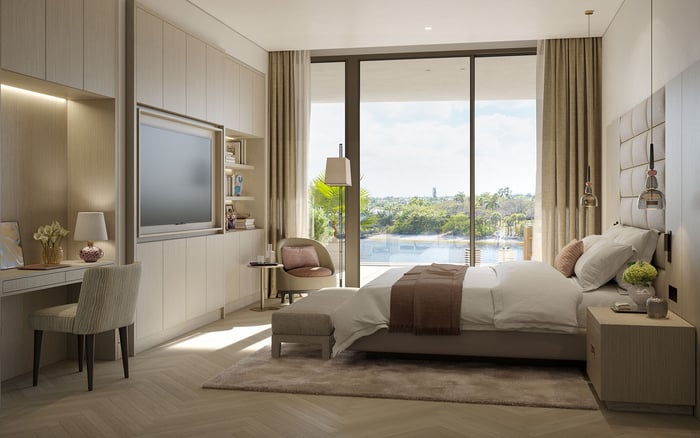
Guest-suite access can reshape the practical value of a South Florida residence, especially for owners who host family seasonally. At Rosewood Residences Hillsboro Beach, the key is to evaluate access rules, privacy, cost, and availability before treating hospitality capacity as part of the purchase decision.
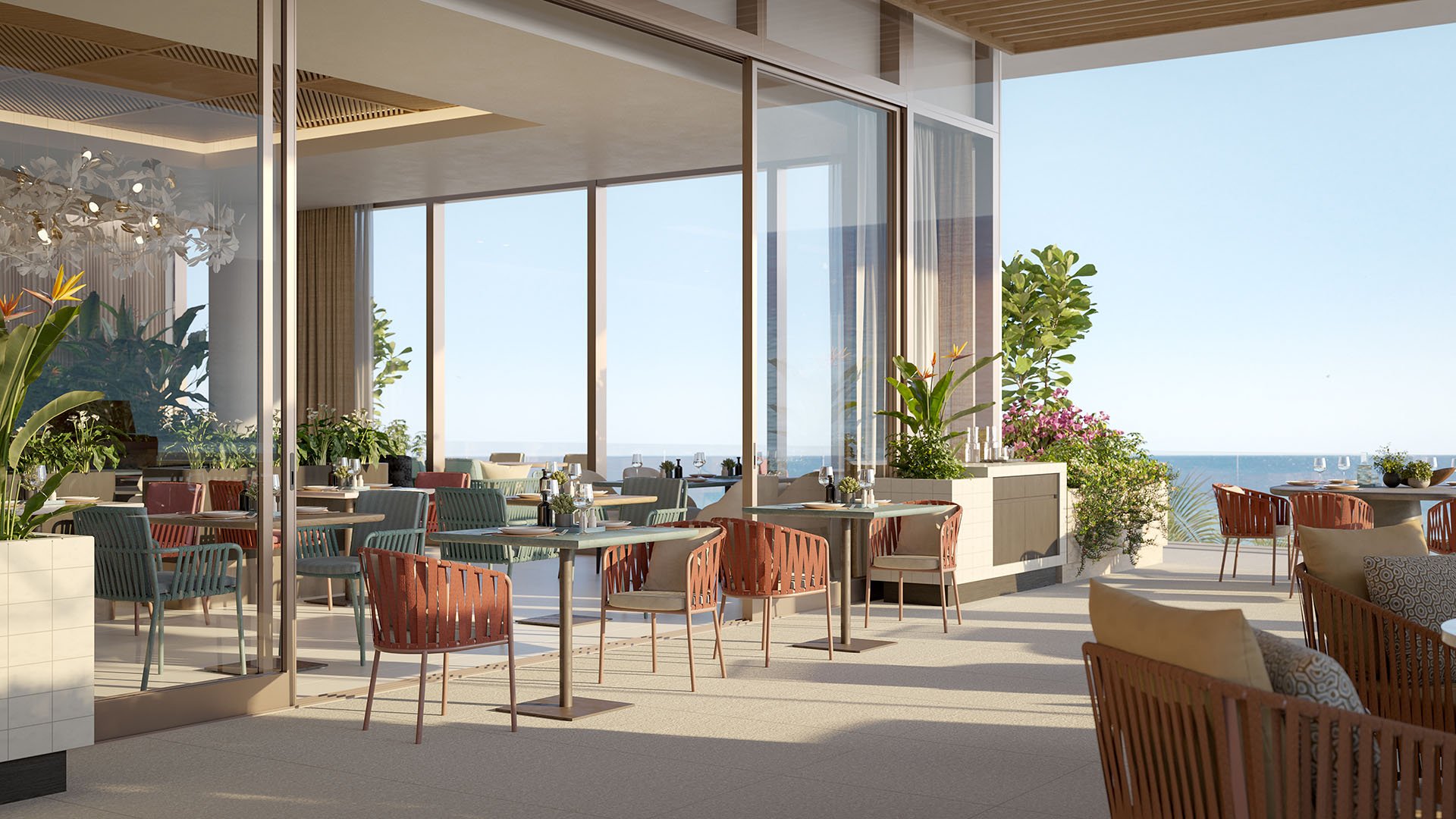
For buyers considering Rosewood Residences Hillsboro Beach, guest-suite access can reshape how a residence is evaluated. The question is not simply whether visiting relatives have somewhere to sleep. It is whether an owner can preserve the calm, privacy, and visual discipline of the primary home while welcoming children, parents, siblings, or close friends for meaningful stays.
That distinction matters in South Florida, where a second home often becomes a family gathering point. A residence selected for two people may periodically need to accommodate a larger group. Buying enough bedrooms for peak occupancy can be costly and may leave substantial space unused for the rest of the year. Guest accommodations, if offered on workable terms, can provide a more flexible solution.
This is especially relevant to branded residences, where buyers may expect residential discretion alongside hospitality-minded service. The ownership equation therefore extends beyond interior square footage to include the practical capacity of the wider property.
Because operating terms are not established here, prospective owners should confirm every material detail during due diligence. The most important questions concern eligibility, advance-booking windows, maximum stay lengths, nightly charges, taxes or service fees, cancellation rules, housekeeping, visitor registration, and whether access is guaranteed or subject to availability.
Seasonality deserves particular attention. A guest suite readily available during quieter periods may be difficult to reserve when family members are most likely to visit. Buyers should ask how competing requests are handled and whether owners receive equal access, priority based on reservation timing, or another allocation method.
It is equally important to clarify what the guest receives. Separate keys, building access, parking, amenity privileges, charging authority, and service requests can determine whether the stay feels seamless or administratively cumbersome. None of these details should be assumed from the presence of a suite alone.
A conventional spare bedroom places guests inside the owner’s daily rhythm. That can be intimate and desirable for a weekend. Over a longer stay, however, separate accommodations may allow everyone to preserve routines, sleep schedules, calls, childcare arrangements, and personal downtime.
For multigenerational families, this separation can ease the friction of extended visits without diminishing togetherness. Breakfast, pool time, and dinners remain shared, while mornings and evenings regain a measure of independence. The benefit is qualitative, but it can materially influence how often a family uses the home.
The oceanfront ownership conversation often emphasizes views and outdoor life. Hosting capacity is less visible during a tour, yet it may have greater influence on annual use. A beautiful residence that becomes uncomfortable when relatives arrive can underperform its intended lifestyle purpose.
A buyer should model at least two scenarios. The first is a larger residence with dedicated guest bedrooms that remain under the owner’s control. The second is a more tailored primary residence supplemented by reservable accommodations. The right choice depends on visit frequency, stay duration, family size, privacy preferences, and tolerance for booking uncertainty.
Permanent bedrooms offer certainty and may serve other household purposes between visits. Guest-suite access may reduce the need to acquire, furnish, cool, maintain, and insure interior space used only occasionally. That apparent efficiency, however, weakens if reservations are difficult, charges are substantial, or guests require more access than the rules permit.
Buyers comparing the northern Broward coast may frame the same questions around Armani Casa Residences Pompano Beach and The Ritz-Carlton Residences® Pompano Beach. The purpose is not to presume equivalent programs, but to compare each residence’s full hosting framework, verified documents, and likely fit with the household’s habits.
The most revealing exercise is a twelve-month calendar. Mark likely visits, school holidays, celebrations, long weekends, and overlapping stays. Then identify the number of nights, rooms, vehicles, and generations involved. This turns an attractive amenity concept into a measurable use case.
Owners with frequent, spontaneous visitors may prefer interior space under their control. Those whose families plan well in advance may find reservable accommodations more practical. A household expecting occasional couples has different needs from one welcoming young children, caregivers, or elderly parents.
Location also shapes the decision. A Hillsboro Beach residence may appeal to buyers seeking distance from denser urban routines. Within the broader Hillsboro Beach market, the question is whether visiting family can share that retreat without overwhelming the private residence. Buyers considering a more hospitality-oriented coastal context might also examine Four Seasons Hotel & Private Residences Fort Lauderdale while independently verifying its current policies.
Guest accommodations should never be valued as though they were deeded bedrooms. They are better understood as conditional access whose utility depends on rules, availability, cost, and service quality. Buyers should review governing documents, current fee schedules, reservation procedures, and any provisions permitting policies to change.
The strongest purchase decision begins with the residence itself. Layout, privacy, storage, everyday circulation, and personal comfort must work without relying on shared inventory. Guest access can then become a strategic extension of the home rather than compensation for a residence that is too small.
For the right family, that extension may be meaningful. It can support longer visits, preserve domestic order, and make a seasonal property feel like a genuine family base. The luxury is not merely an extra room. It is the ability to be together without surrendering independence.
Does the project offer guest suites to residents? Buyers should confirm the current offering, eligibility, and operating terms directly before assigning it value.
Can guest-suite access replace an extra bedroom? It may for planned, occasional visits, but it does not provide the certainty or control of deeded interior space.
What reservation rules matter most? Ask about booking windows, stay limits, priority rules, cancellations, and peak-period availability.
Should guest-suite costs be included in the ownership budget? Yes. Model nightly charges, service fees, taxes, housekeeping, parking, and possible policy changes.
Are guest amenity privileges automatic? They should never be assumed. Confirm access rights, registration procedures, and restrictions in writing.
How does this affect multigenerational visits? Separate accommodations can preserve routines and privacy while keeping family members close to shared activities.
Is guest access guaranteed during holidays? Availability may vary, so buyers should verify allocation procedures and test likely travel dates.
What documents should buyers review? Review governing documents, reservation policies, fee schedules, occupancy rules, and applicable disclosures.
Could guest-suite policies change after purchase? Operational policies may be subject to change, making flexibility and conservative valuation important.
What is the best way to compare alternatives? Compare total space, hosting certainty, recurring costs, privacy, and the family’s actual annual calendar.
For a confidential assessment and a building-by-building shortlist, connect with MILLION.
If branded residences are on your mind — as a home or as an allocation — we would be glad to share what we are seeing, privately.
Begin a quiet conversation