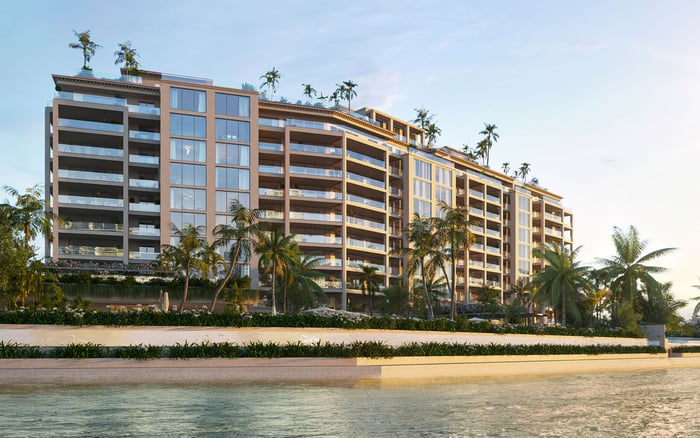
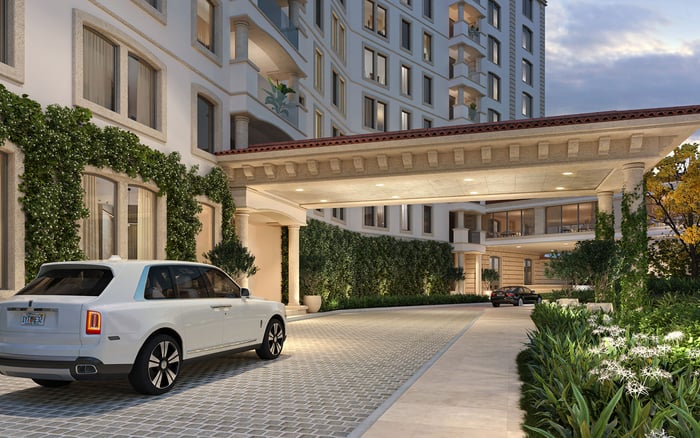
At The Links Estates, generous private garages may simplify daily parking, but controlled island entry and common-area restrictions make advance guest planning an important part of ownership.

At The Links Estates at Fisher Island, guest parking is inseparable from guest access. Fisher Island is reached by auto ferry or private yacht, so visitors arriving by car encounter a controlled transportation system before reaching a residence. The host must clear each guest, and the visitor must present government-issued identification or an accepted FastAccess credential.
That sequence may seem like a minor operating detail, yet it directly shapes dinner parties, weekend visits and vendor appointments. Guests do not share residents’ independent transportation-system clearance privileges. Guest Card holders also cannot clear additional visitors, preventing invitations from being extended informally without the owner’s involvement.
For a private-island buyer, this is the essential trade-off: less casual access in exchange for a more controlled setting. The lifestyle benefit is privacy; the practical cost is preparation.
The planned enclave comprises 12 single-family residences, with homes offering approximately 8,000 to 10,000 square feet of interior space and more than 4,000 square feet of balconies and terraces. Estate plans include five-car garages; the homes are also presented with private parking for at least four vehicles and a golf cart.
Either configuration provides meaningful private capacity, particularly compared with a conventional condominium garage. Owners can accommodate household cars and some visitors without immediately relying on shared space. The scale is also consistent with new-construction estate and single-family ownership, though the category does not promise unlimited parking.
Buyers should reconcile the differing descriptions against the final plans and governing documents for the specific home. Garage dimensions, the practical fit of larger vehicles and the treatment of a golf cart all warrant confirmation. Capacity on paper matters most when tested against an owner’s actual collection and entertaining habits.
Parking on common areas or condominium-association lawns is prohibited unless the location was designed for parking or Public Safety has granted approval. Common areas must remain unobstructed and be used only for their intended purposes. Unauthorized vehicle use that damages lawns or other common property may also leave the violator responsible for repairs.
The implication is straightforward: a sizable gathering requires more than a guest list. Owners may need to coordinate access clearance, vehicle arrival times and any exceptional or overflow arrangements in advance. A wide verge or quiet patch of lawn should not be treated as informal event parking.
Illegally parked contractor and employee vehicles may be subject to booting, removal fees, fines and towing. How frequently guests encounter those measures is not quantified, so buyers should not assume the same enforcement pattern applies in every circumstance. The prudent approach is to obtain written guidance for the event being planned.
Parking analysis should extend beyond passenger cars. Trucks, motorcycles, commercial vehicles, campers, mobile homes and boat trailers face restrictions outside enclosed garages or designated locations. This can affect more than a major party. A renovation delivery, catering team, household contractor or visiting recreational vehicle may present a different operating question from an ordinary guest sedan.
For owners comparing Fisher Island options, Palazzo del Sol and Palazzo della Luna provide useful prompts for examining how parking and access vary by property type. The point is not that one format is inherently preferable. Rather, private capacity, shared circulation and association procedures combine differently in an estate enclave and a condominium residence.
Parking controls support orderly traffic circulation and help preserve access for emergency vehicles. They can also reinforce the uncluttered streetscape and privacy that distinguish Fisher Island. In that sense, operating rules are not merely administrative; they contribute to the community’s visual and experiential quality.
This is familiar within a gated-community model: restrictions that reduce spontaneity may also protect calm. A frequent entertainer may feel the planning burden more acutely than an owner who hosts only a few cars at a time. A collector may value a substantial private garage, while a household with regular commercial deliveries may focus more closely on designated areas and vehicle classifications.
Buyers considering The Residences at Six Fisher Island can apply the same buyer-oriented framework. Ask not only where resident vehicles go, but also how guests, staff, contractors and special-event traffic move through the full arrival sequence.
A dedicated visitor-parking allocation for each Links Estates home-or for the enclave as a whole-is not clearly identified. That ambiguity should be resolved before purchase, particularly for buyers planning frequent gatherings. The island rules date from 2022, so buyers should request current FICA regulations and any Links Estates-specific provisions during due diligence.
A useful exercise is to model four situations: a short-notice visitor, a seated dinner with several arriving cars, a larger private event and a day when guests and vendors overlap. For each, establish who submits clearances, where every vehicle may wait or park, whether Public Safety approval is required and what contingency applies if private capacity fills.
This is where golf-community ease and operational discipline meet. The most refined ownership experience is defined not only by architecture, terraces or garage count. It also depends on whether the rules align with the owner’s preferred rhythm of hospitality.
How many homes are planned at The Links Estates? The enclave is planned with 12 single-family residences on Fisher Island.
How much private parking is described for each estate? Plans include five-car garages, while the homes are also presented with parking for at least four vehicles and a golf cart. Buyers should verify the final configuration.
Can guests park on a common-area lawn? Not unless the location was designed for parking or Public Safety has granted approval.
Do visitors need advance clearance to reach Fisher Island? Yes. A host must clear arriving guests, who must present government-issued identification or an accepted FastAccess credential.
Can a Guest Card holder invite and clear another person? No. Guest Card holders cannot clear additional people for access.
Is dedicated visitor parking disclosed for the enclave? A visitor-parking allocation for each home or the enclave overall is not clearly specified.
What should an owner do before hosting a large gathering? Coordinate guest clearance and seek advance approval for any exceptional or overflow parking arrangement.
Are commercial and recreational vehicles treated differently? Yes. Several vehicle types face parking or storage restrictions outside enclosed garages or designated locations.
Can unauthorized parking create financial liability? Yes. A violator may be charged for damage caused by unauthorized vehicle use of lawns or common areas.
Which documents should a buyer request before closing? Request current FICA rules, final home plans and any Links Estates-specific parking or access regulations.
For a discreet conversation and a curated building-by-building shortlist, connect with MILLION.
If branded residences are on your mind — as a home or as an allocation — we would be glad to share what we are seeing, privately.
Begin a quiet conversation