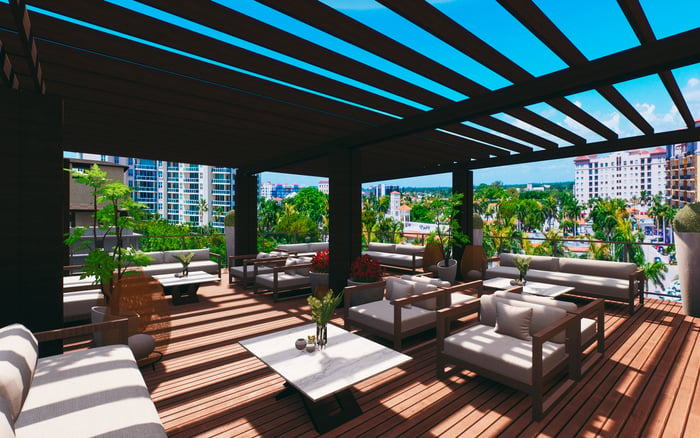
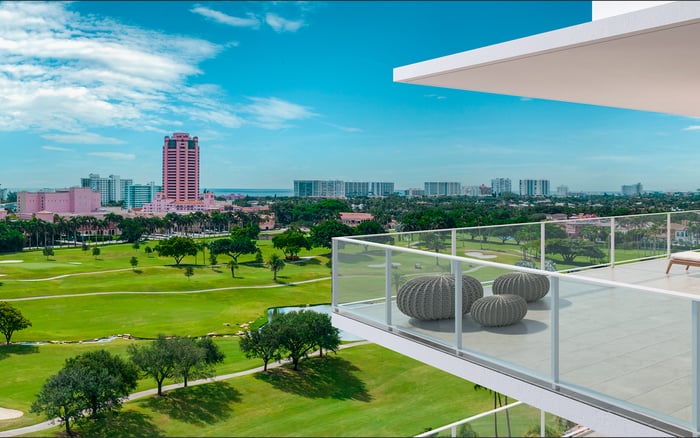
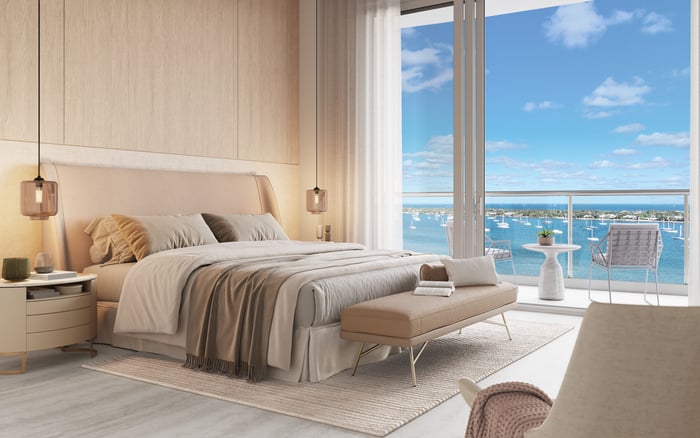
A buyer-focused comparison of Glass House Boca Raton and The Ritz-Carlton Residences® West Palm Beach, examining how floor-to-ceiling glass translates into value through design, service, location, and pricing.
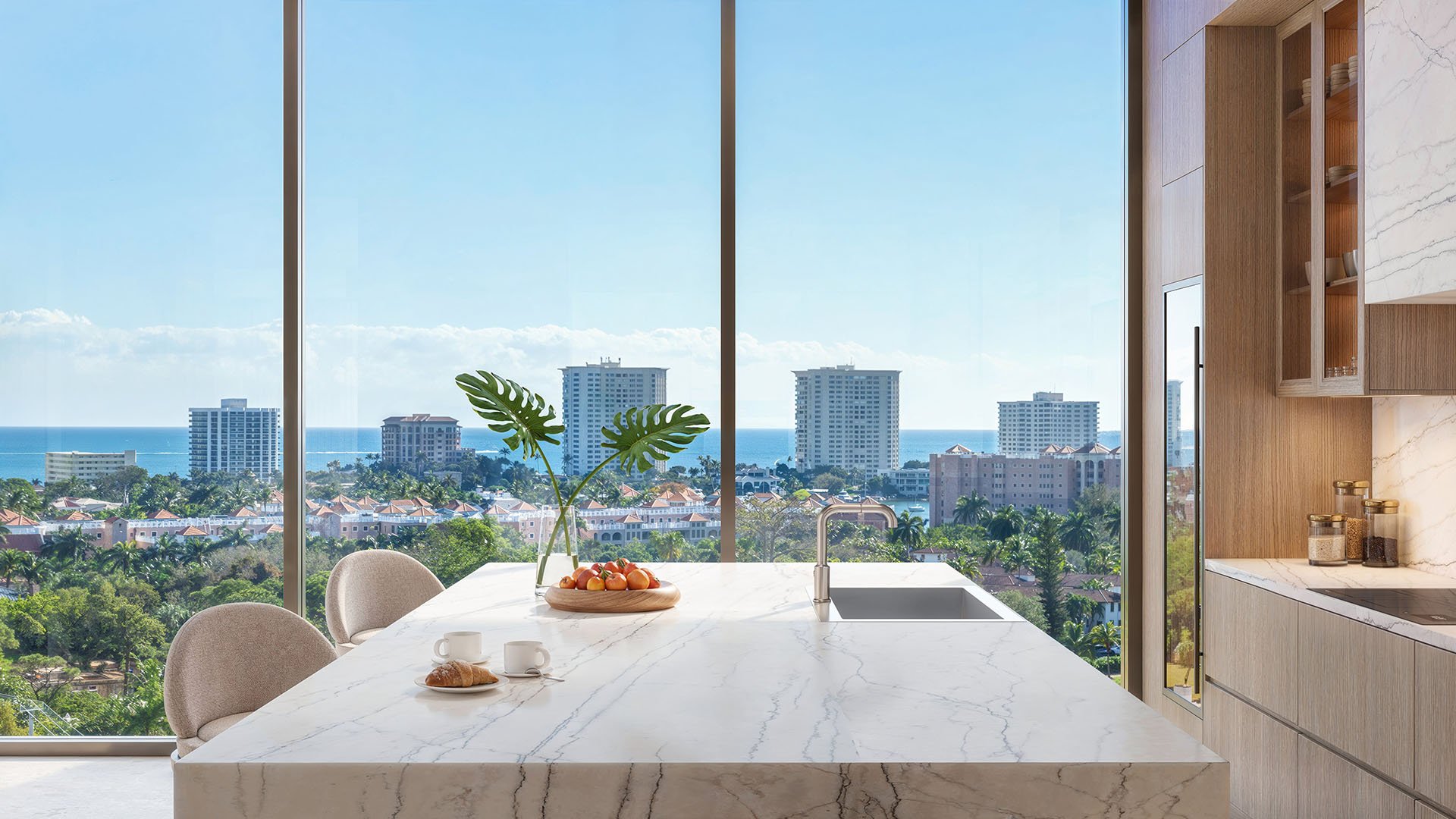
In South Florida luxury real estate, floor-to-ceiling glass is no longer a novelty. It is expected. What separates one project from another is not whether the glazing is dramatic, but what that transparency is designed to deliver for the buyer. In this respect, Glass House Boca Raton and The Ritz-Carlton Residences® West Palm Beach offer two distinct answers.
Glass House Boca Raton is conceived as an architecture-led statement in Downtown Boca Raton, with expansive glazing at the center of its identity. The point is not simply to frame a view, but to make light, skyline continuity, and visual openness the defining residential experience. By contrast, The Ritz-Carlton Residences® West Palm Beach uses similar floor-to-ceiling transparency within a broader branded ecosystem that includes service, concierge-style support, and hospitality-oriented common spaces in West Palm Beach.
For readers evaluating Palm Beach County opportunities, the comparison is less about which building has more glass and more about what kind of value that glass creates. One project presents a purer design thesis. The other presents transparency as part of a broader operational luxury package.
At Glass House Boca Raton, transparency is effectively the product. The residences are defined by open layouts, broad spans of glazing, and an intentionally clean visual language that amplifies daylight and connection to the urban skyline. Buyers drawn to that proposition are often less interested in resort theater and more focused on aesthetic coherence, material restraint, and the emotional effect of living inside an architecture-first concept.
That places Glass House Boca Raton in a notable lane within the region’s new-construction market. It competes not by replicating the hotel-branded formula, but by sharpening its thesis around visual drama and modern residential design. In the same Boca conversation, projects such as Alina Residences Boca Raton and The Residences at Mandarin Oriental Boca Raton illustrate how varied the upper tier has become, with some buyers leaning toward service-rich prestige while others prefer a more architecture-centered identity.
The Ritz-Carlton Residences® West Palm Beach positions glass differently. Here, floor-to-ceiling windows remain central to the experience, particularly in capturing water, Intracoastal, and city views, but they are not the whole story. The glazing enhances a residence that is also selling branded interiors, hospitality systems, and the confidence many buyers attach to a globally recognized service platform. In practical terms, that means the perceived value is not tied solely to design expression. It is also tied to consistency, convenience, and lifestyle management.
Glass House Boca Raton has generally begun around $2 million, with larger residences and penthouses extending well beyond that level. The Ritz-Carlton Residences® West Palm Beach has generally started around $2.5 million. Those ranges matter, but they should be read carefully.
A buyer comparing the two is not simply measuring cost per aesthetic effect. The premium at Ritz-Carlton can reflect the brand itself, the broader amenity and service package, and the appeal of a downtown West Palm Beach address with considerable momentum. In that sense, one is paying for more than glass. One is paying for a managed luxury environment.
Glass House asks a different question: if transparency is the core desire, how much additional infrastructure does the buyer actually need? For some purchasers, especially those seeking a primary residence or refined second home with a strong design point of view, the answer may be less than the market often assumes. That is where Glass House becomes compelling. Its value proposition is unusually direct.
The value of glass is always local. In Boca Raton, the appeal is tied to a more established luxury residential culture. Buyers are often drawn to permanence, polish, and a downtown lifestyle that feels measured rather than performative. In that setting, floor-to-ceiling transparency can read as a sophisticated design gesture, especially when paired with a building that does not overburden the ownership experience with layers of branded programming.
In West Palm Beach, the same architectural feature takes on a slightly different meaning. Downtown West Palm Beach has benefited from stronger urban revitalization and broader momentum, giving glass-lined residences an added investment narrative. Views matter, of course, but so does participation in a district that feels increasingly active and upward-moving. That context strengthens the case for projects such as The Ritz-Carlton Residences® West Palm Beach, as well as peers like Alba West Palm Beach and Forté on Flagler West Palm Beach, where modern envelopes and urban positioning are increasingly central to the luxury conversation.
In an ultra-premium market, transparency has both emotional and financial value. Emotionally, it creates expansiveness, a heightened relationship to light, and the cinematic quality buyers associate with modern luxury. Financially, however, that value can be packaged in very different ways.
At Glass House Boca Raton, the buyer is largely paying for architectural intent. The glass envelope is not just a premium feature but a market differentiator. The project appeals most to those who want a cleaner design thesis, a more minimalist amenity profile, and a home that feels authored rather than branded.
At The Ritz-Carlton Residences® West Palm Beach, the buyer is paying for transparency plus operational ease. The floor-to-ceiling glass is premium, but it sits within a broader framework of service consistency, concierge support, and brand recognition. For some high-net-worth buyers, especially those balancing multiple residences or expecting a polished, low-friction ownership experience, that can justify a meaningful premium.
This is why a simplistic design comparison misses the point. The true distinction is not glass quality in isolation. It is whether the buyer wants glass to be the headline or one element within a fuller hospitality proposition.
Glass House Boca Raton appears strongest with buyers who prize authorship, visual purity, and downtown immediacy without requiring a hotel-style identity. It offers a more distilled luxury proposition, one that can feel especially persuasive to design-literate purchasers who equate value with clarity of concept.
The Ritz-Carlton Residences® West Palm Beach appears strongest with buyers who rank service, operational convenience, and brand cachet alongside architecture. It also benefits from a city narrative that extends beyond the building itself. When a market has visible momentum, premium residences often gain an additional layer of appeal that is not purely architectural.
The conclusion is straightforward. If the question is which project delivers the more direct expression of floor-to-ceiling transparency as value, Glass House Boca Raton has the sharper answer. If the question is which project wraps that transparency into a broader and more insulated luxury package, The Ritz-Carlton Residences® West Palm Beach is the stronger proposition.
Is Glass House Boca Raton a branded residence? No. It is positioned as an architecture-led luxury condominium rather than a hotel-branded residential concept.
Does The Ritz-Carlton Residences® West Palm Beach also use floor-to-ceiling glass? Yes. Expansive glazing is part of the design and is intended to maximize water, city, and Intracoastal views.
Which project is more design-driven? Glass House Boca Raton presents the more direct design thesis, with transparency functioning as the central identity of the building.
Which project offers more service infrastructure? The Ritz-Carlton Residences® West Palm Beach offers the broader service platform, including concierge-style support and hospitality-driven spaces.
Is pricing comparable between the two? Broadly, both sit in the luxury tier, but starting pricing has generally been higher at Ritz-Carlton in West Palm Beach.
Why does brand matter in this comparison? Brand can support a premium because buyers are often paying for service consistency, recognition, and easier day-to-day ownership.
How does Boca Raton change the value proposition? Boca Raton supports a more established residential tone, which can make architecture-first living feel especially appealing to buyers seeking polish and permanence.
How does West Palm Beach change the value proposition? West Palm Beach adds a stronger urban-momentum narrative, which can make branded luxury and city-facing views feel especially compelling.
Who is the ideal Glass House buyer? A buyer who values architectural expression, clean modernism, and visual drama over hotel-style layering.
Who is the ideal Ritz-Carlton buyer? A buyer who wants high design but places equal importance on service, convenience, and a branded residential ecosystem.
For a confidential assessment and a building-by-building shortlist, connect with MILLION Luxury.
If branded residences are on your mind — as a home or as an allocation — we would be glad to share what we are seeing, privately.
Begin a quiet conversation