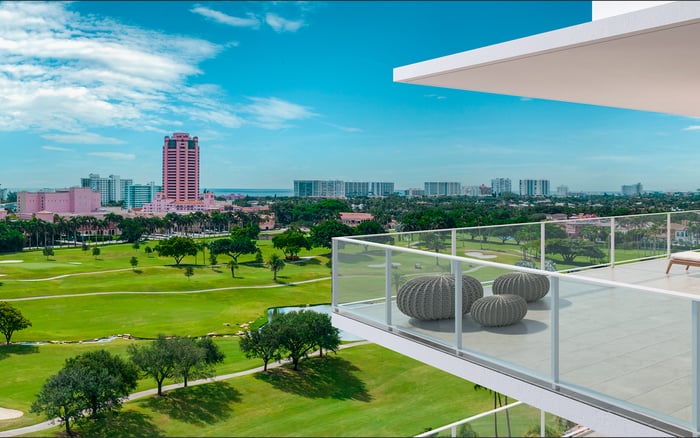
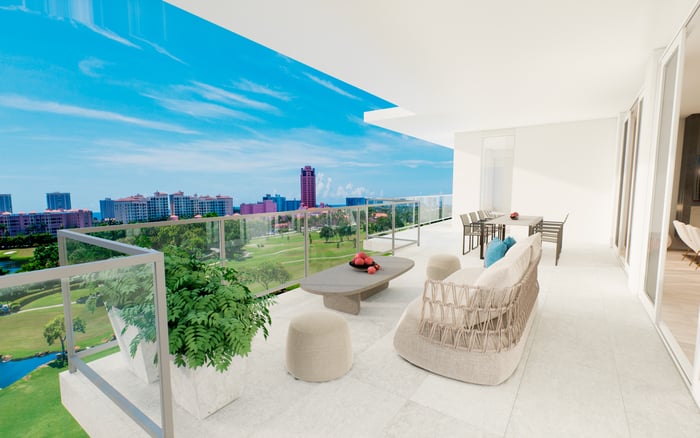
Glass House Boca Raton offers a coastal downtown address without marketed on-site marine infrastructure. That distinction can reduce direct exposure to seawall, dredging, and dock costs, while buyers comparing true waterfront condominiums must examine engineering, permits, reserves, and allocation rules.
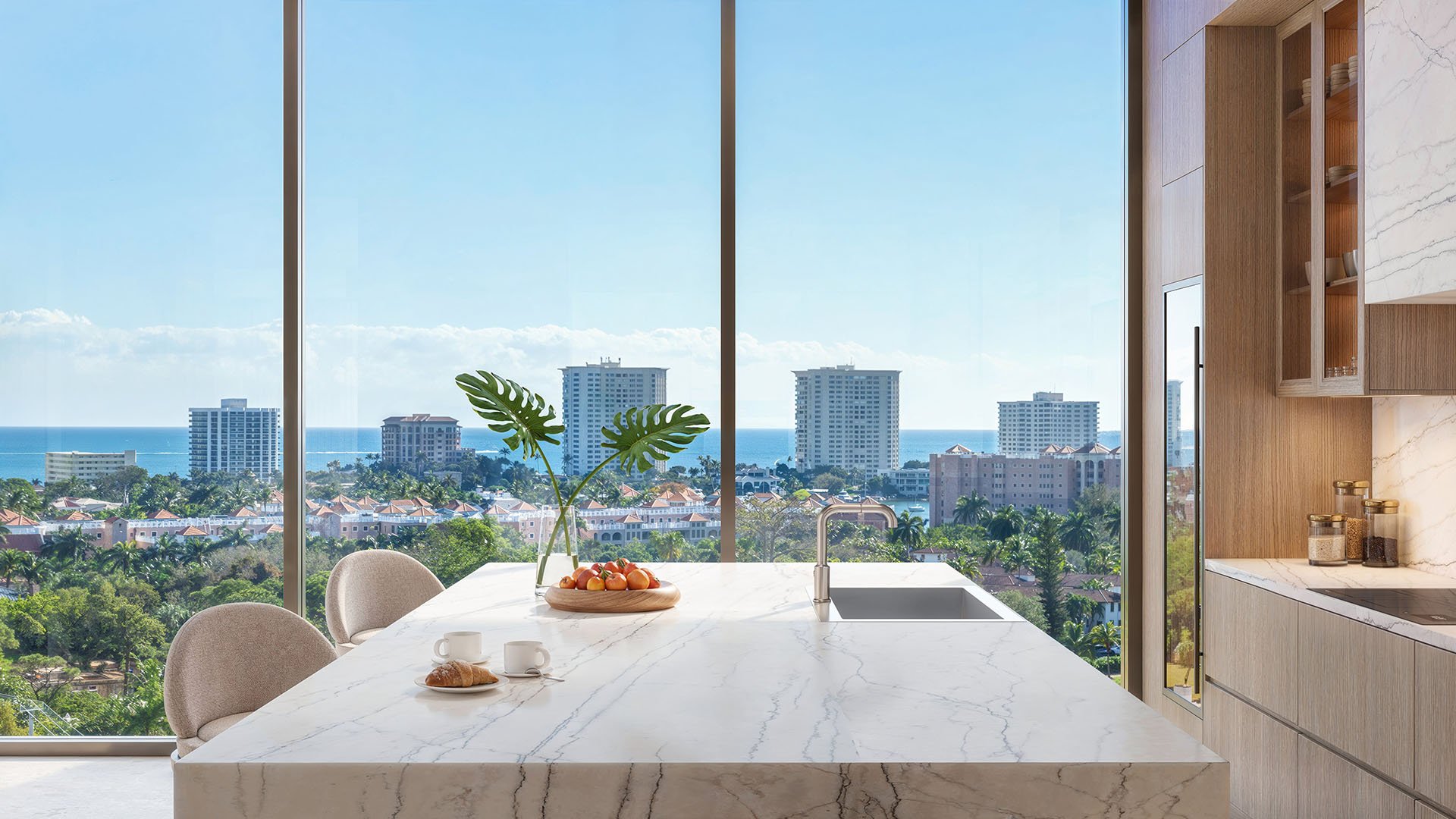
Glass House Boca Raton is a 10-story, 28-residence luxury condominium at 280 E Palmetto Park Road in downtown Boca Raton. Less than one mile from the beach, the development is positioned around ocean, Intracoastal Waterway, and golf-course views. Its marketed lifestyle includes access to The Boca Raton resort by golf cart or shuttle.
The crucial cost distinction lies in what the property does not market: an on-site marina, dock, or seawall. Because the condominium is not directly on a canal or the Intracoastal, owners have less direct exposure to the specialized capital expenses associated with marine infrastructure. That does not eliminate ordinary condominium costs, but it changes the composition of risk compared with true waterfront ownership.
A water view and direct responsibility for the water's edge are financially distinct propositions.
Seawalls, dredging, and docks are interconnected, yet each has a distinct maintenance cycle, approval path, and method of allocating expenses.
A seawall is structural infrastructure. Routine care includes monitoring cracks, voids, drainage issues, and other signs of deterioration before they develop into larger repairs. Most private seawalls are the waterfront owner's responsibility, although an association or municipality may share responsibility in some circumstances. The deed, condominium declaration, and governing documents determine the answer for a specific property.
Dredging concerns navigable depth rather than the visible condition of a structure. Shoaling in a private canal or condominium marina can reduce usable depth and lead to owner-funded work or a special assessment. Public and private entities may participate in maintaining waterways, but a nearby public dredging initiative should never be assumed to cover a private basin, canal, or access route.
Dock maintenance adds another layer. Decking, pilings, lifts, electrical service, and related components may require repair or replacement, while substantial work can also trigger authorization requirements. A buyer should distinguish routine upkeep from a larger permitted project and determine whether costs fall to all owners, waterfront units, or individual slip holders.
In a waterfront condominium, the most consequential question may be not whether work is needed, but who must pay. Seawalls, docks, and slips might be common elements funded by the association. Alternatively, they may be limited common elements or separately controlled facilities, with expenses assigned to particular units or slip holders.
Buyers should review the recorded declaration, amendments, current budget, reserve materials, and slip agreements together. Financial statements, engineering reports, and recent meeting minutes can reveal discussions of seawall movement, piling work, dock repairs, shoaling, or dredging. Reserve funding should also be weighed against any anticipated special assessment.
This is where Glass House presents a cleaner marine-infrastructure profile. Its owners are not buying direct dockage as part of the marketed property, so the association appears less directly exposed to those specific shoreline obligations. Any separately arranged marina, club, or boat-slip access should still be reviewed on its own terms, including fees, availability, maintenance responsibility, and termination provisions.
Construction or substantial repair of docks, seawalls, and other structures in or over Florida surface waters generally requires authorization unless a specific exemption applies. Residential dredging and filling may require environmental permits. Work involving state-owned submerged lands can require separate authorization or a lease.
Dredging or filling can involve federal, state, regional, and local approvals, together with consideration of water-quality impacts. Consequently, a proposal that appears straightforward in an engineering sketch may involve multiple approvals, design revisions, and scheduling dependencies.
Local geometry matters as well. On Boca Raton canals or waterways less than 100 feet wide, a dock, excluding pilings, may project no more than six feet from the property line, seawall, or bulkhead nearest the water. That limitation can affect lift placement and configurations for larger vessels. Existing structures should be checked for permits and final approvals because undocumented work can create compliance, remediation, and resale risk.
A slip described as deepwater is useful only if the owner's boat can navigate the full route. Due diligence should compare the vessel's draft with controlling channel depth, tidal conditions, and shoaling. Bridge clearances and the dimensions permitted at the dock also belong in the analysis.
This is the practical distinction between a residence selected for views and one purchased for immediate boating access. Glass House serves the first proposition. A buyer who prioritizes the second should price the complete operating system, from the seawall and slip to the route connecting private dockage with maintained channels.
Boca Raton buyers often compare residences with different relationships to the coast. Alongside Glass House, the project landscape includes Alina Residences Boca Raton, The Residences at Mandarin Oriental Boca Raton, and Mr. C Residences Boca Raton. Each option should be evaluated through its own recorded documents and disclosed property features rather than broad assumptions about location.
For readers using Buyer's Guides and Pricing & Trends to frame a purchase, the fairest comparison adds projected marine capital needs to the waterfront alternative. Direct boating access has meaningful lifestyle value, but seawall condition, dock scope, dredging responsibility, permitting, and reserves all belong beside the purchase price and regular association charges.
Before committing to a property with marine infrastructure, a buyer's review should include:
The recorded declaration and amendments defining common and limited common elements.
Reserve studies, budgets, financial statements, and recent association minutes.
Current engineering assessments for seawalls, docks, pilings, and drainage.
Dredging history, controlling depths, tides, and responsibility for private channels.
Permits, final approvals, submerged-land authorizations, and relevant leases.
Slip agreements, allocation formulas, and any pending or discussed assessments.
Vessel-specific checks for draft, bridge clearance, dock projection, and lift design.
The longer horizon matters too. Sea-level rise, storm surge, shoreline adaptation, and water-quality requirements can create capital needs beyond ordinary maintenance. A well-funded association with clear records presents a different risk profile from one relying on reactive repairs or uncertain cost allocation.
Glass House offers a coastal downtown setting and water-oriented views without marketed direct dockage. For buyers who value proximity and outlook more than a private slip, that can mean fewer direct marine obligations. True waterfront ownership offers a different privilege, but its full cost includes structures, water depth, approvals, maintenance, and the possibility of assessments.
For discreet guidance on comparing Boca Raton residences and their long-term ownership profiles, connect with MILLION.
If branded residences are on your mind — as a home or as an allocation — we would be glad to share what we are seeing, privately.
Begin a quiet conversationNo on-site marina, dock, or seawall is identified in the project marketing. Buyers seeking boating access should verify any separate marina or club arrangement.
The condominium is not directly on a canal or the Intracoastal. Its association therefore has less direct exposure to marine infrastructure than a true waterfront property.
Most private seawalls are the waterfront owner's responsibility, although an association or municipality may share obligations. Recorded documents must confirm the allocation.
Yes. Private canals and condominium marinas may require owner-funded dredging when shoaling reduces usable depth.
Buyers should investigate cracks, voids, drainage problems, and other deterioration. An engineering review can help clarify condition and potential scope.
Construction or substantial repair in or over Florida surface waters generally requires authorization unless an exemption applies. Dredging may involve additional environmental approvals.
On waterways less than 100 feet wide, a dock excluding pilings may project no more than six feet from the nearest property line, seawall, or bulkhead.
Usability depends on controlling depth, tides, bridge clearances, shoaling, and the intended vessel's draft. The label alone is not sufficient.
Review the declaration, amendments, budgets, reserves, financial statements, engineering reports, meeting minutes, permits, and any slip agreements.
Yes. Sea-level rise, storm surge, shoreline adaptation, and water-quality requirements can create capital needs beyond routine dock and seawall maintenance.