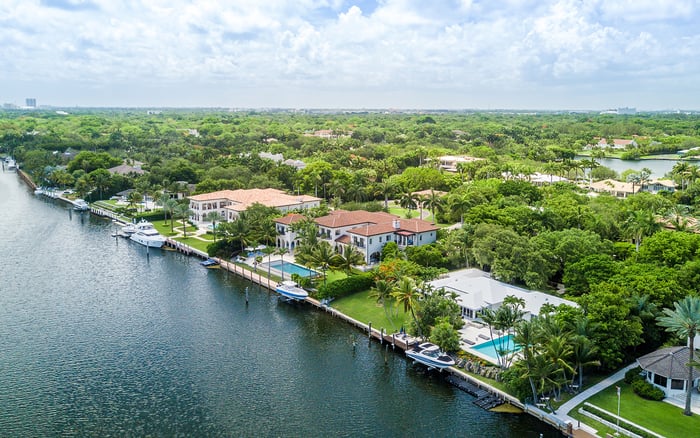
A discreet buyer guide to evaluating South Florida residences through the lens of service circulation, privacy, staff logistics, and household operations.

For a buyer moving from Geneva to Coconut Grove, the first impression of a South Florida home is often light, water, ceiling height, and view. The more important question is quieter: can the household operate without the household being on display?
Service circulation is the architecture of discretion. It is how staff, deliveries, maintenance teams, caterers, drivers, pets, luggage, laundry, flowers, and groceries move through a residence without colliding with family life or formal entertaining. In the best homes, this is not improvised. It is embedded in the plan.
A residence can have exquisite stone and still fail the test if a housekeeper must cross the living room with laundry, if catering trays pass through the main foyer, or if a driver has no logical holding point. For international buyers accustomed to composed domestic operations, South Florida requires a precise translation of expectations into condominium rules, tropical weather, garage logistics, and waterfront living.
The most revealing part of a tour is often the first 90 seconds. Ask how staff enter, where a driver waits, how luggage arrives from the garage, and whether the principal arrival can remain ceremonial while daily operations follow a separate path.
In a single-family estate, the ideal pattern may include a discreet motor court, service gate, secondary mudroom, and route from garage to pantry that avoids the formal rooms. In a condominium, the question shifts to elevator banks, service corridors, loading access, package rooms, and the etiquette of shared staff movement.
This matters in Brickell, where vertical living can be highly polished yet operationally dependent on building circulation. A buyer considering St. Regis® Residences Brickell should study not only the residence plan, but also the sequence from vehicle arrival to elevator, from delivery to storage, and from staff entry to work areas.
A staff-ready plan has zones. Public rooms should feel effortless. Family rooms should remain relaxed. Staff work areas should be close enough to function and separate enough to preserve privacy.
Look for a kitchen that can support both family breakfast and private entertaining. A show kitchen alone is rarely sufficient for an active household. The more serious question is whether there is a back kitchen, scullery, pantry, laundry relationship, or service corridor that allows preparation and clean-up to continue behind the scenes.
Bedrooms require the same discipline. Principal suites should not sit directly on a staff route. Children’s rooms should have practical access for laundry and housekeeping, but not at the expense of quiet. Guest suites should allow visitors to feel independent without absorbing the home’s operational traffic.
In Coconut Grove, where lush residential character meets new condominium living, projects such as Four Seasons Residences Coconut Grove invite buyers to think carefully about the relationship between private residential calm and day-to-day support. The point is not simply having more space. It is arranging space so service feels natural.
Many ultra-prime buyers focus on the unit and underweight the building. That is a mistake. A condominium can only be as staff-ready as its shared infrastructure allows.
Ask how domestic employees register, whether recurring staff access can be handled gracefully, how vendors are received, and where deliveries are staged before they reach the residence. Clarify rules for caterers, florists, stylists, dog walkers, tutors, trainers, and maintenance providers. The finest private routine can be compromised by an awkward lobby policy or an overexposed service elevator.
This is especially relevant in Miami Beach, where privacy, beach access, hospitality habits, and entertaining often overlap. When reviewing The Ritz-Carlton Residences® Miami Beach, the right questions are practical: how does a catered dinner arrive, where do staff pause, how does a wet beach day transition into the residence, and what path keeps the principal rooms composed?
Waterfront homes and island addresses introduce their own service logic. Boats, beach equipment, guest arrivals, storm preparation, exterior maintenance, and security protocols all place pressure on circulation.
On Fisher Island, the issue becomes even more specific because privacy and controlled access are central to the lifestyle. A residence such as The Residences at Six Fisher Island should be evaluated through the lens of how people and provisions move before they ever reach the front door. The home may feel serene precisely because much of its operational life has been absorbed elsewhere.
For waterfront single-family homes, separate storage is essential. Paddleboards, fishing gear, pool towels, cushions, hurricane materials, dog washing, gardening equipment, and staff supplies should not migrate into the visual center of the property. If they do, the house will feel busy no matter how refined the interiors are.
A staff room or suite can be valuable, but placement matters more than the label. It should support the way the household actually lives. A live-in nanny, visiting chef, weekend housekeeper, estate manager, and seasonal security professional each require different adjacencies.
The strongest layouts offer dignity as well as efficiency. Staff should not be pushed into afterthought spaces that make operations clumsy. Proper rest areas, storage, bath access, and circulation reduce friction for everyone. Luxury is not only what the principal sees. It is also how comfortably the household can be cared for.
In Coconut Grove wellness-oriented living, buyers looking at The Well Coconut Grove can use the same test: does the plan support private routines, recovery, family scheduling, and service without forcing every activity through the same corridor?
A home that functions in Geneva may not operate the same way in Miami. Heat, humidity, sudden rain, pool use, boating, beach sand, and year-round landscaping all increase the burden on transition spaces.
A staff-ready South Florida home needs practical thresholds. Covered service entries, durable secondary corridors, ventilated storage, laundry capacity, and sensible routes from pool or dock to utility areas are not minor details. They are what keep the main rooms pristine.
The same applies to entertaining. Outdoor kitchens, terraces, and pool decks should connect logically to preparation and clean-up spaces. If every tray, towel, and ice bucket must cross the living room, the architecture is asking the staff to solve a planning problem every weekend.
Before making an offer, walk the home as five different people: the owner, the housekeeper, the caterer, the driver, and the overnight guest. Each should have a graceful route.
Open the doors that are not staged. Measure the pantry. Follow the path from garage to kitchen. Stand in the laundry room and imagine a full house after a beach day. Ask where luggage waits, where flowers are conditioned, where pet supplies live, and how vendors leave without passing through the principal entertaining spaces.
For new construction, request clarity early. Some deficiencies can be resolved with millwork, technology, or staffing protocol. Others are structural. Elevator location, corridor depth, slab penetrations, garage access, and building rules are not easily revised after closing.
The most refined South Florida residences do not advertise their service intelligence. They simply feel calm. The foyer remains poised. The kitchen performs without spectacle. Bedrooms stay private. Staff can work with confidence. Guests experience ease without seeing the choreography behind it.
For the Geneva buyer, that is the real bridge to Coconut Grove and beyond. The architectural language may change from lakefront classicism to tropical modernism, from townhouse discipline to oceanfront verticality, but the standard remains the same: a home should protect the life inside it.
What is service circulation in a luxury home? It is the planned movement of staff, deliveries, maintenance, and household logistics through a residence without disrupting private or formal living areas.
Why does it matter for South Florida buyers? Climate, waterfront living, entertaining, and condominium operations all increase the need for discreet, efficient household movement.
Is a service elevator enough? Not by itself. The elevator must connect logically to storage, kitchen, laundry, staff areas, and vendor access.
Should condo buyers ask about building rules? Yes. Staff registration, vendor access, delivery timing, and catering policies can strongly affect daily household function.
What should I look for in a kitchen layout? Look for preparation, pantry, clean-up, and delivery paths that do not force staff through the principal living spaces.
Are staff quarters always necessary? Not always. What matters is whether the residence supports the actual staffing model, from daily help to live-in support.
How do waterfront homes differ? They need better storage and transition zones for boating, pool use, outdoor entertaining, weather, and exterior maintenance.
Can poor service circulation be fixed after purchase? Sometimes with millwork or protocols, but elevator placement, garage access, and core building circulation are difficult to change.
What is the best touring strategy? Walk the property as the owner, housekeeper, caterer, driver, and guest, then note every point of friction.
Is service circulation about privacy or convenience? It is both. The best layouts make service efficient while preserving the atmosphere, privacy, and dignity of the home.
For a tailored shortlist and next-step guidance, connect with MILLION.
If branded residences are on your mind — as a home or as an allocation — we would be glad to share what we are seeing, privately.
Begin a quiet conversation