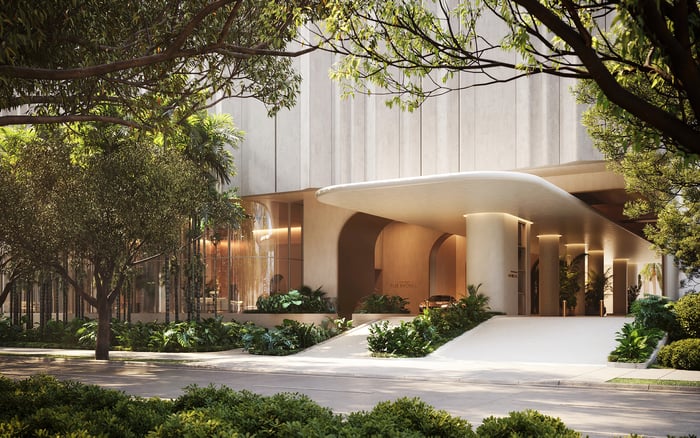
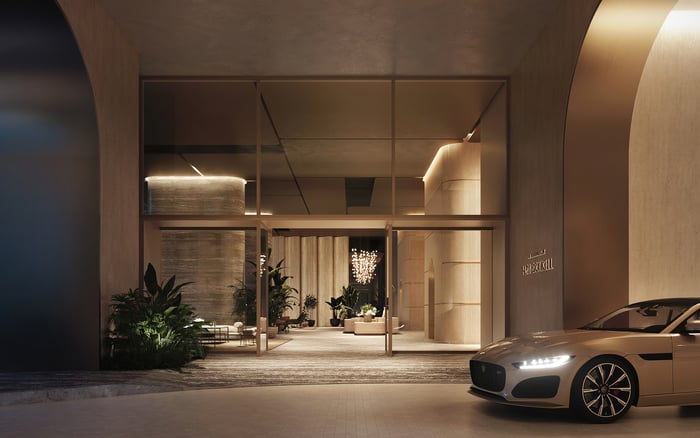
A buyer-focused guide to verifying emergency-power endurance, elevator operation, and refrigerator coverage at Una Residences Brickell before purchase and during ownership.

At Una Residences Brickell, private elevator entries into each residence make arrival part of the architecture of privacy. During an extended power outage, however, the ownership question becomes practical: what keeps operating, for how long, and under whose control?
The materials provided for this review do not establish Una’s generator fuel type, tank capacity, rated emergency load, or guaranteed runtime. Nor do they confirm normal resident elevator service during outages or emergency power to refrigerators, freezers, kitchen circuits, or entire residences. These are open diligence questions-not evidence that the capabilities are absent.
For a buyer, that distinction matters. A private elevator entry describes access under ordinary conditions; it does not define emergency operation. Likewise, a discussion of building backup power is not a unit-specific promise. Before purchase, the objective is to translate broad assurances into documented operating conditions that inform both the purchase decision and everyday ownership.
A useful runtime answer requires more than a number of hours. Ask for the fuel type, usable fuel capacity, consumption at the actual emergency load, and operating assumptions behind the stated duration. Clarify which equipment remains connected and which loads may be shed as conditions change.
The materials reviewed do not support a specific endurance claim for Una. Buyers should therefore request the approved electrical one-line diagram, emergency-power load schedule, fuel-tank specifications, transfer-switch documentation, and generator commissioning documentation. Have a qualified professional reconcile these materials rather than treating any single specification as a complete answer.
The written response should distinguish documented minimum runtime from duration dependent on replenishment. Ask how emergency refueling is arranged, who coordinates delivery, and what the plan assumes about access. Evaluate refueling arrangements separately from the usable fuel already on site.
Ask a qualified professional to explain what the generator’s permitting documentation establishes about equipment, fuel supply, exhaust location, and code compliance. Do not treat a permit alone as a guarantee of Una’s outage endurance or a fire-alarm standby-power requirement as a whole-building runtime claim. For the purchaser, the relevant commitment is a duration tied to a clearly identified operating load.
Elevator recall belongs to a documented fire-alarm sequence of operation. It is not proof that residents retain normal elevator service when utility power fails. Fire-service recall, firefighter operation, and ordinary resident travel require separate answers.
For Una, ask which elevator cars receive emergency power and what service those cars are intended to provide. Then request the elevator emergency-power sequence and condominium emergency plan. The essential question is not simply whether an elevator can receive power, but whether residents may use it, under what conditions, and with what restrictions.
Ask management how access to a particular residence would be handled during an extended interruption. Households with mobility needs should discuss them explicitly rather than infer assistance arrangements from the presence of private entries.
A buyer also considering Cipriani Residences Brickell should apply the same distinction between an arrival experience and documented emergency access. This is a comparison framework, not a claim that the buildings share elevator systems or operating policies.
Refrigeration remains a separate diligence item, even after generator and elevator questions have been answered. The materials reviewed do not confirm that refrigerator or freezer receptacles at Una remain energized during an outage. Kitchen backup and whole-residence backup are likewise unconfirmed in those materials.
Request written confirmation for the specific residence identifying the refrigerator and freezer receptacles, their corresponding circuits, and whether those circuits appear on the emergency-power load schedule. If coverage exists, ask whether it remains available throughout emergency operation or is subject to load shedding.
Confirmation for one appliance does not establish coverage for every kitchen circuit. The response should identify each appliance or receptacle whose operation matters to the household. Where refrigeration supports a medical need, make a separate continuity plan with appropriate professional guidance rather than relying on an unresolved building-power assumption.
For a shortlist that includes The Residences at 1428 Brickell, request equally specific documentation. Comparing written circuit coverage is more useful than comparing general descriptions of resilience. No equivalent refrigeration capability should be presumed across projects.
Before committing to terms, organize the diligence around three written answers: emergency-power duration, permitted elevator use, and unit refrigeration coverage. Ask counsel how those answers should be addressed in the transaction and what review opportunities the agreement actually provides.
Keep the technical materials together. The one-line diagram and load schedule should support the power explanation; fuel specifications and commissioning documentation should support the endurance discussion; the elevator sequence and emergency plan should support the access explanation. Unit-specific circuit confirmation should complete the refrigeration review.
Where an answer remains unresolved, acknowledge that uncertainty in the purchase decision. Do not substitute a verbal assurance for a technical description or assume that silence means a feature is unavailable. A disciplined review distinguishes confirmed capabilities, conditional operation, and unanswered questions without overstating any category.
At ownership handover, request current testing records and fuel-level information alongside the emergency plan. Ask management to explain the testing schedule and how fuel adequacy is assessed. Those records are useful for diligence, but they do not substitute for a documented runtime at a stated load.
Ask who will communicate operating changes, how an absent owner will receive updates, and what arrangements management permits for checking a residence. Align the household plan with verified elevator access and refrigeration coverage-not the most optimistic interpretation of backup power.
Portable generators are not a presumed alternative. Obtain building-specific restrictions and consult a qualified professional about safety and applicable requirements rather than assuming a balcony is suitable or that a connection to building circuits is permitted. Nothing in this review establishes authorization to use a portable generator at Una.
The strongest ownership plan begins before the offer: establish the emergency load, clarify access, verify the unit’s circuits, and carry those answers into the household’s outage preparations. Luxury is best supported by a precise understanding of what the residence can deliver when ordinary service is interrupted.
For a discreet conversation about your South Florida property search, connect with MILLION.
If branded residences are on your mind — as a home or as an allocation — we would be glad to share what we are seeing, privately.
Begin a quiet conversationThe materials reviewed do not establish a guaranteed runtime. Request usable fuel capacity, consumption at the actual emergency load, and documented duration assumptions.
The materials reviewed do not establish the fuel type or tank capacity. Request fuel specifications and emergency refueling arrangements before relying on an endurance estimate.
No. Private elevator entries do not establish which cars receive emergency power or whether normal resident service continues during an outage.
No. Recall is part of the fire-alarm operating sequence and must be distinguished from firefighter operation and normal resident service.
Emergency power to unit refrigerators and freezers is not confirmed in the materials reviewed. Obtain written confirmation identifying the specific residence’s appliance receptacles and circuits.
The materials reviewed do not confirm backup power to entire residences or kitchen circuits. Lack of confirmation does not establish that those capabilities are absent.
Request the approved electrical one-line diagram, emergency-power load schedule, commissioning documentation, fuel-tank specifications, and transfer-switch documentation. Also obtain the elevator emergency-power sequence and condominium emergency plan.
Do not treat a permit alone as a runtime guarantee. Request a documented duration tied to an identified emergency load and have a qualified professional review the supporting materials.
Request current testing records and fuel-level information alongside the emergency plan. Ask management to explain the testing schedule and how fuel adequacy is assessed.
This review does not establish authorization to use a portable generator at Una. Obtain building-specific restrictions and qualified safety guidance rather than assuming balcony use or connections to building circuits are permitted.