A Fort Lauderdale waterfront purchase should begin with the yacht, not the view. Understand how dock depth, bridge clearance, turning room, and the route to Port Everglades determine whether a home truly suits your vessel.
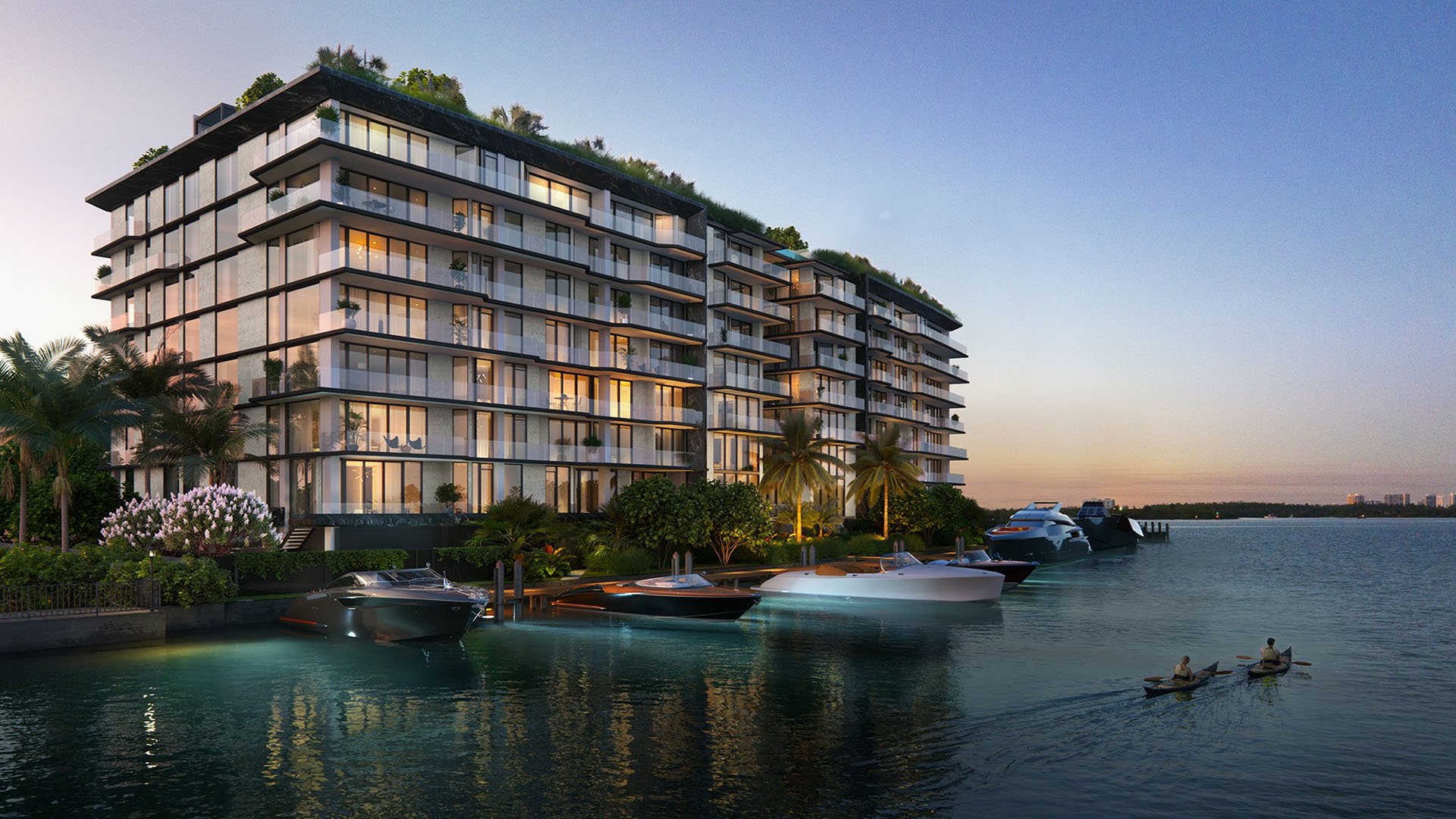
In Fort Lauderdale, a waterfront home can offer a compelling view without providing the right berth. For buyers who intend to keep a yacht behind the residence, the distinction is fundamental: “ocean access,” “deep water,” and “no fixed bridges” describe different attributes. None alone establishes that a particular vessel can comfortably reach and occupy a particular dock.
Start with a vessel profile: length, beam, draft, fully equipped air draft, and maneuvering requirements. Compare those dimensions with the property's dock configuration and the complete route to the ocean. Evaluate the residence and berth as one purchase, but do not assume that one suits the other.
For buyers also considering Andare Residences Fort Lauderdale, the first decision is whether home and yacht must share an address. That answer separates residential preferences from essential boating requirements.
“Ocean access” means less than many buyers expect. It does not necessarily mean a route without fixed bridges, nor does it establish sufficient water depth for your yacht. The question is whether every segment between the berth and the ocean accommodates the vessel.
Depth and air draft are independent constraints. A deep channel cannot compensate for a bridge that is too low; a bridge-free route cannot make a shallow berth suitable for a deeper-draft yacht. A no-fixed-bridge designation removes fixed-bridge height restrictions, but opening bridges, water depth, and maneuvering space still require examination.
Treat these descriptions as screening language, not a final determination of suitability. Before becoming attached to an address, request a route review identifying bridges, depth constraints, and the approach to the dock. The most restrictive point may lie well beyond the property's waterfront boundary.
Advertised dockage length is only the beginning. Compare vessel length and beam with the berth, then assess canal width, turning room, and the permitted dock configuration. The practical test is not simply whether the yacht fits alongside, but whether the captain can approach, turn, berth, and depart with appropriate room.
Request an address-specific depth survey with a stated tidal datum, and have the captain assess the complete route. Advertised capacity becomes useful only when reconciled with the vessel's actual dimensions and operating needs.
“Deep water” does not guarantee usable draft. Tide, sedimentation, and differences between channel and berth depth can affect clearance. A favorable measurement at one location does not establish adequate water throughout the approach or alongside the dock.
Ask where and when measurements were taken, and which tidal datum they use. The objective is a consistent picture of the berth and route, not a collection of depth figures that cannot be meaningfully compared. Have the captain assess the clearance the intended vessel needs rather than treating an advertised draft capacity as the operating limit.
Distinguish present conditions from proposed improvements. Evaluate the home on confirmed conditions, and investigate contemplated dock changes separately. A plan to create suitable dockage is not the same as an existing berth that meets the yacht's requirements.
For bridge analysis, use the yacht's maximum fully equipped air draft, including antennas and other elevated equipment. Compare that profile with every relevant bridge along the route. Do not substitute a general vessel dimension for the configuration in which the yacht will actually travel.
Opening bridges require a different assessment from fixed bridges. They can open for vessels, but schedules and restrictions shape practical access. Confirm current operations along the specific route rather than assuming an opening will be available whenever you arrive.
The ownership question is therefore partly about time. A route may be physically navigable yet poorly suited to your preferred departure and return hours. Ask your captain to assess both clearance and the likely effect of bridge operations on your routine.
Port Everglades is Fort Lauderdale's principal deep-water ocean gateway, making the route to the inlet central to a waterfront search. Harbor Beach's proximity to Port Everglades makes it relevant for buyers prioritizing that connection. Proximity, however, cannot replace an address-specific assessment of the berth and approach.
Las Olas Isles offers ocean-access canals, but individual properties still require checks of bridge routes, dock depth, canal width, and turning room. Buyers weighing a canal home against Sixth & Rio Fort Lauderdale should treat residential preference and verified vessel accommodation as separate decisions.
When considering Coral Ridge, Bermuda Riviera, Bay Colony, or The Landings, do not assign a single access profile to an entire neighborhood. Use the neighborhood to organize the search, then verify the exact address. Even an appealing location cannot resolve a mismatch between the yacht and its route.
Private dockage attached to a home is distinct from municipal docking and boat-launch facilities. If considering public facilities as part of your boating arrangement, verify availability and current terms independently rather than treating them as a dedicated private berth.
If considering St. Regis® Residences Bahia Mar Fort Lauderdale alongside a single-family waterfront property, establish the boating arrangement independently. A residential choice does not confirm a suitable berth or the terms governing its use.
Before committing, reconcile the depth survey, captain's route assessment, bridge review, and permitted dock configuration. For contemplated marine work, investigate applicable approvals. The strongest waterfront purchase is not the one with the broadest access language, but the one whose verified conditions suit the yacht and how you intend to use it.
Explore Fort Lauderdale residences with MILLION to align your home search with your waterfront priorities.
If branded residences are on your mind — as a home or as an allocation — we would be glad to share what we are seeing, privately.
Begin a quiet conversationNo. Ocean access does not establish a bridge-free route or adequate water depth for a particular yacht.
Draft concerns the vessel's depth below the waterline, while air draft concerns its height above it. Both must be checked against the complete route.
No. Opening bridges, their operating restrictions, water depth, and maneuvering space still require review.
Tide, sedimentation, and differences between channel and berth depth can affect usable clearance. Request an address-specific depth survey with a stated tidal datum.
Provide length, beam, draft, fully equipped maximum air draft, and turning requirements. Include antennas and other elevated equipment when assessing bridge clearance.
Drawbridges can open for vessels, but schedules and restrictions affect passage. Confirm current operations for every opening bridge on the intended route.
Port Everglades is Fort Lauderdale's principal deep-water ocean gateway. The complete route between the property and that gateway is central to evaluating access.
No. Even within a neighborhood, the specific bridge route, dock depth, canal width, and turning room need verification.
No. Compare the berth with the yacht's dimensions, approach requirements, turning room, and permitted dock configuration.
No. Municipal docking and launch facilities are separate from a home's private berth; verify availability and current terms before relying on them.