For families dividing their time between Tokyo and Fort Lauderdale, a carefully managed residence begins with clear local authority, reliable moisture control, and an emergency plan that works across borders.

For a Tokyo family establishing a Fort Lauderdale residence, the most consequential amenities may be the least visible: dependable unit access during an absence, clearly assigned maintenance responsibilities, and an emergency plan that does not depend on reaching the owner immediately. A beautifully appointed home should be as thoughtfully managed when empty as when the family is in residence.
Winter and spring occupancy followed by a return to Tokyo is one possible schedule, not a fixed pattern. Atlantic hurricane season runs June 1 through November 30, so leaving Florida before summer does not remove the need for preparation. It changes who must carry it out.
When considering Four Seasons Hotel & Private Residences Fort Lauderdale, make operating arrangements part of your due diligence. Request the applicable building documents rather than assuming the residential name or service offering includes private-unit inspections, humidity oversight, or emergency intervention.
Designate a local emergency contact with authorized unit access, and keep that person's details current with management. For overseas coordination, provide international dialing details, agree on primary and backup messaging channels, and establish who receives urgent notices when the family is unavailable.
Written proxy instructions help a household coordinate responsibilities between Tokyo and Florida. They should distinguish routine visits, maintenance approvals, storm preparation, and emergency escalation. Consider agreeing on spending authority in advance so a minor service decision does not become a prolonged exchange across time zones.
Before departure, assemble a concise residence file containing:
Owner and proxy contacts, access permissions, and management communication channels.
The association's hurricane policy and the owner's unit-specific responsibilities.
Service contacts, equipment instructions, and the agreed inspection schedule.
Insurance details, property photographs, and essential document backups.
Ask management whether its emergency roster includes elevator service, restoration contractors, plumbers, electricians, fire-alarm vendors, and engineering support. The private proxy and building team have complementary roles; neither should be assumed to replace the other.
Summer protection begins with moisture control. Keep indoor relative humidity below 60%, since higher humidity promotes mold growth. Treat this as a maintenance guideline, not a condominium rule or a guarantee against damage.
Properly sized air conditioning, closed windows, appropriate bathroom and kitchen exhaust ventilation, and supplemental dehumidification can help control indoor moisture. Have a qualified HVAC professional establish an operating plan suited to the residence. A single thermostat setting is no substitute for checking humidity performance.
If air conditioning alone cannot maintain the target, consider a dedicated dehumidifier with continuous drainage. In an unattended home, this avoids relying on someone to empty a collection tank frequently. Confirm installation and drainage arrangements before leaving.
Ask the local caretaker to record humidity readings during agreed visits and report persistent elevations to the appropriate service professional. The aim is a repeatable process with a named person responsible for follow-through-not an assumption that the home remains dry because it feels cool.
For a Waterfront purchase, distinguish private-unit duties from association responsibilities. Inspect window and door seals and confirm that shutters or impact-window systems are operable before storm season. At the building level, ask how roof conditions, drains, garages, low points, and electrical or mechanical rooms are assessed for water-intrusion vulnerabilities.
A buyer evaluating Auberge Beach Residences & Spa Fort Lauderdale can use these questions to guide document review without assuming any particular protection or service is included. Ask for the disaster plan, including evacuation procedures, emergency contacts, backup-power protocols, and arrangements for repairs and debris removal.
Clarify exactly what backup power serves and how elevator shutdown procedures affect access. Do not infer that emergency power supports every residential need.
Follow the association's specific deadlines for shutters and exterior clearance. No universal departure checklist overrides a building's policy or official emergency instructions. Obtain the current policy and give the proxy the same copy.
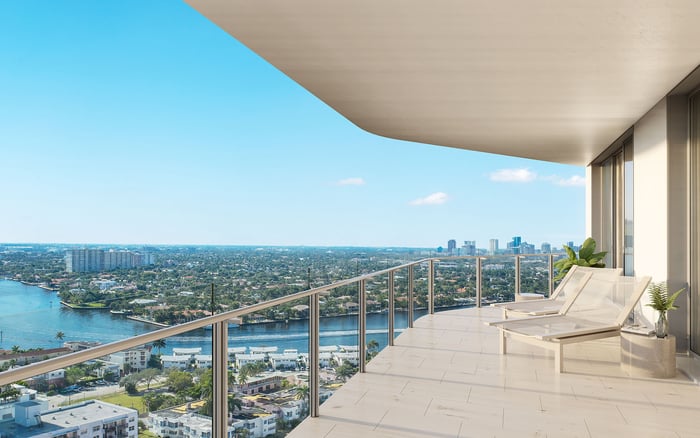
Balcony furniture, planters, and loose objects can become dangerous projectiles. Remove or secure them before a storm in accordance with building requirements. If the family will be abroad, decide before departure who will complete the work, where items will go, and how completion will be confirmed.
Photograph the residence and valuables for insurance documentation, and move vulnerable belongings away from windows and potential water-entry points. Preserve identification, insurance, property, and medical documents with digital backups and waterproof storage. Surge protectors are another recommended property-protection measure.
When reviewing Sixth & Rio Fort Lauderdale, bring the same unit-level questions to the discussion: what remains the owner's responsibility, what access is permitted, and how are urgent notices delivered? These are due-diligence questions, not claims about the project's operating policies. Resolve them through the applicable documents and written arrangements.
Determine whether the residence lies in a flood zone or mandatory evacuation zone. Choose an evacuation destination and plan at least two routes. Know where Broward evacuation orders and shelter information are published, and follow current official instructions rather than assuming a standing household plan will suffice in every storm.
Account for children, older relatives, and anyone who needs assistance, especially when movement depends on elevators. Arrange pet accommodation in advance rather than assuming every destination accepts animals.
Keep at least three days of emergency supplies, including water, nonperishable food, lighting, batteries, first aid, and medications. Post emergency numbers, teach children when and how to call 911, and choose an out-of-state family contact in case household members become separated. Share the essential plan with everyone responsible for the children.
Avoid driving through floodwater. Six inches can cause loss of vehicle control, and vehicle wakes can push water into homes. An alternative route is part of preparedness, not merely a convenience.
Before returning to Tokyo, review the occupancy calendar with the proxy and management, reconfirm access, and check that humidity-control arrangements are operating as intended. Record outstanding service issues and assign responsibility for resolving them. Let the building's policy and official instructions determine storm-related timing.
After a storm, coordinate any inspection with management and follow applicable access instructions rather than promising the family an automatic return date. Request documented condition updates once access is permitted. The central principle is continuity: someone local knows the residence, understands the instructions, and can communicate clearly while the owners are overseas.
For a considered approach to your Fort Lauderdale residence search, connect with MILLION.
If branded residences are on your mind — as a home or as an allocation — we would be glad to share what we are seeing, privately.
Begin a quiet conversationAtlantic hurricane season runs June 1 through November 30. Preparation remains important even when the residence is unoccupied.
Designate a local emergency contact or proxy with authorized unit access, and keep their details current with management. Written instructions should clarify responsibilities and escalation.
Keep indoor relative humidity below 60% to help limit conditions that promote mold growth. This is maintenance guidance, not a guarantee against damage.
Properly sized air conditioning helps, but supplemental dehumidification may be needed. If a dedicated dehumidifier is necessary, consider continuous drainage for an unattended residence.
Request the hurricane policy and disaster plan, including shutter requirements, balcony-clearance deadlines, elevator procedures, emergency contacts, and backup-power protocols.
Do not assume it does. Review the building's backup-power protocols and clarify what is served, including how elevator procedures affect access.
Remove or secure furniture, planters, and other loose objects in accordance with building requirements. Assign the task to an authorized local person if the owners will be abroad.
Confirm flood and evacuation zones, select a destination, and plan at least two routes. Include pet arrangements, assistance needs, and a way to receive current official instructions.
Keep at least three days of water, nonperishable food, lighting, batteries, first aid, and medications. Follow current official instructions for the developing situation.
Preserve identification, insurance, property, and medical documents with digital backups and waterproof storage. Photograph the residence and valuables for insurance documentation.