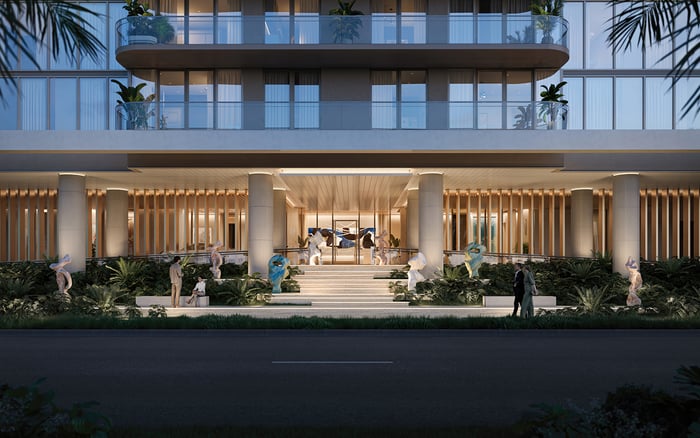
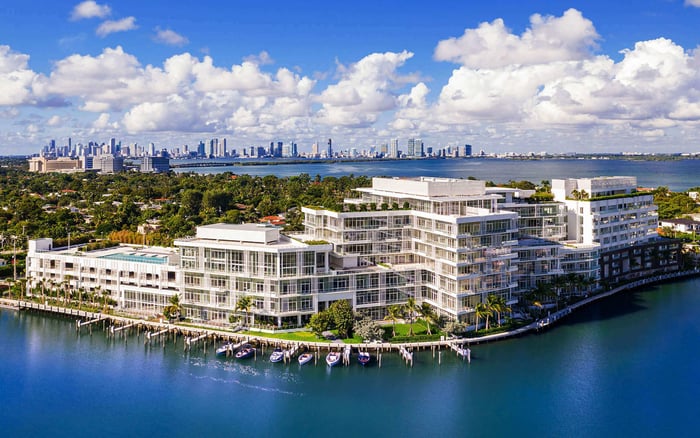
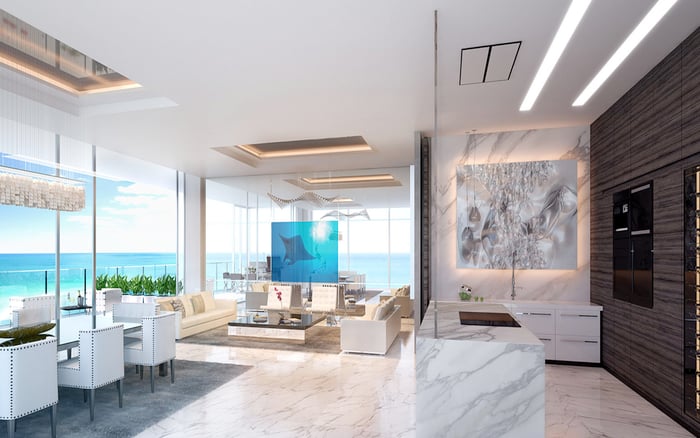
For seasonal owners, the most consequential luxury may be a frictionless arrival. Private elevator configuration, valet choreography, guest screening, delivery routing, and service circulation deserve unit-level scrutiny before an offer.
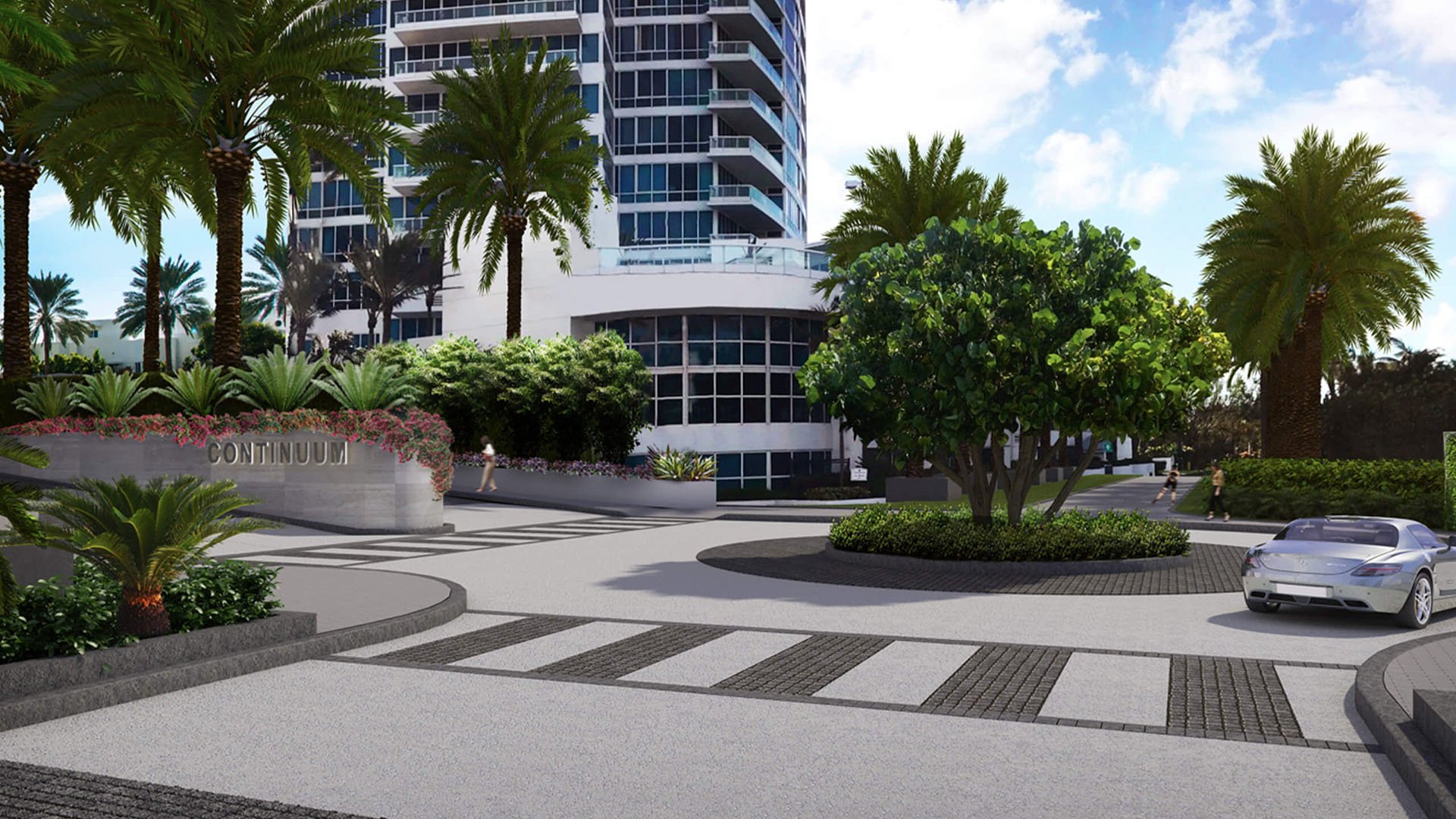
For a seasonal owner, the decisive moment may not occur beside the pool or inside the spa. It may come at the curb after a late flight, when the car is handed over, luggage is transferred, guests are recognized, and the path home feels either effortless or unexpectedly public.
A second home may be occupied in concentrated intervals, with owners arriving alongside family, household staff, deliveries, or guests. A long amenity brochure cannot compensate for a congested arrival area, an ambiguous elevator arrangement, or a cumbersome handoff among valet, lobby, and residence.
In Miami Beach, a useful operational question is simple: How many transitions stand between the vehicle and the front door, and who shares them?
“Private elevator” can describe different configurations. It may refer to a dedicated cab serving one residence, a semi-private elevator shared among several homes, or a common cab opening into a restricted vestibule. Each arrangement should be evaluated according to the privacy and control it provides in practice.
A dedicated elevator may offer the fewest shared transitions. A semi-private system limits the number of residences served but still introduces shared circulation. A restricted vestibule creates separation at the threshold even when the elevator cab remains common.
When considering The Ritz-Carlton Residences® South Beach, buyers should examine the precise route from the arrival point to the residence, including any transfer among parking, lobby, and residential elevator areas.
Valet service is not merely a line on an amenity list. A buyer should understand where arriving cars queue, where residents wait for retrieval, how luggage is staged, and whether guest vehicles, deliveries, and resident vehicles converge at the same point.
Valet timing, guest-screening procedures, delivery routing, service-elevator rules, and backup procedures should be requested directly and evaluated during periods that resemble the owner’s likely use. A quiet midday tour may not reveal how the arrival sequence functions during a busier period.
The central issue is not simply whether valet exists, but whether its flow protects time and discretion. Ask how keys are managed, how an owner requests a car, where vehicles are returned, and what happens when several households arrive simultaneously. Also consider how beach returns, wet gear, household deliveries, and formal arrivals intersect within the circulation plan.
Unit-level verification is essential. When evaluating Casa Cipriani Miami Beach, review the individual floor plan, stack, and floor rather than relying solely on broad building language.
For buyers considering branded residences, service and privacy should not be treated as separate categories. They meet at the front door, where access control, staff response, and residential systems shape the lived experience.
Comparisons should be equally precise. Tours of Setai Residences Miami Beach and Shore Club Private Collections Miami Beach provide opportunities to ask the same operational questions without assuming that terminology or procedures are equivalent across properties.
A visit to Bentley Residences Sunny Isles can broaden the comparison while keeping the search within Miami-Dade. The goal is not to assume that one arrival concept suits every buyer, but to compare the number of transfers, shared spaces, checkpoints, and staff handoffs involved.
The best fit is the arrival plan that aligns with the owner’s priorities for privacy, predictability, and ease of use. In practical terms, recurring convenience may matter more than an amenity used only occasionally.
Before making an offer, request the residence floor plan and a written description of elevator access. Confirm whether the cab is dedicated, semi-private, or common with a restricted vestibule. Trace the route from vehicle to residence, identifying every credentialed door, staffed checkpoint, transfer, and shared waiting area.
Request the guest-entry procedure, delivery policy, valet protocol, service-elevator rules, and available information about elevator and access operation during a power interruption. Ask whether contractors, household staff, caterers, and oversized deliveries use separate routes. If privacy is central to the purchase, these are part of evaluating the real estate rather than secondary management questions.
Finally, test the experience rather than simply admire it. Arrive by car, bring luggage, request vehicle retrieval, and walk the guest route. A residence can have exceptional finishes and still create daily friction. For seasonal ownership in Miami Beach, operational competence may be the amenity that matters most.
What can “private elevator” mean in a condominium? It may describe a dedicated cab, a semi-private cab serving several homes, or a common cab opening into a restricted vestibule.
Which elevator configuration may provide the most separation? A dedicated elevator serving one residence may reduce shared circulation, but the complete route from arrival to front door still requires review.
Does direct elevator access always mean a dedicated cab? Not necessarily. Buyers should confirm both where the elevator opens and whether the cab is shared.
Why does valet flow matter to a seasonal owner? Concentrated stays may involve luggage, guests, deliveries, and simultaneous arrivals, making the handoff especially important.
How should a buyer evaluate valet operations? Ask about queuing, vehicle requests, key handling, luggage staging, retrieval points, and procedures during busy periods.
Should elevator access be verified for the specific residence? Yes. Confirm the configuration for the exact residence, stack, floor, and floor plan rather than relying on broad marketing language.
What guest-access details deserve review? Establish where guests are screened, how they are announced, which elevators they use, and what authorization is required.
What should buyers ask about deliveries? Request procedures for routine packages, groceries, oversized items, contractors, caterers, and service-elevator use.
Why ask about power-interruption procedures? Buyers should understand how elevator service and access control are expected to operate during an interruption.
Can a strong amenity program offset a weak arrival experience? Amenities may add appeal, but buyers should separately assess recurring friction and privacy between the curb and the residence.
For a confidential assessment and a building-by-building shortlist, connect with MILLION.
If branded residences are on your mind — as a home or as an allocation — we would be glad to share what we are seeing, privately.
Begin a quiet conversation