For relocating families, residential privacy depends on an uninterrupted chain of controlled access. The right building should coordinate vehicle arrival, guest screening, elevator credentials, staff circulation and package handling as one discreet operating system.
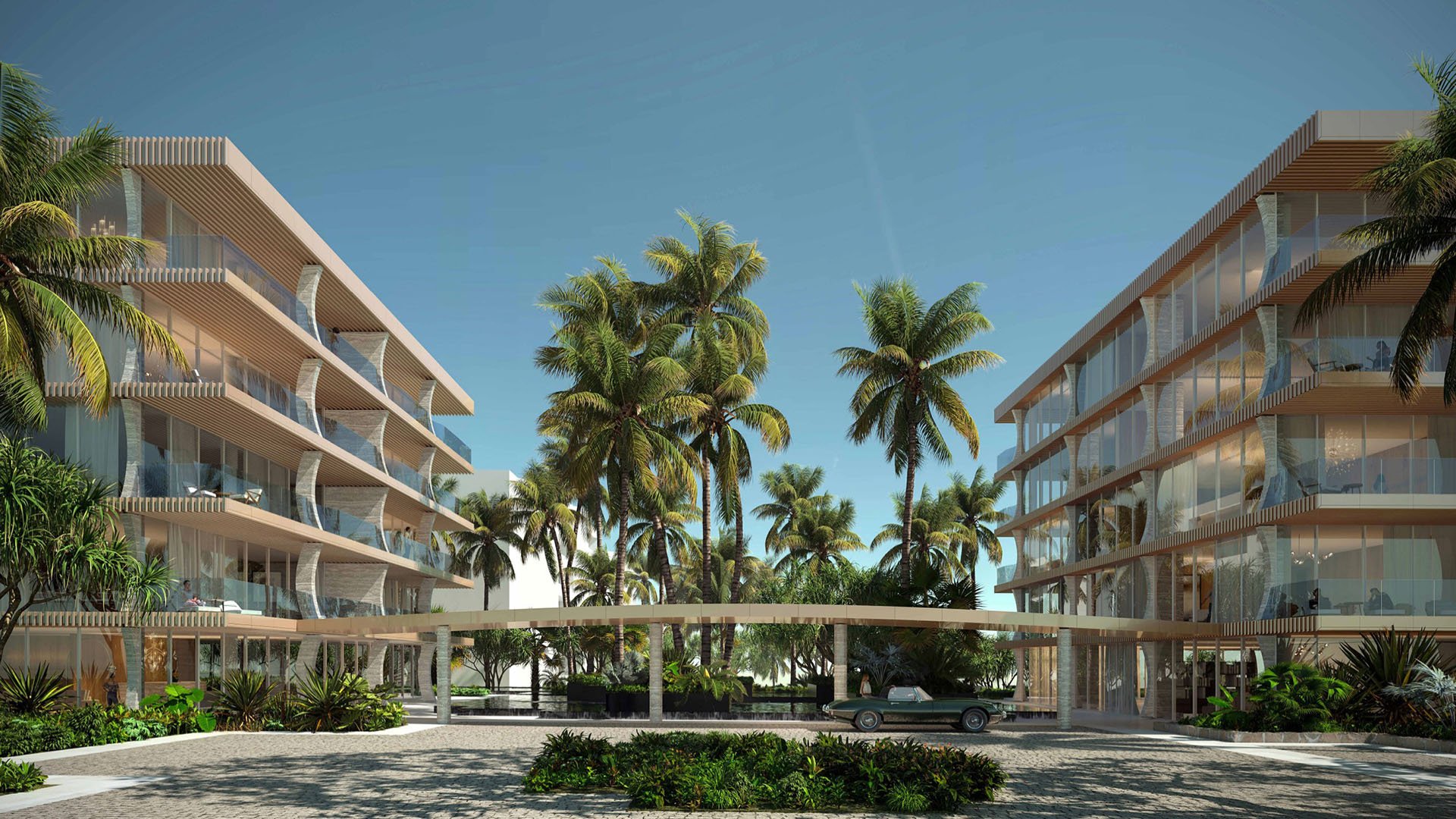
For a Los Angeles family moving to Palm Beach, privacy should be assessed as a continuous journey, not a collection of impressive amenities. The route begins as a vehicle approaches the property, continues through valet handoff or garage entry, passes the lobby or reception desk, and ends only when the residential elevator opens into a protected foyer.
The strongest configuration combines controlled vehicle entry, a staffed arrival point, secure residential elevators and separate service circulation. If one link is weak, the entire sequence becomes less private. A guarded gate cannot compensate for unmanaged elevator access, just as a private foyer offers little protection if couriers and contractors routinely share the resident route.
Privacy is strongest when every handoff is designed as part of one controlled journey.
Before committing to a home, request a written circulation map from management. It should identify the resident entrance, garage or valet handoff, guest check-in, loading area, package room, service entrance and every elevator bank. Walk the route in person at the times your household is most likely to use it.
At the curb, determine where an unfamiliar vehicle is stopped and who approves its entry. At reception, establish whether advance notice is required and whether a visitor can proceed beyond the lobby without confirmation. In the garage, ask how cameras, credentials and staff oversight work together. These questions apply equally to a waterfront tower and a gated-community residence: privacy depends on operational control, not merely architectural enclosure.
The Berkeley Palm Beach illustrates this layered approach with gated entry, full-time concierge service and direct private-elevator access for every residence. The buyer's task is to understand how those elements connect during an ordinary arrival-not simply to confirm that each appears on an amenity sheet.
The phrase can describe materially different arrangements: a dedicated elevator cab, a shared cab that opens into an individual private foyer, or a common elevator with restricted floor access. Each reduces exposure differently.
A semi-private elevator can limit corridor activity while still serving multiple residences. Families seeking complete separation should ask how many homes share the cab, whether elevator dispatch is credentialed, where guests wait and whether access can be revoked immediately. Confirm what happens when the main elevator is being serviced and whether the alternative route preserves the same standard of separation.
Boutique scale may also shape the experience. Forté on Flagler West Palm Beach has 41 residences, each with private-elevator access. That is useful baseline information, but a careful buyer should still examine cab sharing, foyer configuration, credential controls and backup circulation.
Access permissions should reflect roles rather than household familiarity. Create distinct approved-access lists for family guests, household employees, recurring vendors, contractors and one-time couriers. Each category should have a defined entrance, permitted hours, destination and expiration rule.
Housekeepers, chefs, assistants and maintenance personnel should not require the same credential privileges as residents. Former staff access should be revocable immediately, while temporary vendor credentials should expire automatically. Ask whether management maintains access logs, enforces no-tailgating rules and can alert the household when an unexpected credential is used.
For lifestyle planning, schedule routine staff arrivals outside school-run, airport-transfer and evening return windows. This is less about inconvenience than about preventing congestion at the precise moments when children, luggage, drivers and guests may converge.
Dedicated service elevators and keyed service entrances allow household staff, caterers, maintenance teams and couriers to move without crossing the owner's residential elevator path. South Flagler House West Palm Beach has dedicated service elevators, secure key access to service entrances and keyed elevators serving residences and common areas. A 24-hour lobby attendant and concierge place access decisions ahead of the residential elevator.
When touring, follow the staff path from the exterior entry to the residence's service threshold. Identify every point where resident and service routes merge. Ask who can unlock the service entrance, whether a household employee may escort a vendor and how after-hours access is handled. A theoretically separate route has value only when building procedures preserve it consistently.
Packages, flowers, groceries, catering equipment and luggage should stop at a controlled back-of-house location until authorized staff can transfer them. A staffed package room prevents couriers from gaining unnecessary access to residential floors. Bulk deliveries should use the loading area and service elevator rather than the primary lobby and owner elevator.
Mr. C Residences West Palm Beach combines private high-speed elevators with security-surveilled parking, mail and package rooms, 24-hour valet, concierge reception and butler service. Its custom resident app connects owners with concierge, valet and butler services, creating a direct channel for advance arrival and delivery coordination.
Establish a written household rule: nothing proceeds upstairs until the recipient, household manager or authorized building employee accepts responsibility. Apply the rule as rigorously to one-time couriers as to recurring vendors. It should also address oversized items, chilled food, unattended packages and deliveries arriving outside approved windows.
A polished lobby is not automatically a controlled lobby. Ask reception to explain what happens when a driver arrives early, a guest uses a different name, a former employee appears or a caterer brings additional personnel. The answer should reveal who makes the decision, how the household is contacted and where the visitor waits.
At The Ritz-Carlton Residences® West Palm Beach, private-elevator access to entry foyers is paired with 24-hour concierge, valet and loss-prevention services. For a relocating family, the salient issue is how these staffed services coordinate, especially when arrivals overlap or the principal residents are away.
Before closing-or before the household fully moves in-rehearse several realistic scenarios. Send an approved guest without a resident escort. Schedule a flower delivery, followed by a larger household delivery. Have a staff member arrive through the designated service entrance. Request an immediate credential revocation and verify that it takes effect.
Observe every handoff. Does the valet transmit the vehicle's arrival to reception? Does reception verify the visitor before issuing elevator access? Does a courier remain in the package area? Can staff reach the residence without entering the private foyer? A practical test often reveals more than a generalized promise of security.
This exercise belongs on any serious buyer's guide checklist for Palm Beach and West Palm Beach. It distinguishes physical features from daily operating discipline and gives the family a clear basis for comparing residences.
Once the building is selected, document the operating plan. Name the family members and household managers authorized to approve entry. Assign separate arrival instructions to guests, employees and vendors. Define delivery windows, package-transfer responsibilities and escalation contacts. Review credentials after every staffing change, and periodically reconcile approved lists with management.
The most discreet home is not necessarily the one with the most visible security. It is the residence where gate personnel, valet, reception, concierge, elevators, service corridors and household staff follow one coherent plan. That coordination turns privacy from a marketed feature into an everyday condition.
For confidential guidance on evaluating Palm Beach residences and their arrival protocols, connect with MILLION.
If branded residences are on your mind — as a home or as an allocation — we would be glad to share what we are seeing, privately.
Begin a quiet conversationEvaluate the complete curb-to-residence route. Controlled vehicle entry, staffed screening, secure elevators and separate service circulation should operate as one system.
No. It can mean a dedicated cab, a shared cab opening into a private foyer or restricted floor access, so buyers should request a precise definition.
A semi-private elevator reduces hallway traffic but may still serve multiple residences. It does not necessarily provide complete separation.
Where available, staff should use a keyed service entrance and dedicated service elevator under role-specific credentials and approved hours.
A controlled package room or loading area is preferable. Building or household staff can then transfer items through service circulation.
It should identify resident entry, valet handoff, guest check-in, loading, package storage, service entry and every elevator bank.
Use separate permission lists with defined entrances, permitted times, destinations and credential expiration rules for each access category.
Schedule them outside school-run, airport-transfer and evening arrival windows to reduce congestion and overlapping movements.
Rehearse guest entry, staff arrival, package delivery and credential revocation, then observe each screening and transfer point.
Management should be able to revoke the former employee's credential immediately and retain an access record for review.