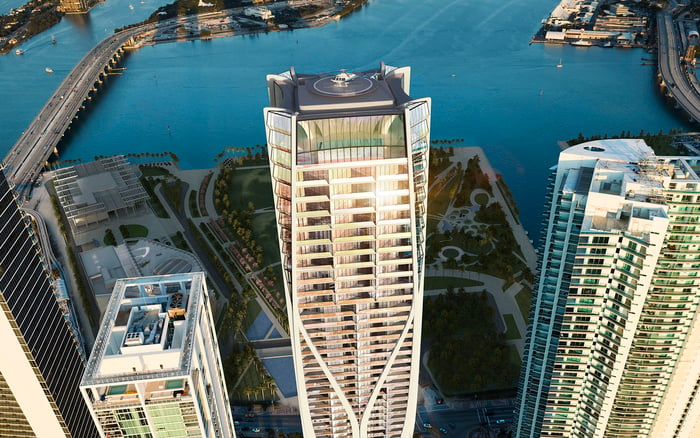
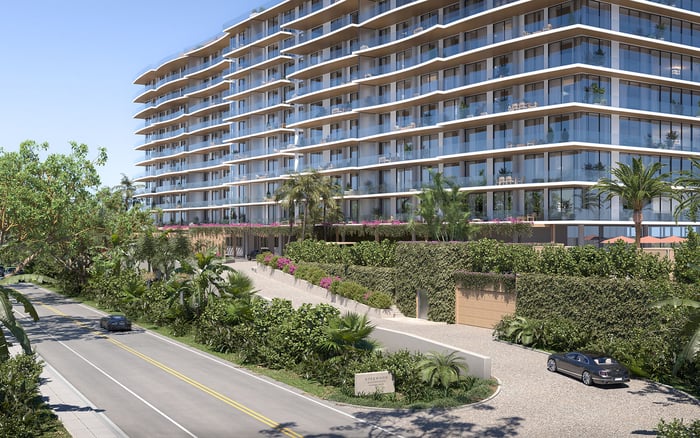
A buyer-focused comparison of private entertaining at two Pompano Beach residences, separating advertised dining services and hosting spaces from the fees, operating rules, and shared costs that require written confirmation.

An elegant dinner at home should feel effortless. For buyers weighing shared ownership priorities in Pompano Beach, however, the consequential details extend beyond the table setting: who arranges the evening, who may use the room, and which costs fall to the association rather than the individual host. Here, shared ownership priorities concern common amenities and collective expenses, not a fractional-ownership offering.
The distinction between The Ritz-Carlton Residences® Pompano Beach and Armani Casa Residences Pompano Beach is meaningful but specific. Ritz-Carlton explicitly advertises dining and catering services. Armani/Casa advertises dedicated entertaining spaces without an equivalent disclosed catering operation or billing model. Neither establishes a complete entertaining budget in the available disclosures.
For an owner who hosts regularly, the goal is more than an impressive amenity collection. It is a predictable arrangement with clearly defined service access, reservation rights, and financial responsibility.
Ritz-Carlton advertises a catering kitchen and expressly includes in-residence dining and catering among its services. That gives buyers a clearer starting point than a dining room alone: both infrastructure and a service offering are identified. It does not establish how every dinner or reception would be organized.
The broader advertised hospitality offering includes concierge support, valet parking, and dedicated beach services. Food-and-beverage amenities include a restaurant beach bar and grill and a breakfast bar. Together, these features describe a hospitality-oriented setting-not confirmation that private entertaining is included in association assessments.
The essential qualification is that some services are à la carte and may be performed by third parties. Buyers should distinguish access to a service from payment for it. An advertised catering option is not an included catering allowance, a guarantee of availability, or a fixed event price.
The available disclosures establish neither an automatic service-charge percentage for in-residence dining or catered events nor a complete schedule of venue charges, catering minimums, staffing, gratuities, cleaning, deposits, and cancellation penalties. Those questions remain open until current written terms are provided.
Armani/Casa advertises a social lounge with a private dining room-a relevant distinction for buyers who want to entertain beyond their residence. The broader advertised amenity program also includes an oceanfront lap pool, rooftop amenities, and concierge service.
An outdoor summer kitchen with a bar and beverage center is also advertised, but buyers should confirm that feature against current developer documents before making it a purchase assumption. Even if confirmed, a summer kitchen establishes hosting infrastructure, not an automatic catered-event package.
The central unresolved issue is who would deliver the meal. The available disclosures do not identify an equivalent formal catering program or specify an in-house operator, affiliated restaurant, outside vendor, or concierge arrangement. A concierge amenity alone does not answer those questions.
Private-dining reservation fees, food-and-beverage minimums, staffing charges, service-charge percentages, gratuities, deposits, and cancellation terms are likewise not established. That does not mean catering is unavailable or fees are zero. It means buyers need the operating rules before judging convenience, flexibility, or value.
A clear comparison separates collective ownership expenses from spending generated by a particular gathering. Ask which costs appear in association assessments and which are billed only when an owner uses a room, orders food, or requests staff. Neither property's advertised offering should be assumed to answer that allocation question.
A written event estimate should itemize the venue or reservation charge, food and beverages, any minimum spend, event labor, setup, cleaning, taxes, service charges, and gratuities. Deposits and cancellation penalties should appear separately, with clear terms for when they become nonrefundable and whether any deposit is credited toward the final bill.
Service charges deserve particular attention. Ask whether a charge is mandatory, what amount it applies to, and whether gratuity is additional. Do not treat service charge and gratuity as interchangeable without written clarification of how each is applied.
For an accurate comparison, present both properties with the same proposed gathering: identical guest count, menu expectations, duration, and staffing needs. Request itemized written estimates rather than broad assurances. The available evidence does not support declaring either property less expensive or calculating an all-in cost today.
An attractive private dining room is not necessarily available whenever an owner wishes to host. Request the amenity reservation policy and ask about booking windows, frequency limits, exclusive-use rights, guest limits, and quiet hours. These are diligence questions, not confirmed restrictions at either property.
Outside catering deserves a separate discussion. Ask whether owners may select their own caterer, whether approved vendors are required, and whether vendor insurance or access documentation must be supplied. Clarify kitchen access, delivery arrangements, setup time, and responsibility for restoring the space after an event.
Buyers who jointly own a residence should also ask who may make reservations and authorize charges. Confirm whether permissions differ for owners, household members, or guests. A shared ownership arrangement is easier to manage when those using an amenity understand both their authority and their financial responsibility.
Before treating entertaining as a decisive purchase advantage, request the current association budget, governing documents, resident-services agreement, amenity reservation policy, and written fee schedule. Read them together: an amenity description explains what is advertised; the relevant agreements should clarify access, obligations, and charges.
Ask which terms are current, which remain proposed, and how fees or operating arrangements may change. If the documents leave a question unresolved, seek written clarification before building a purchase decision around a preferred hosting routine.
The same discipline applies when extending a Pompano Beach shortlist to Ocean 580 Pompano Beach. This is a diligence framework, not a claim that another residence provides equivalent dining services. Compare documented arrangements rather than projecting one property's hospitality offering onto another.
Ritz-Carlton offers the more explicit advertised dining-and-catering proposition. Armani/Casa identifies private entertaining space but leaves the catering operation and billing structure to be confirmed. Neither conclusion establishes superior service, lower costs, or more permissive reservation rules.
The right choice depends on whether the buyer values coordinated service, control over vendors, predictable expenses, or access to common rooms. Turn those preferences into written questions, then evaluate the answers alongside the residence itself. The most persuasive luxury is not merely access to an elegant setting, but clarity about how that setting can be used.
For a discreet assessment of your Pompano Beach ownership priorities, connect with MILLION.
If branded residences are on your mind — as a home or as an allocation — we would be glad to share what we are seeing, privately.
Begin a quiet conversationYes. It advertises a catering kitchen and expressly lists in-residence dining and catering among its services.
Inclusion is not established. Some services are à la carte and may be performed by third parties, so buyers should request written billing terms.
Yes. Its advertised amenities include a social lounge with a private dining room.
The available disclosures do not identify an equivalent formal catering program or establish who would provide catering. Buyers should confirm the operating arrangement in writing.
No automatic percentage is established in the available disclosures for the dining and entertaining services discussed. Request the current written fee schedule.
Not from the available disclosures. Comparable itemized estimates are needed before making a cost comparison.
No. The amenity should be confirmed against current developer documents, and hosting infrastructure alone does not establish a catering package.
Request the current association budget, governing documents, resident-services agreement, amenity reservation policy, and written fee schedule.
No. Ask whether service charges are mandatory, what they apply to, and whether gratuities are additional.
Ask whether outside caterers are permitted, whether vendor approval and insurance are required, and what access, cleanup, and guest rules apply.