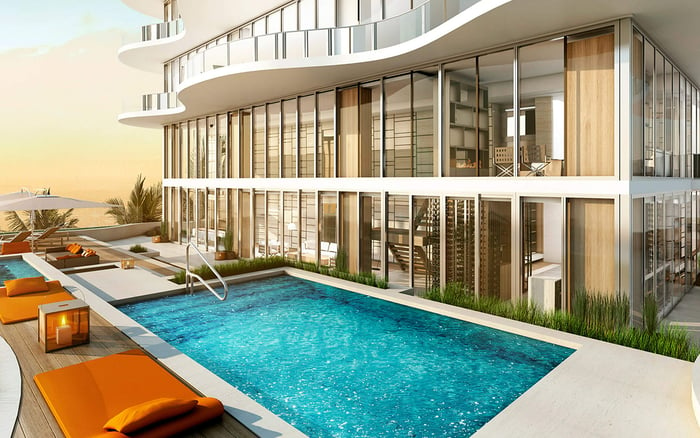
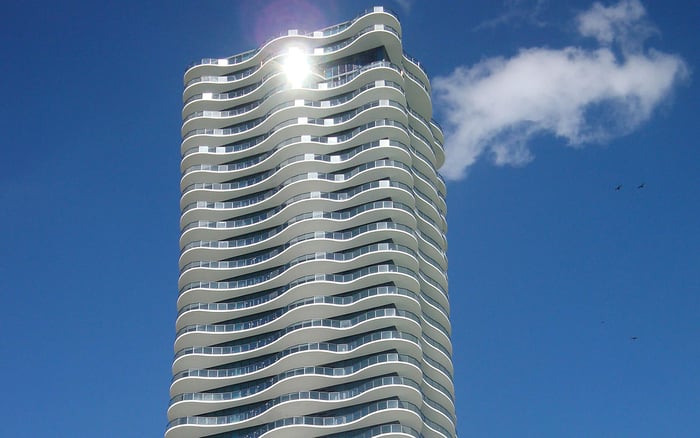
In Sunny Isles Beach, residential discretion takes two distinct forms: Regalia’s boutique, full-floor separation and The Ritz-Carlton’s professionally managed, service-led environment.
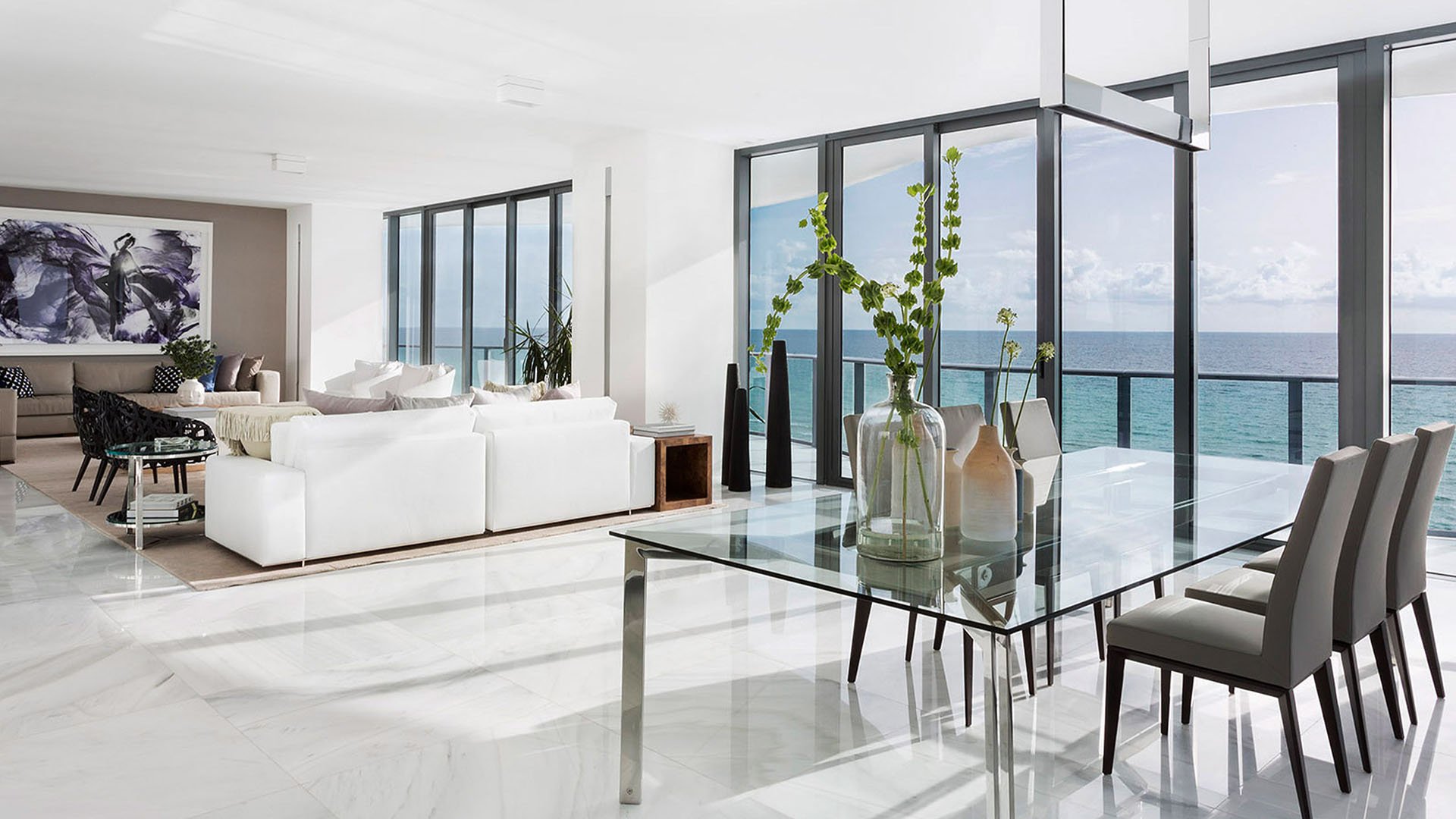
In Sunny Isles Beach, privacy is not a single amenity. It is the cumulative result of density, circulation, staffing, guest access, branding and the degree of exposure a resident accepts in daily life. For buyers considering Regalia Sunny Isles Beach and The Ritz-Carlton Residences® Sunny Isles, the central question is not which address is more luxurious. Both occupy the ultra-premium end of the market. The more useful distinction is which operating model best reflects the buyer’s preferred form of discretion.
Regalia offers a boutique, low-density proposition centered on full-floor residences and a deliberately subdued residential identity. The Ritz-Carlton Residences offers a larger, internationally branded environment where professional management, high-touch service and controlled residential operations support privacy. One minimizes the number of households sharing a floor. The other places greater emphasis on the consistency and choreography of service.
Neither model guarantees anonymity. Residential discretion is personal, operational and subject to each building’s current protocols.
Regalia’s defining principle is architectural separation. Its full-floor concept limits the number of households sharing each residential level, creating a fundamentally different rhythm from a larger condominium. For an owner who values fewer encounters with neighbors, a smaller residential community and less visible hospitality branding, that structure may be especially compelling.
This is discretion achieved through a scarcity of shared residential space. The appeal extends beyond exclusivity in the abstract to quieter transitions among arrival, elevator and residence. The building’s limited-unit format is designed to support privacy and calm rather than the energy of a large, resort-style community.
That distinction may matter to principals whose homes serve as retreats, families seeking a restrained second-home setting, or residents who prefer service to remain in the background. Boutique living, however, still warrants an operational assessment. Buyers should determine how guests are registered, how deliveries move through the property, which personnel can access residential levels and whether service circulation intersects with owner circulation.
At The Ritz-Carlton Residences, discretion takes shape through a recognized hospitality service model applied to private residential living. The concept pairs residences with high-touch services and resort-style amenities, creating an environment in which staffing and management play a larger role in the ownership experience.
For some buyers, this is the more reassuring expression of privacy. Professional management can bring structure to arrivals, visitors, service requests and the many practical details of maintaining an oceanfront home. The brand also provides familiarity. Owners moving among several residences may value an internationally recognized standard and a service culture they readily understand.
The trade-off is visibility and scale. Branded residences naturally carry a more identifiable public profile than an intentionally subdued boutique condominium, and this community operates on a larger scale than Regalia’s full-floor model. Buyers comfortable with that visibility may view the service infrastructure as an advantage. Those seeking the smallest possible owner community may reach a different conclusion.
The comparison is particularly relevant because both properties occupy the same broader luxury geography. Sunny Isles Beach offers a concentrated oceanfront residential setting, yet buildings along the shoreline can deliver markedly different experiences beyond their entrances.
A buyer’s tour should therefore focus less on broad neighborhood assumptions and more on building-specific operations. Even nearby towers can differ in elevator arrangements, staff presence, guest procedures and the relationship between amenities and residential pathways. Muse Residences Sunny Isles Beach can be included in a wider local tour to sharpen that building-by-building comparison, without treating any single operating model as universally preferable.
Oceanfront living also introduces practical patterns that merit attention. Owners may arrive with family, household personnel, drivers, vendors or guests. Discretion depends on how gracefully the property absorbs those movements, not merely on how private a residence feels once its doors close.
The strongest evaluation begins with ordinary scenarios. Ask how an unannounced guest is handled, where a private driver waits, how household staff enter and whether deliveries use separate circulation. Confirm who controls elevator access, how amenity traffic relates to residential floors and which procedures apply during periods of heavier occupancy.
At Regalia, the inquiry should test how effectively the full-floor, low-density concept translates into daily separation. At The Ritz-Carlton Residences, it should examine how the service organization manages access while preserving ease and warmth. The first model is grounded in fewer shared residential relationships. The second depends more heavily on operational discipline.
Buyers should seek current answers rather than rely on assumptions tied to architecture or branding. Access protocols, security systems, staffing policies and guest-registration procedures can change. Condominium documents and direct building guidance should be reviewed with appropriate advisers before a decision is made.
Regalia may be the more intuitive choice for a purchaser who associates privacy with low density, full-floor living and a quiet architectural profile. Its luxury is closely tied to separation and the intimacy of a small owner community.
The Ritz-Carlton Residences may better suit a buyer who defines discretion as seamless, professionally managed living. Its proposition is not minimal scale, but a controlled environment supported by recognizable service and resort-style amenities.
The decision ultimately rests on temperament. Some owners want their building to recede almost entirely from view. Others prefer an attentive residential platform capable of anticipating needs. A thoughtful buyer should tour both at comparable times, observe circulation rather than finishes alone, and assess how each property accommodates the specific people and routines accompanying the household.
What does residential discretion mean in this comparison? It encompasses density, circulation, staffing, guest access, branding and exposure rather than promising anonymity.
Why does Regalia appeal to privacy-focused buyers? Its boutique, full-floor format limits the number of households sharing each residential level and prioritizes separation.
How does The Ritz-Carlton approach discretion? Its model relies more on professional management, high-touch service and controlled residential operations than on a minimal unit count.
Is a full-floor residence automatically private? No. Buyers should still verify elevator controls, staff access, delivery procedures and guest protocols.
Does prominent branding reduce privacy? Not necessarily, but it creates a more visible identity that some buyers may assess differently from a subdued residential profile.
Which property has the smaller-community concept? Regalia follows the lower-density model, while The Ritz-Carlton Residences operates on a larger community scale.
Which model is better for a second home? That depends on whether the owner prioritizes architectural separation or a service-intensive environment for managing the residence.
What should buyers observe during a tour? Observe arrivals, elevator use, amenity circulation, guest handling and the interaction among residents, staff and vendors.
Should current security procedures be confirmed? Yes. Access protocols, staffing policies, guest registration and security systems should be verified directly with each building.
Is one property definitively more discreet? No. Regalia and The Ritz-Carlton Residences offer distinct forms of discretion suited to different ownership preferences.
To compare the best-fit options with clarity, connect with MILLION.
If branded residences are on your mind — as a home or as an allocation — we would be glad to share what we are seeing, privately.
Begin a quiet conversation